

Investment will target data centres, fibre networks and subsea connectivity across the continent.
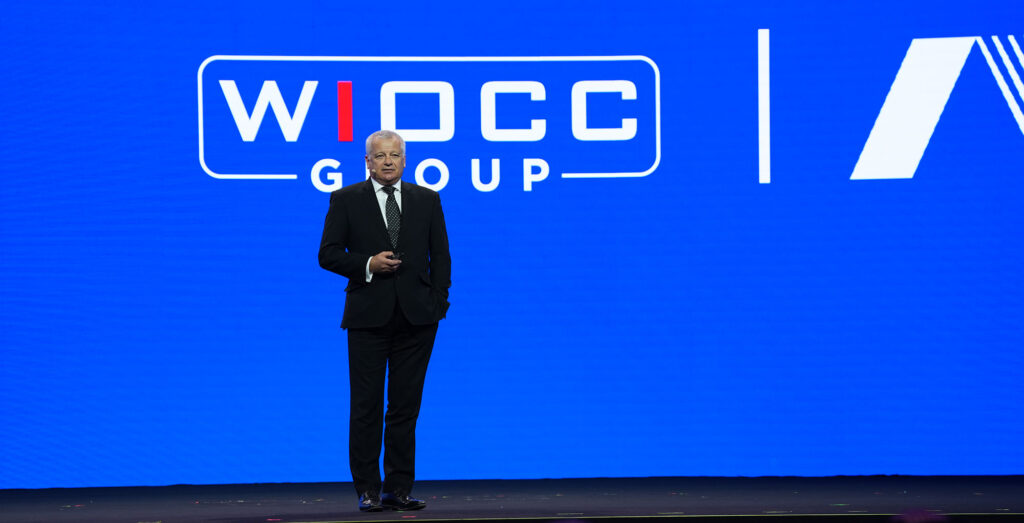
WIOCC Group has secured a combined $300 million investment from Africa Finance Corporation and Saudi Arabia-based Vision International Investment Company as the pan-African digital infrastructure company prepares to accelerate its expansion across the continent.
The investment was formalised through a Shareholder Subscription Agreement announced in September and will provide WIOCC with additional capital to expand the infrastructure supporting Africa’s growing digital economy. The funding will focus on data centres, terrestrial fibre networks and strategically selected subsea cable assets.
The deal comes at a time when demand for cloud computing, artificial intelligence, digital public infrastructure and other technology services is growing rapidly across Africa. But the continent continues to face significant gaps in the infrastructure needed to support that growth.
Building the infrastructure behind Africa’s digital economy.
WIOCC operates as a carrier-neutral digital infrastructure platform, providing connectivity infrastructure to telecommunications companies, cloud providers, businesses and other digital service providers.

The company’s existing network spans more than 30 African countries. Its infrastructure includes terrestrial fibre, data centre capacity and international connectivity, allowing businesses to move data between African markets and the rest of the world.
The new capital is expected to strengthen these networks rather than simply expand them individually.
WIOCC says the investment will allow it to accelerate the deployment and consolidation of data centre capacity, extend its open-access terrestrial fibre footprint into new markets and add subsea assets that strengthen international connectivity.
Africa’s AI ambitions need more than software.
The investment arrives as African governments and businesses increasingly look toward artificial intelligence as a potential driver of economic growth.
But AI requires significant computing power, data storage and reliable connectivity. Without sufficient data centres, fibre networks and international bandwidth, African countries risk becoming consumers of AI technologies developed elsewhere without developing the infrastructure needed to participate more deeply in the industry.
WIOCC’s investment therefore reflects a wider shift in the African technology market. The focus is moving beyond connecting people to the internet toward building the physical infrastructure that supports cloud services, AI, digital payments and other technology-driven businesses.
Subsea cables remain strategically important.
International connectivity is particularly important for Africa because a large share of the continent’s digital traffic depends on connections between African networks and global internet infrastructure.
Additional subsea cable capacity can help improve resilience and provide greater connectivity between African markets and international data networks.
For businesses, reliable international connectivity can influence everything from cloud services and financial transactions to online entertainment and remote work.
WIOCC’s plan to invest in strategically selected subsea assets is therefore part of a broader effort to create a more integrated digital infrastructure ecosystem across the continent.
African capital is playing a bigger role.
The structure of the investment is also significant.
Africa Finance Corporation is one of the continent’s major infrastructure investors, while Vision Invest brings capital from Saudi Arabia. Their combined investment means that African and Middle Eastern capital is supporting the expansion of infrastructure that will underpin Africa’s future digital economy.
For AFC, the investment is consistent with its broader strategy of supporting infrastructure that can improve Africa’s ability to participate in global markets.
AFC President and CEO Samaila Zubairu has argued that stronger digital infrastructure can help African businesses and communities connect more effectively to the global economy and compete internationally.
The investment gap remains enormous.
Despite increasing investment, Africa’s digital infrastructure remains uneven.
Many communities still lack reliable broadband access, while businesses in several markets face high connectivity costs and limited access to modern data infrastructure.
The International Telecommunication Union estimates that only about 35.7 percent of Africa’s population used the internet in 2025, compared with a global average of 73.6 percent.
That gap represents both a development challenge and a business opportunity.
Expanding fibre networks and data centres can create opportunities for telecommunications companies, cloud providers, financial technology firms, software businesses and other enterprises whose operations depend on reliable digital infrastructure.
The real opportunity is integration.
One of the most important aspects of the WIOCC investment is the attempt to connect different parts of the digital infrastructure chain.
Data centres need reliable connectivity. Fibre networks need international links. Cloud providers need data centres. Businesses need all three.
WIOCC’s strategy is therefore based on building an interconnected infrastructure platform rather than treating each component as an isolated investment.
That approach could become increasingly important as African economies become more dependent on digital services.
Africa cannot build a digital economy without physical infrastructure.
The $300 million investment is ultimately a reminder that Africa’s digital transformation will not be driven by applications and startups alone.
Behind every digital payment, streaming service, cloud platform and artificial intelligence application are physical assets: fibre cables, data centres, power systems and international connectivity.
The companies and investors building those assets will play an increasingly important role in determining how competitive African economies become.
For WIOCC, the new capital provides an opportunity to expand that infrastructure at a critical moment.
For Africa, the larger question is whether investments of this scale can help create a digital economy in which African businesses are not simply connected to the global internet, but are increasingly capable of building, owning and operating the infrastructure that powers it.

Comments (0)
No comments yet — be the first to share your thoughts.