

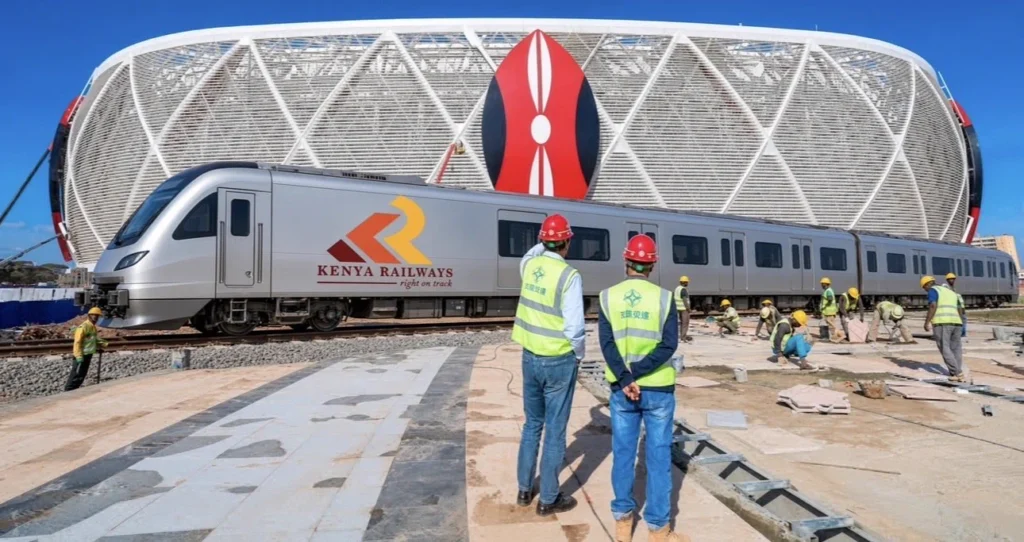
Kenya is turning to its railway network as it prepares for the massive movement of football supporters expected during the 2027 Africa Cup of Nations. Kenya Railways has unveiled plans for a new railway station next to Nyayo National Stadium, together with a spur line linking Nairobi Central Station through the Nyayo area and Kibera to Talanta Sports City, creating a new transport corridor around some of the country’s most important AFCON venues.
The railway upgrade is designed to address one of the less visible challenges of hosting AFCON 2027: how to move thousands of fans, teams, officials and other tournament visitors around Nairobi without placing even greater pressure on the city’s roads. Kenya will host the competition alongside Uganda and Tanzania, with Nyayo, Talanta and Moi International Sports Centre, Kasarani, among the venues identified for the tournament.
The New Rail Route Will Connect Major Football Venues.
The centrepiece of the plan is the proposed spur line from Nairobi Central Station to Talanta Sports City, passing through the Nyayo Stadium area and Kibera. Kenya Railways says the project is intended to provide a safe, reliable and affordable transport option for people travelling to and from the football venues.
The proposed Nyayo railway station is particularly important because of the stadium’s central location. Rather than forcing supporters to depend entirely on cars, buses and taxis, the government wants rail transport to become part of the movement system around the tournament.

Kenya Railways has also been repossessing land along the railway corridor to create space for the new infrastructure. The corporation said notices were issued to people occupying sections of the corridor before enforcement action began, with structures remaining within the designated railway area subject to removal.
Why Nairobi Needs Another Transport Option.
AFCON 2027 will bring concentrated crowds into Nairobi around match days, meaning congestion could become a major operational issue if large numbers of spectators are dependent on the same road network.
The railway plan is therefore being developed as part of the wider preparations for the tournament rather than as a standalone infrastructure project. Kenya Railways specifically linked the proposed station and spur line to the need to make movement to and from the AFCON venues easier.
The timing is also important because Nairobi is already preparing for other major international sporting events. The city was recently selected to host the 2029 World Athletics Championships, with Kasarani expected to be one of the central venues, meaning improvements to Nairobi’s transport infrastructure could have uses beyond AFCON 2027.
Talanta Stadium Is At The Centre Of The Upgrade.
The railway project is closely connected to the development of Talanta Sports City, also known as Raila Odinga International Stadium.
Construction at the 60,000-capacity stadium has been progressing as Kenya prepares for AFCON. In August, Sports Cabinet Secretary Salim Mvurya said substantial progress had been made, with the pitch completed and work continuing on the stadium’s training facilities and supporting infrastructure.
The government has also identified transport access as part of the stadium’s wider development. Mvurya said in August that a railway connection was being planned alongside improvements to surrounding roads.
That means the railway is being treated as part of the stadium’s operational infrastructure, rather than something that will be considered only after construction of the venue is complete.
Kenya Is Racing Against The AFCON Clock.
The railway upgrade comes while Kenya is simultaneously working on stadiums, training grounds, roads, security and other tournament infrastructure.
In September, Sports Principal Secretary Elijah Mwangi said preparations were advancing, with major upgrades continuing at Talanta and Kasarani. Recent CAF inspections have also been part of the process of checking whether Kenya’s facilities are moving toward the standards required for the tournament.
Earlier CAF assessments had identified significant gaps in Kenya’s proposed stadium infrastructure, making the remaining preparation period particularly important.
The railway project therefore has to progress alongside several other major construction programmes before the tournament begins.
The Upgrade Could Change Nairobi’s Match-Day Experience.
If completed and operational for AFCON 2027, the new rail connection could give supporters an alternative to Nairobi’s increasingly busy road network.
A fan arriving through Nairobi Central could potentially use the commuter railway to reach the stadium corridor, while spectators around Nyayo and Talanta would have a rail option for leaving the venues after matches.
For tournament organisers, this could also make crowd movement easier to manage because large groups would not be concentrated entirely on roads surrounding the stadiums.
The project could consequently have a lasting impact beyond the tournament, particularly if the new infrastructure becomes part of Nairobi’s regular commuter network after AFCON.
The Bigger Challenge Is Getting Everything Ready In Time.
Kenya Railways announced the stadium railway plans in January 2026, meaning the project has been moving on a relatively tight timeline ahead of the 2027 tournament. The corporation has already begun clearing the designated railway corridor to make construction possible.
The success of the plan will ultimately depend on whether the station, spur line and associated infrastructure can be completed, tested and integrated into Nairobi’s commuter railway operations before the first AFCON crowds arrive.
Kenya’s AFCON preparations are therefore no longer just about whether the stadiums will be ready. The country also has to demonstrate that supporters can actually reach those stadiums efficiently, safely and without Nairobi’s roads becoming overwhelmed.
That is why the railway upgrade could become one of the most important parts of Kenya’s preparations for AFCON 2027: the tournament will test not only Kenya’s football infrastructure, but also the city’s ability to move an entire football continent.

Comments (0)
No comments yet — be the first to share your thoughts.