

Africa Has a Financing Problem.
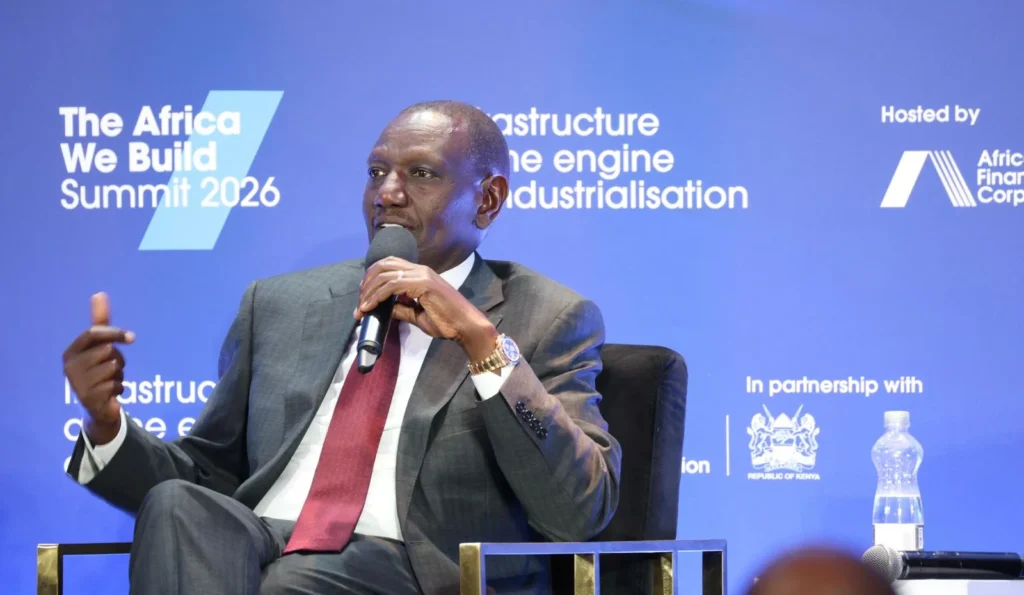
Kenyan President William Ruto has become one of the continent’s most vocal advocates for reducing Africa’s dependence on external financing.
His argument is straightforward: Africa has significant financial resources of its own, yet too much of that capital remains disconnected from the infrastructure and businesses that need it. In April 2026, Ruto called for African countries to use domestic capital more aggressively to finance roads, ports, energy projects and industrial infrastructure.
The Money Is Already There.
The argument becomes more compelling when the numbers are considered.
The Africa Finance Corporation reported in April that Africa’s non-bank domestic capital pools exceed $2 trillion, compared with approximately $1.7 trillion in cumulative external flows between 2014 and 2024. The problem, according to the report, is increasingly about moving African savings into productive investment rather than simply finding more money from abroad.

That changes the conversation considerably. Africa may not have a shortage of capital in absolute terms. It may have a shortage of mechanisms capable of connecting that capital to projects that can generate long-term economic value.
Pension Funds Could Be Part of the Answer.
One of the biggest pools of potential capital is sitting inside Africa’s pension and insurance systems.
Ruto said in an April address that Africa has more than $4 trillion in long-term domestic savings, including more than $1 trillion in pension and insurance assets. He argued that the continent’s challenge is not simply liquidity, but the financial structures and risk mechanisms required to deploy those resources safely.
That is an important distinction.
Pension funds cannot simply be ordered to invest in infrastructure because governments need money. Fund managers have a responsibility to protect the retirement savings of millions of people.
Trust Is the Missing Ingredient.
This is where the argument for African financing becomes more complicated.
Recent discussions involving African pension funds have identified trust, investment structures and risk as major barriers to deploying institutional capital into development projects. Investors need confidence that projects will be professionally managed, financially viable and protected from political interference.
Africa therefore needs more than patriotic appeals for domestic investment. It needs credible institutions capable of giving investors reasons to trust those investments.
Foreign Capital Is Not the Enemy.
There is also a danger in presenting African financing and foreign investment as opposing choices.
Africa needs international investors. Foreign capital brings technology, expertise, access to global markets and additional financing capacity. The problem emerges when external financing becomes the only realistic way for African countries to build major infrastructure or industrial projects.
Ruto himself has continued to seek international investment for Kenya’s National Infrastructure Fund, demonstrating that the debate is not necessarily about rejecting foreign capital. It is about creating a better balance between external investment and African-owned capital.
The Infrastructure Gap Makes the Question Urgent.
The continent still faces enormous infrastructure requirements in energy, transport, water, housing, digital connectivity and industrial development.
The African Development Bank estimates Africa’s annual development financing gap at around $400 billion, while new African financial initiatives are increasingly focused on mobilising domestic resources to address it.
If Africa continues to finance these needs primarily through expensive external borrowing, governments could find themselves spending an increasing share of public revenue servicing debt rather than building infrastructure.
Senegal Offers a Warning.
The recent debt crisis in Senegal demonstrates the risks involved in relying heavily on external financing and complex borrowing arrangements.
Senegal is now working with the International Monetary Fund on a $2.2 billion programme after previously undisclosed borrowing pushed its debt burden sharply higher. The situation has forced the country into difficult discussions with creditors and raised wider questions about debt transparency and fiscal management.
The lesson is not that African countries should stop borrowing. Infrastructure and development sometimes require borrowing. The lesson is that borrowing must be accompanied by transparency, productive investment and a credible ability to repay.
Africa Needs Its Own Financial Architecture.
This is why Ruto’s argument matters beyond Kenya.
The African Development Bank and other continental institutions are now pushing a New African Financial Architecture designed to mobilise domestic capital, improve risk-sharing and make African investment more attractive. African leaders have also been discussing stronger regional financial institutions and mechanisms capable of financing projects that cross national borders.
The objective should not be financial isolation. It should be greater financial sovereignty.
The Real Question Is Political.
Africa has money. It has pension funds, insurance companies, banks, sovereign reserves, wealthy investors and a growing private sector.
What it does not yet have at sufficient scale is a system that consistently turns those resources into productive long-term investments.
That requires governments to strengthen institutions, improve transparency, protect investors and create projects capable of generating reliable returns.
Ruto’s biggest challenge, therefore, is not convincing Africans that Africa has money. It is helping build the institutions that make Africans confident enough to invest that money at home.
If the continent succeeds, African development could increasingly be financed not only by what the rest of the world is willing to lend or invest, but by what Africa itself is capable of mobilising, owning and building.

Comments (0)
No comments yet — be the first to share your thoughts.