

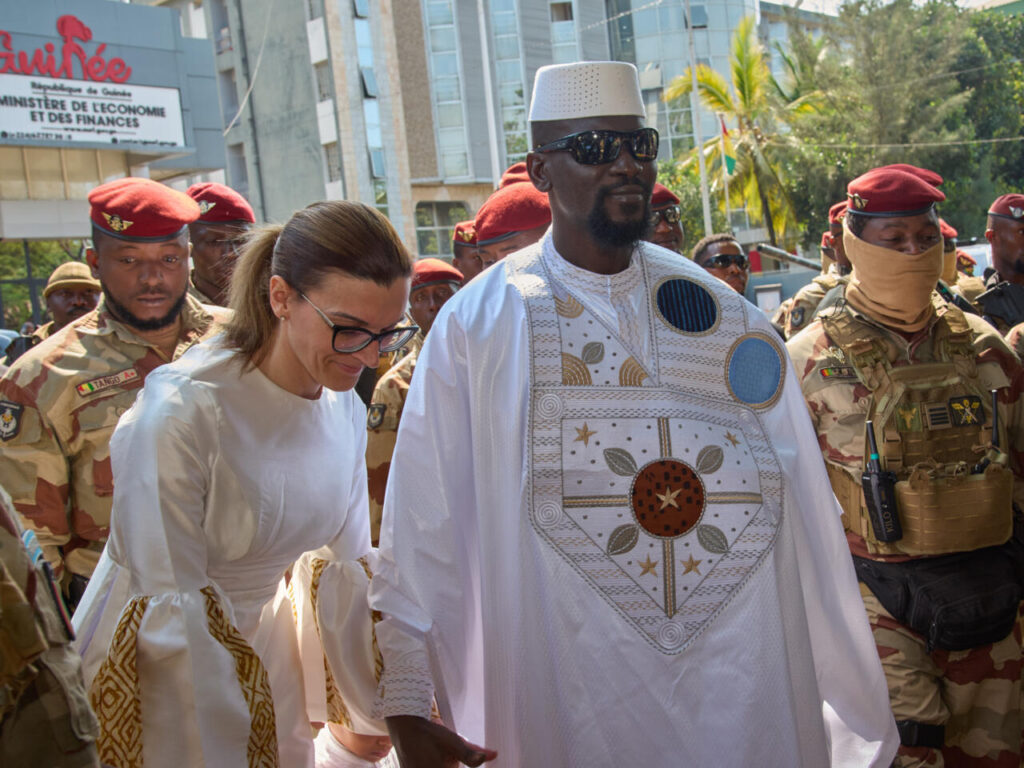
A single description used on France 24 has opened a new dispute between the international broadcaster and Guinea’s media regulator. The country’s Haute Autorité de la Communication, or HAC, formally put France 24 on notice on September 16 after an edition broadcast the previous day referred to President Mamadi Doumbouya as a “putschist president.”
The dispute is bigger than the word itself. Guinea’s regulator argues that the description fails to reflect Doumbouya’s current constitutional status after his election in December 2025 and inauguration in January 2026, while the controversy inevitably brings back the circumstances through which he first came to power in 2021.
The word that triggered the dispute.
According to the HAC’s decision, France 24 used the disputed description during its September 15 news coverage. The regulator said the wording was inappropriate and accused the broadcaster of failing to observe requirements of accuracy, impartiality and balance under Guinea’s media framework.
The HAC went further, saying the terminology disregarded what it considers the electoral legitimacy of the current president. It therefore ordered France 24 to stop using terms it considers inappropriate, degrading or damaging to the dignity of Guinea’s institutions.

The regulator also demanded editorial corrections across France 24’s digital platforms and warned that further measures could follow if the broadcaster fails to comply or repeats what the HAC considers the violation.
Why Doumbouya’s history makes the wording sensitive.
The controversy cannot be separated from how Doumbouya originally became Guinea’s leader.
In September 2021, Doumbouya led the military takeover that removed President Alpha Condé from power. He subsequently became head of Guinea’s transitional government before later contesting the country’s presidential election.
Guinea’s authorities now point to the December 2025 presidential election and Doumbouya’s subsequent inauguration as the reason they believe international media should describe him according to his current constitutional position. The HAC specifically cited the December 28, 2025 election and January 17, 2026 inauguration in its decision.
That creates the central tension in the dispute: the military takeover remains part of Doumbouya’s political history, but Guinea’s regulator argues that his subsequent election changed the institutional context in which he should now be described.
France 24 has not confirmed an apology.
Despite the headline circulating around the dispute, there is an important distinction between what Guinea has demanded and what has actually happened.
The HAC has demanded corrections and warned of possible sanctions, but available reporting as of September 17 does not show a confirmed France 24 apology. Africanews, citing AFP, reported that France 24 had not immediately responded to a request for comment.
That means the current development is a regulatory warning and demand for editorial correction, rather than a confirmed apology from the broadcaster.
Why the dispute matters beyond France 24.
The confrontation comes at a time when Guinea’s authorities are paying increasing attention to how international and domestic media portray the country’s political institutions.
The HAC’s decision invokes Guinea’s constitutional and legal framework governing media freedom and journalistic ethics. It argues that the wording used by France 24 crossed the line from legitimate reporting into what the regulator considers a breach of professional obligations.
For France 24, the dispute raises a different journalistic question: how should an international broadcaster describe a political leader whose route to power began with a military takeover but who later obtained an electoral mandate?
That distinction is at the heart of the controversy, and it explains why a single adjective has become a formal media-regulation issue.
Guinea is demanding more than a correction.
The HAC did not simply complain about the broadcast. Its September 16 decision formally ordered France 24 to cease using the disputed terminology and called for corrections across its digital platforms. It also reserved the possibility of sanctions if the broadcaster does not comply or if the issue is repeated.
That raises the stakes for what happens next.
If France 24 changes the wording or publishes a clarification, the immediate dispute could lose momentum. If it refuses, the confrontation could move into a broader dispute over the limits of Guinea’s media regulator and the editorial independence of an international broadcaster.
The bigger question is about how Guinea is described.
The France 24 controversy is ultimately about more than one television description. It exposes the continuing tension between Guinea’s official presentation of its post-transition political order and how international media describe the country’s recent history.
For Guinea’s authorities, the election of Mamadi Doumbouya is now central to his institutional legitimacy. For international observers and media organisations, the circumstances surrounding his rise to power remain an important part of the country’s political story.
The disagreement between the two positions is now playing out through a formal regulatory warning, with Guinea demanding editorial corrections and France 24 yet to publicly confirm an apology.

Comments (0)
No comments yet — be the first to share your thoughts.