

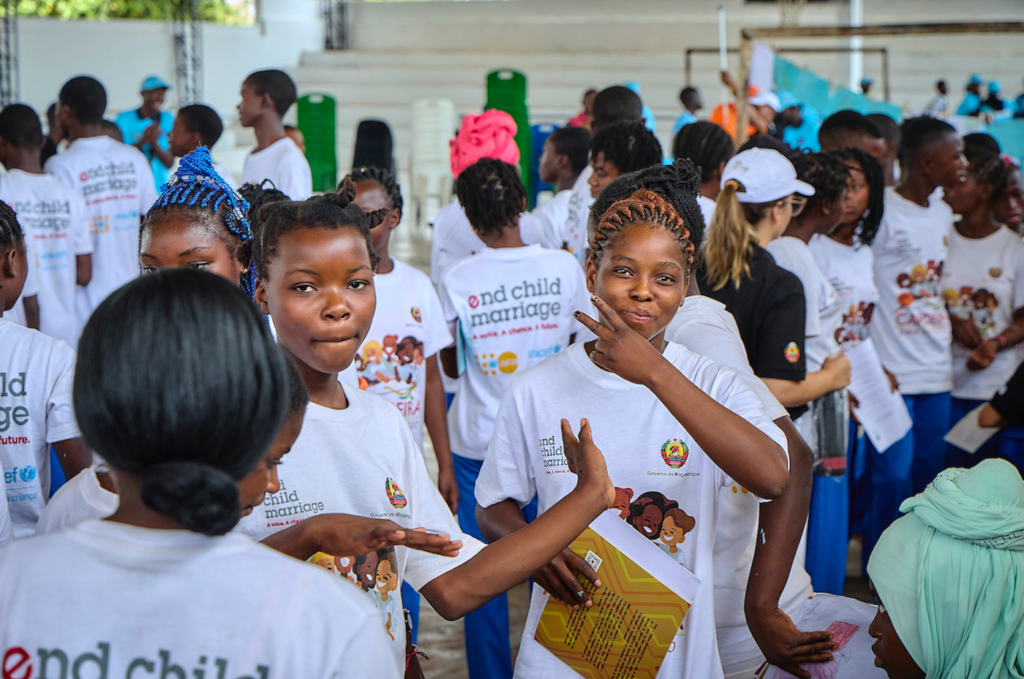
November 27 becomes a new global day of action.
The United Nations General Assembly has designated November 27 as the International Day for the Elimination of Child, Early and Forced Marriage, creating a permanent global platform for governments, civil society organisations and communities to intensify efforts against a practice that continues to affect millions of girls around the world.
The resolution was adopted by consensus on September 4, 2026, by the 193-member General Assembly. The initiative was led by Sierra Leone and supported by a group of African countries and other UN member states. The United Nations has now formally listed November 27 as an annual international observance beginning in 2026.
Sierra Leone puts Africa at the centre of the initiative.
Sierra Leone played a leading role in bringing the issue to the General Assembly, with First Lady Fatima Maada Bio among the prominent advocates for the initiative.
The campaign was also supported by Bhuwan Ribhu, founder of Just Rights for Children, who first called for the creation of a dedicated international day during the UN Commission on the Status of Women in March 2026.

The initiative subsequently gained support from governments and civil society organisations across Africa and beyond. Kenya, The Gambia, Ghana, Guinea, Liberia, Rwanda, Uganda and Zambia were among the African countries identified as co-sponsors.
For Sierra Leone, the resolution represents an opportunity to place an issue that disproportionately affects girls at the centre of international development and human rights discussions.
Child marriage remains a major global challenge.
The UN decision comes despite decades of efforts to reduce child marriage. Millions of girls continue to enter marriages or unions before reaching adulthood, often as a result of poverty, social pressure, insecurity, gender inequality and limited access to education.
The consequences can extend throughout a girl’s life. Early marriage can interrupt education, reduce economic opportunities and increase exposure to health and protection risks. It can also reinforce cycles of poverty by limiting the ability of girls to acquire the skills and qualifications needed to participate fully in the economy.
The practice is therefore increasingly being treated not simply as a cultural or family issue, but as a major barrier to children’s rights, gender equality, education and development.
Africa faces a particularly important test.
The new international day carries particular significance for Africa, where child marriage remains a serious concern in several countries.
The continent has made progress in strengthening laws and policies designed to protect children, but legislation alone has often proved insufficient. In communities where poverty, social expectations and limited educational opportunities remain entrenched, girls can still face pressure to marry at an early age despite legal protections.
This makes the implementation of national strategies particularly important. Governments will need to combine stronger enforcement with investments in education, social protection, economic opportunities for families and community-based programmes that challenge harmful practices.
The Gambia’s government, which co-sponsored the resolution, described the decision as an opportunity to strengthen international efforts to protect children and advance their health, education and wellbeing.
The education connection.
One of the strongest arguments for ending child marriage is its impact on education.
When girls marry young, they are significantly more likely to leave school, reducing their opportunities to develop professional skills and earn independent incomes later in life. Keeping girls in school can therefore become one of the most effective tools for delaying marriage and improving their long-term economic prospects.
The UN’s new observance is closely linked to Sustainable Development Goal 5.3, which calls for the elimination of harmful practices, including child, early and forced marriage, by 2030.
With the 2030 deadline approaching, the new international day gives governments an additional opportunity to measure progress and publicly account for whether their policies are producing meaningful results.
A day alone will not end child marriage.
Advocates behind the resolution have emphasised that the creation of an international day is only a starting point.
Fatima Maada Bio has described the decision as a global mandate for action, while campaigners have called on governments to strengthen laws, improve enforcement and ensure that girls have access to education and protection.
That distinction will be important. International days can generate awareness, but lasting change requires sustained investment and political commitment.
Governments must ensure that child protection systems function effectively, communities understand the legal consequences of forced marriage and vulnerable families have alternatives when poverty creates pressure to marry off children.
November 27 will test political commitment.
The first International Day for the Elimination of Child, Early and Forced Marriage will be observed on November 27, 2026.
Its significance will ultimately depend on what governments do beyond the speeches and campaigns surrounding the date. For African countries in particular, the observance provides an opportunity to assess whether laws are being enforced, whether girls are remaining in school and whether national programmes are actually reaching vulnerable communities.
The UN’s decision has given the fight against child marriage a new international platform. The next challenge is turning that platform into measurable progress.
With only a few years remaining before the 2030 Sustainable Development Goal deadline, the question is no longer whether the world recognises child marriage as a serious problem. It is whether governments and communities can translate that recognition into action capable of changing the lives of millions of girls.

Comments (0)
No comments yet — be the first to share your thoughts.