

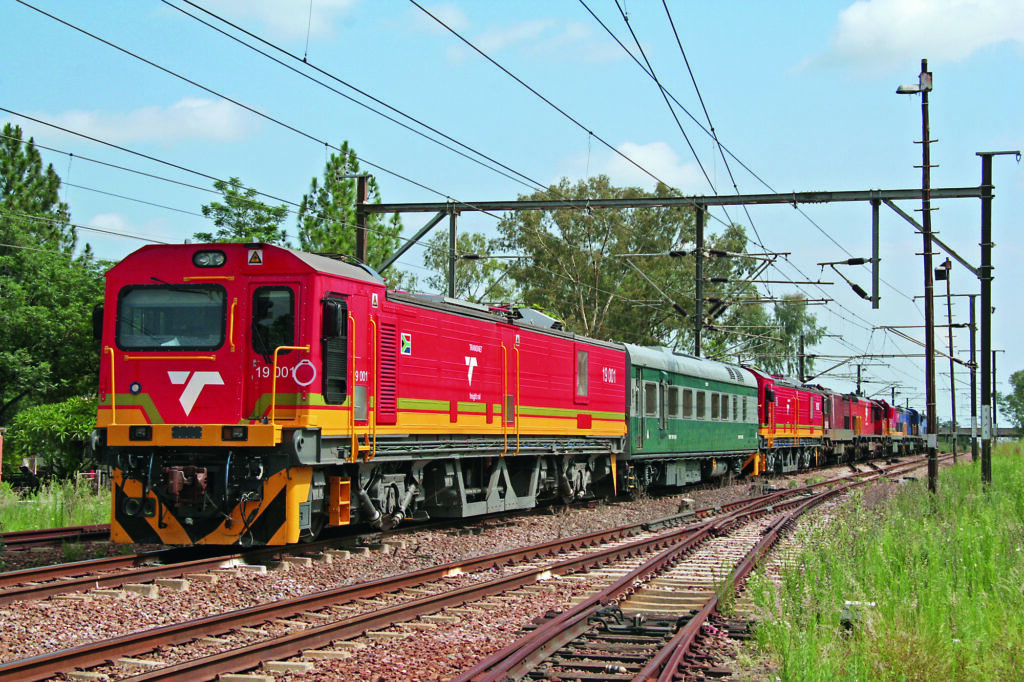
South Africa’s state-owned logistics company Transnet has returned to profit for the first time in four years, signalling an important turnaround for a company whose financial and operational problems have weighed heavily on Africa’s most industrialised economy.
Transnet reported a net profit of 4.6 billion rand, about $286 million, for the financial year ended March 2026, compared with a 1.9 billion-rand loss the previous year. Revenue also increased by 7.1% to 88.6 billion rand as freight volumes improved across its rail and pipeline operations.
A Major Turnaround for a Troubled State Company.
The profit represents a significant change for Transnet, which has spent years struggling with ageing infrastructure, equipment shortages, maintenance backlogs and declining freight volumes.
The company operates some of South Africa’s most important economic infrastructure, including the country’s freight rail network, ports and petroleum pipelines. Its performance therefore has consequences far beyond its own balance sheet, affecting mining companies, manufacturers, exporters, importers and the broader competitiveness of South African businesses.

The latest results suggest that efforts to stabilise the company are beginning to produce financial benefits, although Transnet remains under considerable pressure.
Durban Terminal Deal Provides a Major Boost.
A major factor behind the turnaround was Transnet’s 25-year concession agreement with Philippines-based International Container Terminal Services Inc. (ICTSI) for a stake in Durban’s busiest container terminal.
The transaction generated a 12.5 billion-rand profit for Transnet and provided a substantial boost to the company’s annual results. Without the concession transaction, however, Transnet would have recorded another annual loss, highlighting the difference between the company’s improved underlying performance and the exceptional contribution from the asset deal.
The partnership forms part of South Africa’s broader strategy of bringing private-sector expertise and capital into infrastructure that has traditionally been controlled entirely by the state.
For Transnet, the objective is to improve efficiency while attracting investment into facilities that require significant amounts of capital.
Rail Volumes Are Recovering, but the Target Remains Out of Reach.
Transnet’s freight rail division moved 167.9 million metric tonnes during the financial year, up from 160.1 million tonnes a year earlier.
That improvement is encouraging, particularly because South Africa’s mining and manufacturing industries depend heavily on rail to move commodities and goods to ports. However, the latest volume remains below Transnet’s target of 180 million tonnes.
Chief Executive Michelle Phillips has said reaching that level is important for the underlying business to return to break-even without relying on once-off gains from transactions such as the Durban terminal concession.
The company is therefore under pressure to turn the initial recovery in freight volumes into a sustained improvement.
Private Rail Operators Are Coming.
One of the biggest changes in South Africa’s logistics sector is the opening of Transnet’s rail network to private operators.
Eleven private operators have been granted access and are expected to begin operations from 2027. Transnet estimates that these operators could initially add around 24 million tonnes of freight capacity, with that figure potentially rising to 52 million tonnes.
The reforms are intended to increase competition, bring additional investment into the rail system and make it easier for mining and industrial companies to transport goods efficiently.
For South African businesses, the significance could be substantial. Efficient rail transportation can reduce dependence on expensive road freight, lower logistics costs and improve the competitiveness of exports.
Debt Remains Transnet’s Biggest Challenge.
Despite returning to profit, Transnet’s financial position remains fragile.
The company’s borrowings increased to approximately 150.7 billion rand, up from 144.8 billion rand a year earlier. Its debt burden remains one of the major constraints on the company’s ability to finance the infrastructure upgrades needed to sustain the recovery.
Transnet says its gearing ratio improved slightly to 49.4%, compared with 49.6% previously, helped by the return to profitability.
The numbers demonstrate that a single profitable year will not solve the company’s financial problems. Transnet will need stronger operating performance and higher freight volumes to generate sustainable cash flow.
R129 Billion Infrastructure Plan.
Transnet is planning to invest 129.1 billion rand over the next five years, with 115.9 billion rand earmarked for maintaining and rehabilitating existing infrastructure.
The scale of the planned investment illustrates how much work remains to be done. Years of underinvestment have left sections of the country’s logistics infrastructure in need of major rehabilitation.
The company says it has sufficient government guarantees to support the five-year investment programme, providing some financial backing as it attempts to modernise its network.
The challenge will be ensuring that the new investment translates into measurable improvements in freight capacity, turnaround times and reliability.
Why Transnet Matters to South Africa’s Economy.
Transnet’s recovery is important because logistics is one of the foundations of South Africa’s export economy.
Mining companies need reliable railways to transport coal, iron ore and other commodities to ports. Manufacturers need predictable logistics networks to receive raw materials and deliver finished products. Ports need efficient rail connections to move containers and bulk cargo between ships and inland markets.
When those systems fail, companies face higher costs, delays and lost international business. When they improve, the benefits can spread across the entire economy.
Transnet’s return to profit therefore represents more than an improvement in one state company’s financial statements.
The Real Test Starts Now.
The immediate financial turnaround is encouraging, but Transnet’s next challenge will be proving that the recovery can continue without depending on large asset transactions.
Higher freight volumes, private-sector participation, infrastructure rehabilitation and improved port performance will determine whether the company can establish a sustainable business model.
The planned 129.1 billion-rand investment programme gives Transnet an opportunity to rebuild some of the infrastructure that has held back South African trade for years.
If the reforms succeed, the impact could extend well beyond Transnet. A stronger rail and port network could reduce logistics costs, increase export capacity and help South African companies compete more effectively in African and global markets.
For now, Transnet has achieved an important milestone: after four years of losses, South Africa’s logistics giant is back in the black. The bigger question is whether this marks the beginning of a lasting recovery or simply a temporary improvement supported by a major asset transaction.

Comments (0)
No comments yet — be the first to share your thoughts.