
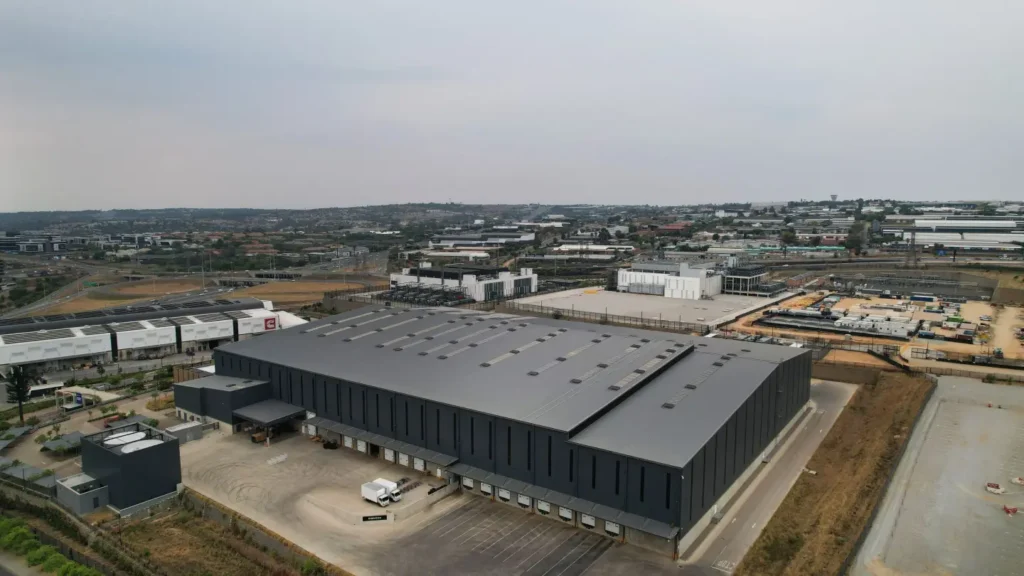
Civil society wants greater scrutiny as digital infrastructure expands.
South Africa’s rapid emergence as Africa’s leading data centre hub is creating a new social debate over how the country should balance digital investment with the needs of communities facing pressure on water, electricity and land.
Civil society organisations are calling for a temporary halt to the approval of new data centres until the government and regulators have a clearer understanding of how much water, electricity and land these facilities require, as well as their potential impact on surrounding communities. The South African Human Rights Commission has received more than 250 submissions following a call for public input into the expansion of the sector.
The debate comes at a time when South Africa is positioning itself as a major destination for digital infrastructure. Technology companies including Amazon, Microsoft and Equinix are expanding their presence in the country, while the government sees data centres as part of the country’s broader opportunity in the global digital economy.
Digital growth is meeting an old infrastructure problem.
The concern is not necessarily about data centres themselves. It is about whether their expansion is taking place within a system that can guarantee that economic benefits will not come at the expense of essential public resources.

South Africa has experienced years of electricity shortages, while water security remains a major concern in several parts of the country. Cape Town, in particular, became internationally known for its 2018 “Day Zero” crisis, when the city came close to running out of municipal water.
Against that background, the approval of another large facility in Cape Town has attracted attention. The proposed Equinix hyperscale data centre has been estimated to require about 160 megawatts of electricity, raising questions about how such projects should be assessed in areas where infrastructure remains under pressure.
The question is who benefits.
Data centres can bring investment, jobs, connectivity and infrastructure. They can also strengthen a country’s position in cloud computing, artificial intelligence and other parts of the digital economy.
But civil society organisations argue that communities should have access to much more information about these projects before they are approved.
The South African Human Rights Commission has highlighted questions surrounding electricity and water demand, land use, infrastructure requirements, environmental effects and the impact on surrounding communities. One concern is that operators are not always required to make binding public commitments about the resources their facilities will consume.
That creates an important question for African governments: when global technology companies invest in local infrastructure, how much should communities know about the resources being committed to those projects?
Industry says the concerns need perspective.
The data centre industry disputes some of the criticism.
Industry representatives argue that modern facilities are becoming more efficient and increasingly use renewable energy. They also say data centres in South Africa should not automatically be compared with the much larger facilities being built in the United States, where resource requirements can be significantly greater.
The Internet Service Providers Association has argued that growing data centre demand is not responsible for electricity shortages or rising tariffs in South Africa, while operators say new technologies are helping reduce water consumption.
This means the debate is not simply between technology companies and environmental activists. There is a legitimate economic argument for allowing digital infrastructure to expand, particularly as artificial intelligence and cloud services become increasingly important to African economies.
South Africa may need better rules, not fewer investments.
For policymakers, the challenge may therefore be less about stopping the data centre industry and more about creating rules that make its expansion transparent and sustainable.
Experts cited in recent reporting have argued that serious investors are unlikely to be discouraged by clear regulations. Instead, predictable rules can make it easier for governments, companies and communities to understand the costs and benefits of new developments.
That could include mandatory disclosure of projected water and electricity consumption, stronger environmental assessments, community consultation and clearer requirements for renewable energy and water-efficiency measures.
Such measures would not necessarily undermine investment. They could actually strengthen public confidence in the sector.
Africa’s digital future must also be a social future.
South Africa’s data centre debate is likely to become increasingly relevant across Africa.
As demand for artificial intelligence, cloud computing, streaming and digital services grows, more African countries will need large-scale digital infrastructure. Governments will compete for technology companies and the investment they bring.
But the continent cannot afford to treat digital infrastructure as separate from basic infrastructure.
The question should not simply be how many data centres Africa can attract. It should also be whether those facilities are being built in ways that protect water supplies, strengthen electricity systems, create meaningful local economic opportunities and respect the interests of surrounding communities.
South Africa has an opportunity to establish that balance before the data centre boom becomes too large to regulate effectively.
The future of Africa’s digital economy will require servers, fibre networks and cloud infrastructure. But it will also require public trust.
If communities believe that the digital economy is consuming their resources without delivering sufficient benefits, resistance will grow. If governments establish transparent rules and companies demonstrate measurable value to the societies in which they operate, digital investment can become part of Africa’s development story rather than another source of inequality.

Comments (0)
No comments yet — be the first to share your thoughts.