

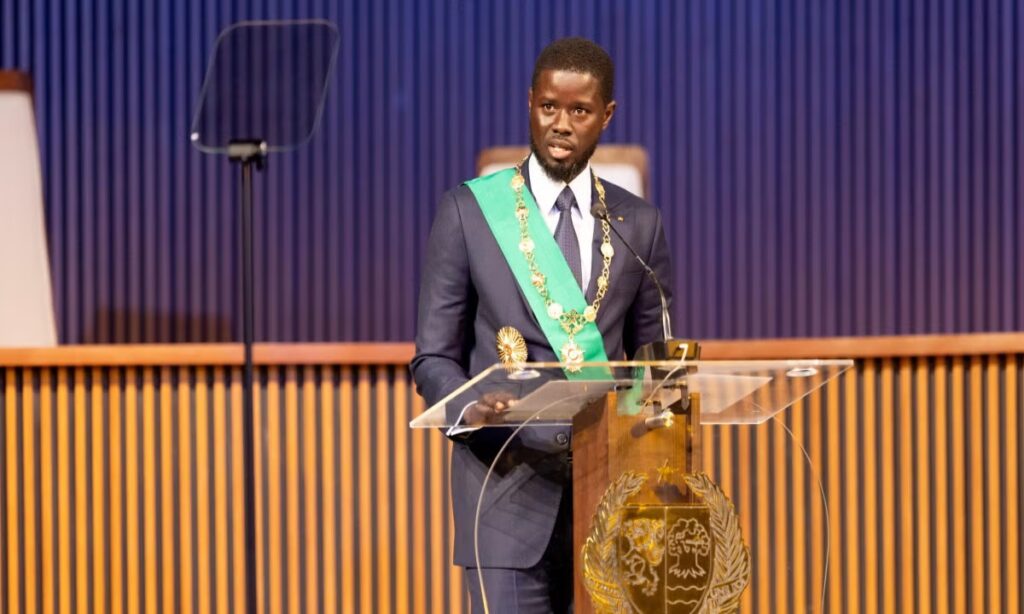
Senegal has taken another major step in its ambition to become one of West Africa’s leading technology centres after U.S. technology and cybersecurity company Cybastion announced plans to mobilise approximately $300 million for digital transformation projects in the country. The announcement came after Senegalese President Bassirou Diomaye Faye met Cybastion’s delegation in Washington on September 14 during his working visit to the United States. The proposed investment will target cybersecurity, data centres, technology transfer and the development of national digital capabilities.
The announcement gives fresh momentum to Senegal’s wider digital strategy, which seeks to build technological sovereignty while positioning Dakar as a regional hub for innovation, digital services and technology investment. For Faye, the objective is not simply to attract foreign technology companies but to ensure that Senegalese businesses, startups and young professionals become part of the value created by the digital economy.
A $300 Million Digitalisation Commitment.
According to Senegal’s presidency and the Senegalese Press Agency, Cybastion, led by CEO Thierry Wandji, announced the mobilisation of about $300 million, equivalent to more than 170 billion CFA francs, for several major digitalisation projects. The programme is expected to cover cybersecurity and the fight against cybercrime, data-centre development, technology transfer and the strengthening of national technical capacity.
The distinction between an announced commitment and completed investment is important. The money has been presented as a mobilisation for projects rather than as a single cheque already transferred to the Senegalese government. Nevertheless, the scale of the proposed programme makes it one of the more significant recent U.S.-linked technology commitments announced in Senegal.

The partnership also comes at a strategic moment for the country. As governments across Africa accelerate digitalisation, the ability to secure data, operate reliable data centres and develop domestic technological expertise is becoming increasingly important to economic competitiveness.
Senegal Wants Technology Sovereignty.
The investment fits directly into Faye’s political emphasis on economic and technological sovereignty. During the meeting, the president argued that Senegal should build partnerships in which international companies can benefit commercially while the country retains greater control over its development priorities.
Faye has made the development of domestic capacity a central part of his digital agenda. Rather than viewing technology simply as an imported service, his government wants Senegal to develop the skills, companies and infrastructure required to participate more deeply in the digital value chain.
That approach could become particularly important in cybersecurity. As more government services, financial transactions and private-sector operations move online, African countries are facing growing exposure to cybercrime, data theft and attacks on critical infrastructure.
A stronger domestic cybersecurity ecosystem could therefore serve both an economic and national-security purpose.
Senegalese Startups Will Be Part of the Programme.
One of the most important elements of the announcement is the planned involvement of Senegalese startups. The presidency says local technology companies will be selected to participate in implementing and developing several of the projects.
That could make the initiative more significant than a conventional foreign technology investment. If Senegalese startups gain access to technology, contracts, expertise and international networks, the programme could help create companies capable of serving markets beyond Senegal.
It could also provide a pathway for young Senegalese engineers and technology professionals to work on large-scale projects inside their own country rather than seeking opportunities abroad.
For a country with a young and increasingly connected population, that is potentially one of the most valuable outcomes of the partnership.
Data Centres Could Become the New Digital Infrastructure.
The focus on data centres is particularly significant. Africa’s digital economy is expanding rapidly, but the continent remains dependent on a relatively limited supply of high-quality digital infrastructure.
Data centres provide the physical foundation for cloud computing, artificial intelligence, financial technology, government digital services and large-scale business applications. Countries that develop reliable local capacity can potentially attract more technology companies because businesses want their data and digital operations to be supported by secure and resilient infrastructure.
For Senegal, building that capacity could strengthen Dakar’s position as a regional technology destination.
It could also support the government’s broader objective of increasing the number of digital public services available to citizens and businesses.
The $300 Million Fits Into a Bigger Digital Ambition.
The Cybastion announcement is not an isolated initiative. Senegal has already launched a much broader digital strategy under the Faye-Sonko administration.
The United States’ trade authorities say Senegal’s $1.8 billion Technological New Deal aims to digitise 90 percent of public services, provide internet access to 95 percent of the population and create 150,000 technology jobs and 500 startups by 2034. The strategy is built around digital sovereignty, public-sector digitalisation, technology-sector development and regional digital leadership.
The government has also previously promoted plans for a large digital city in Dakar, intended to attract international companies working in artificial intelligence, cybersecurity, fintech and cloud computing.
The latest Cybastion announcement therefore adds private-sector weight to a strategy that has already been presented as one of Senegal’s major long-term economic priorities.
Washington Is Becoming an Important Investment Channel.
The announcement also demonstrates how Faye is using his Washington visit to pursue private-sector investment alongside government-to-government relations.
After meeting Cybastion, the president held discussions with the U.S. Chamber of Commerce and the Corporate Council on Africa. The Senegalese government has presented these meetings as part of a broader effort to attract American investment into priority sectors and strengthen confidence in the Senegalese economy.
This is particularly important as Senegal attempts to restore investor confidence while managing significant fiscal and debt challenges. On September 15, the World Bank said its president Ajay Banga planned to meet Faye to discuss Senegal’s intention to pursue debt restructuring through the G20 Common Framework.
The government therefore needs investments that generate productive capacity rather than simply short-term financial inflows. Technology could be one of those areas.
Can Dakar Become West Africa’s Tech Hub?
The $300 million commitment strengthens Senegal’s case, but money alone will not make Dakar a technology hub. The country will need reliable electricity, fast internet, strong cybersecurity regulations, skilled workers, access to venture capital and an environment in which startups can grow beyond the domestic market.
It will also need to ensure that foreign partnerships create lasting local capacity rather than leaving Senegal dependent on imported technology.
That is why the participation of Senegalese startups could become one of the most important aspects of the Cybastion programme. If local companies are genuinely involved in implementation, technology transfer and service delivery, the investment could help create a deeper technology ecosystem rather than simply installing foreign infrastructure.
A New Test for Senegal’s Digital Strategy.
For Bassirou Diomaye Faye, the Cybastion announcement provides an opportunity to turn his vision of technological sovereignty into something tangible. The president has argued that Senegal possesses valuable resources and human capital and should use partnerships to unlock that potential rather than simply depend on external assistance.
If the proposed $300 million is successfully mobilised and deployed into cybersecurity, data centres, technology transfer, training and local startups, it could accelerate Senegal’s digital transformation and strengthen Dakar’s position in the regional technology race.
It could also create a model for other African countries seeking to attract international technology investment while building domestic expertise.
Senegal is therefore not simply chasing another foreign investment announcement. It is attempting to build the infrastructure and human capacity required to compete in Africa’s next economic frontier.
If Faye’s government can turn the Cybastion commitment into functioning infrastructure, stronger local companies and thousands of skilled jobs, the $300 million could become much more than an investment figure. It could become an important step in Senegal’s attempt to make Dakar one of West Africa’s leading digital capitals.

Comments (0)
No comments yet — be the first to share your thoughts.