
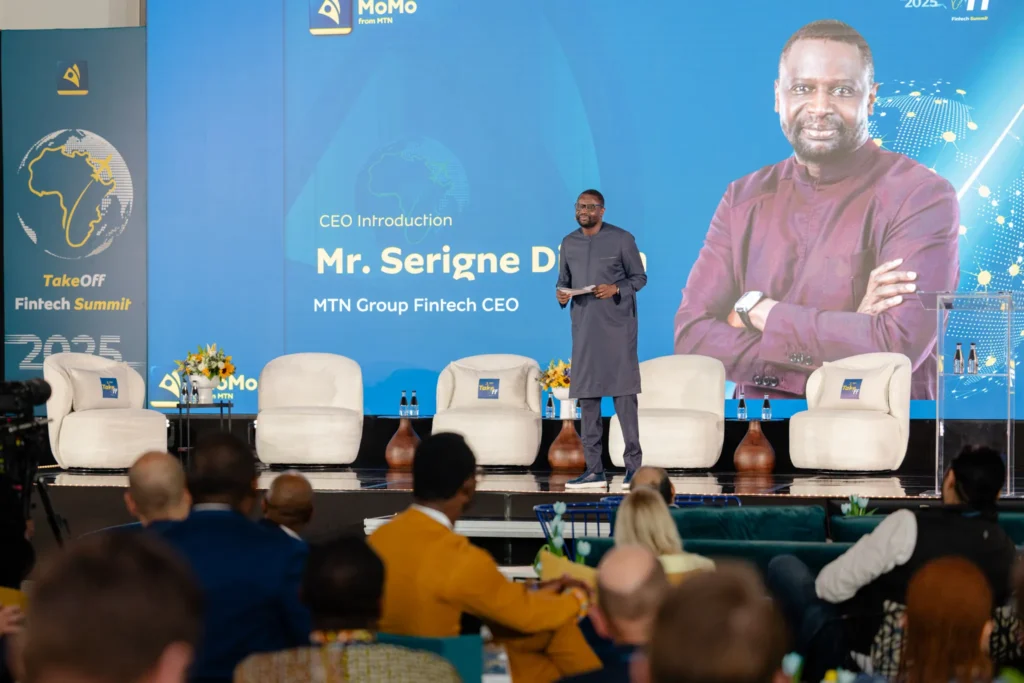
MTN Group Fintech is preparing to make artificial intelligence and big data a bigger part of its digital financial services strategy as Africa’s mobile money industry moves beyond basic payments and toward a broader digital financial ecosystem.
The company outlined the direction at the three-day MTN Group Fintech Summit 2026 in Johannesburg, held under the theme “Maximum Velocity, As One.” The summit brought together regulators from the 14 African markets where MTN Fintech operates, alongside payment companies, technology partners, fintech innovators and other industry stakeholders.
From mobile money to intelligent financial services.
MTN Fintech says its business is evolving from providing basic financial access into an integrated digital ecosystem. The company’s journey began with relatively simple transactions and expanded through open application programming interfaces that allow external partners to connect services to MTN’s platforms.
The next stage is expected to make greater use of artificial intelligence and big data to improve customer experiences and develop more sophisticated financial products. MTN Group Fintech CEO Serigne Dioum said the company believes its partners will be central to this transition as it expands its digital ecosystem across the continent.

The shift reflects a broader transformation in African fintech. Mobile money initially focused on enabling people without traditional bank accounts to send, receive and store money. Increasingly, however, digital platforms are expanding into savings, payments, investment products, credit and services for merchants and small businesses.
More than 60 million users create a large technology base.
MTN Group Fintech currently has more than 60 million active users across its 14 markets, giving the company a substantial customer base from which to develop new digital services.
That scale also creates an enormous amount of transaction and behavioural data. Used responsibly, such information can help financial platforms understand customer needs, identify patterns and improve the delivery of services.
Artificial intelligence could eventually help personalise financial products, improve fraud detection, strengthen customer support and assist businesses in making faster decisions. But the opportunity comes with significant responsibilities around privacy, cybersecurity and responsible use of financial data.
Cybersecurity becomes a bigger priority.
As more financial activity moves onto digital platforms, the risks surrounding those platforms are also increasing.
Participants at the MTN summit emphasised that cybersecurity, data protection and resilient digital infrastructure will be critical to maintaining consumer confidence. Financial platforms must remain operational even when networks experience disruptions, while customers need assurance that their money and personal information are protected.
This is particularly important in markets where mobile money has become an essential part of everyday economic activity. A major outage or security breach can affect households, merchants and businesses that increasingly depend on digital transactions.
For MTN and other fintech operators, technological expansion therefore has to happen alongside investment in security and reliability.
Regulation must keep pace with innovation.
The summit also highlighted the challenge facing African regulators as fintech develops faster than traditional regulatory systems.
MTN argues that African countries need frameworks capable of protecting consumers and maintaining financial stability without preventing technology companies from developing new products.
That balance is becoming increasingly important as digital finance expands into areas such as digital credit, open finance, cross-border payments, stablecoins and other emerging financial technologies.
The company brought regulators from its different markets together with private-sector stakeholders partly to encourage greater collaboration around these issues.
Africa’s fintech opportunity is becoming more sophisticated.
The significance of MTN’s strategy goes beyond the company itself. Africa has already demonstrated its ability to leapfrog traditional banking infrastructure through mobile money, creating one of the world’s most important examples of digital financial inclusion.
The next challenge is to turn that access into deeper economic participation.
Digital platforms could help small businesses accept payments, access financial services and participate in e-commerce. Consumers could gain access to tools that help them save, invest and manage their finances, while financial institutions could reach customers who have traditionally remained outside the formal banking system.
However, technology will only deliver those benefits if consumers trust the systems being developed around them.
Trust could determine the next phase.
MTN’s latest strategy reflects a growing reality across Africa: the next generation of fintech will not be defined simply by how many people can access mobile money.
The bigger question will be whether digital financial platforms can become secure, intelligent and interconnected ecosystems capable of supporting increasingly complex economic activity.
For MTN, artificial intelligence and big data are expected to play a central role in that transition. But the company acknowledges that technology alone will not determine the outcome. Collaboration between businesses, regulators and technology providers will be essential.
With more than 60 million active fintech users already on its platforms, MTN has the scale to become an important player in this next phase. Its challenge now is to turn that scale, data and technological infrastructure into financial services that are not only faster and more intelligent, but also secure, trusted and genuinely useful to Africa’s consumers and businesses.

Comments (0)
No comments yet — be the first to share your thoughts.