

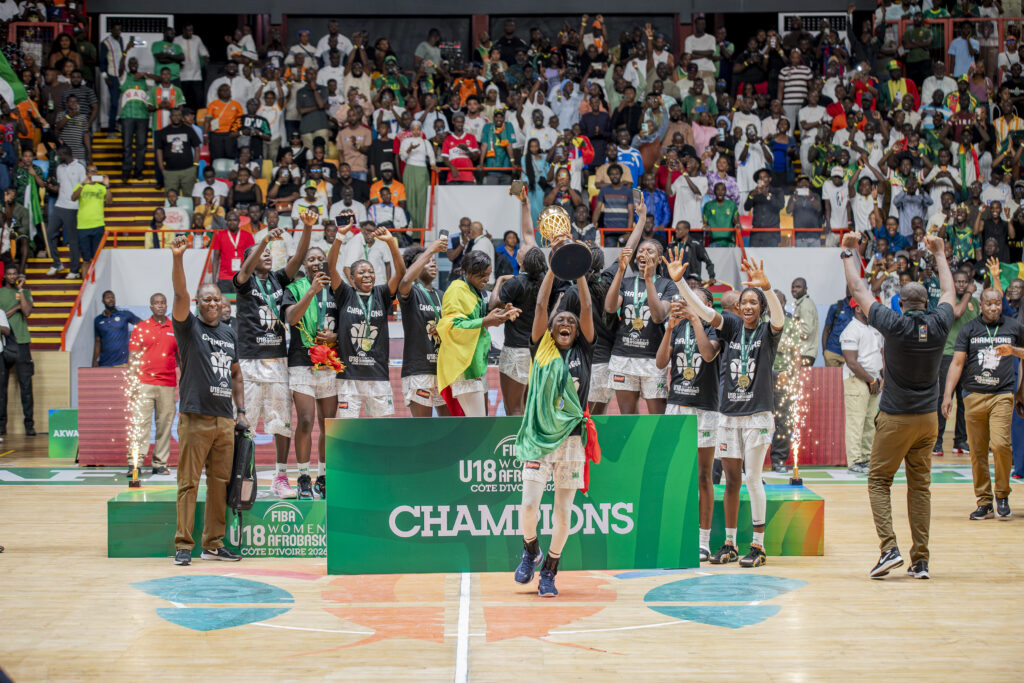
Mali Defeat Nigeria to Retain U18 Women’s AfroBasket Crown.
Mali have reaffirmed their extraordinary dominance of African women’s youth basketball after defeating Nigeria 77–68 in the final of the 2026 FIBA U18 Women’s AfroBasket in Abidjan, Côte d’Ivoire. The victory, played on 16 August, gave Mali their third consecutive continental title and their second three-peat in the history of the competition.
The achievement places Mali in a category of their own in the tournament’s history. The country previously won three consecutive titles in 2014, 2016 and 2018, and has now repeated that feat by winning the 2022, 2024 and 2026 editions. Mali have won five of the last six editions of the FIBA U18 Women’s AfroBasket, with Egypt interrupting their dominance by claiming the 2020 title on home soil.
Couda Keita Leads Mali to Another Championship.
Mali’s latest triumph was powered by Couda Keita, who produced a game-high 25 points in the final and emerged as one of the decisive players of the tournament. Her performance helped Mali withstand a stronger challenge from Nigeria than they faced in the previous final.
Nigeria pushed the defending champions throughout the contest, with Favour Anari producing 23 points and 10 rebounds. Maimouna Traoré also contributed 18 points for Mali as the champions maintained control when the game reached its decisive stages.

The result also represented another painful final for Nigeria, who have now finished runners-up three times in the competition without winning the U18 continental championship. Two years earlier, Mali defeated Nigeria 76–56 in the final, meaning the 2026 contest represented an opportunity for the Nigerians to close the gap on the continent’s dominant youth programme.
A Six-Game Unbeaten Campaign.
Mali completed the tournament without losing a single game, finishing with a perfect 6–0 record. Their consistency throughout the competition underlined why the country has become the benchmark for women’s youth basketball in Africa.
The success is also significant because of the pathway Mali have created between youth development and elite women’s basketball. The country’s repeated success at U18 level demonstrates the strength of its player-development system and its ability to produce successive generations capable of competing for continental honours.
For African basketball, that consistency matters. Dominance at youth level is not simply about collecting trophies; it provides a foundation for senior national teams and creates a pipeline of players who can eventually compete internationally at the highest level.
Nigeria Take Silver as Mali Set Another Benchmark.
Nigeria’s second-place finish was still significant, particularly because the Junior D’Tigress secured qualification for the 2027 FIBA U19 Women’s Basketball World Cup in China by reaching the final. Mali also qualified for the global tournament as the two African representatives.
The qualification gives both countries another opportunity to measure themselves against the world’s leading youth basketball programmes. For Nigeria, the challenge will be converting repeated appearances in the final into a first continental title at this level. For Mali, the objective will be extending their continental dominance onto the global stage.
Mali’s success also sends a strong message about the importance of sustained investment in youth basketball. Winning one tournament can be attributed to an exceptional generation of players; winning three consecutive editions twice suggests something much deeper within the development structure.
Mali’s Youth Programme Has Become Africa’s Benchmark.
The 2026 title reinforces Mali’s status as the dominant force in African U18 women’s basketball. Their two separate three-peats, combined with five championships in six editions, demonstrate an extraordinary level of consistency that few national programmes across the continent have been able to match.
The next challenge is ensuring that this youth dominance translates into sustained senior success and stronger performances on the global stage. Africa has produced outstanding individual women’s basketball talent, but the continent continues to search for greater consistency at international level.
For Mali, however, the foundation is clearly there. A generation of young players is growing up in a system accustomed to winning, competing under pressure and representing the country at major continental tournaments.
In Abidjan, that culture produced another championship.
Three consecutive titles. A second three-peat. Five championships in six editions. Mali’s dominance of African U18 women’s basketball shows no sign of ending.

Comments (0)
No comments yet — be the first to share your thoughts.