

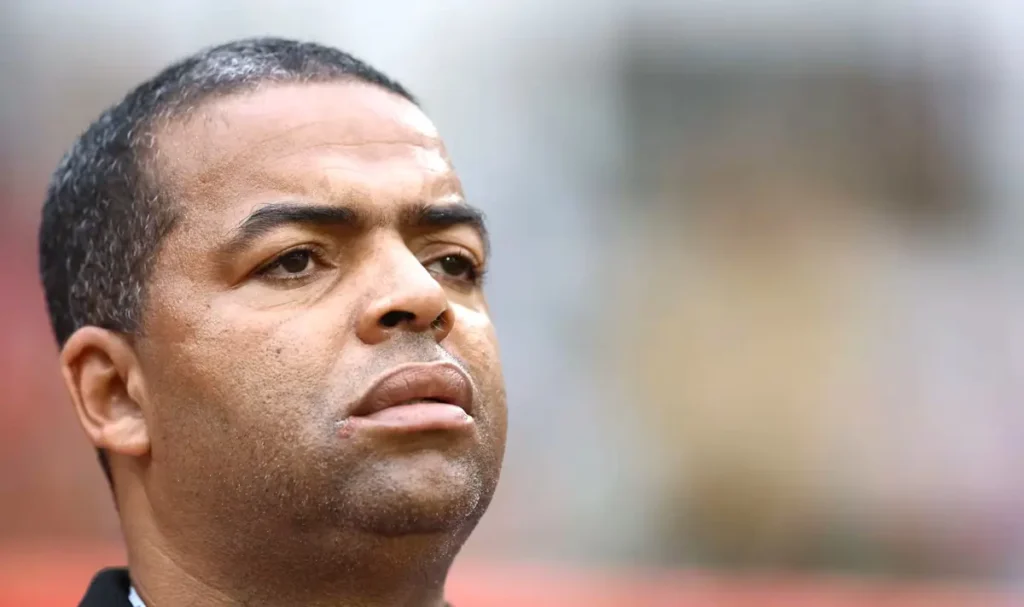
Blue Sharks Turn to Familiar Face Ahead of the Next International Challenge.
Cape Verde have appointed Humberto Bettencourt as the new head coach of the national team following the departure of Pedro “Bubista” Brito, bringing an era of continuity to the Blue Sharks after one of the most significant periods in the country’s football history. Bettencourt, who previously served as Bubista’s assistant for several years, has now been handed the responsibility of leading the team into its next chapter.
The appointment comes shortly after Bubista left his position to take charge of Moroccan club RS Berkane, ending a spell in which he helped transform Cape Verde into one of Africa’s increasingly competitive national teams. Rather than completely changing direction, the Cape Verdean Football Federation has opted to promote a member of the existing technical structure, suggesting that it wants to preserve the team’s tactical identity and the culture that has developed in recent years.
Bettencourt Knows the Team From the Inside.
Bettencourt is not arriving as an outsider unfamiliar with the squad. His previous role within the national-team technical staff means he already understands the players, the coaching structure and the methods that have helped Cape Verde make significant progress on the international stage.
That familiarity could be particularly valuable because international football provides very little preparation time. National-team coaches often have only a few days with their players before competitive matches, making continuity an important advantage. Bettencourt will therefore not have to spend his first months completely rebuilding relationships or introducing an entirely new tactical philosophy.

Instead, his immediate task will be to maintain the progress made under Bubista while establishing his own authority and ideas.
Bubista Leaves Behind a Significant Legacy.
Bubista’s departure represents the end of an important chapter for Cape Verde football. Under his leadership, the Blue Sharks developed a reputation for being difficult opponents and became increasingly comfortable competing against some of Africa’s strongest national teams.
His work also coincided with a historic period for Cape Verde, culminating in the country’s participation at the FIFA World Cup. For a nation with a relatively small population and limited resources compared with Africa’s traditional football powers, reaching the global stage represented an extraordinary achievement.
Bettencourt now inherits the responsibility of ensuring that the World Cup breakthrough does not become an isolated success.
Cape Verde’s World Cup Experience Raised Expectations.
Cape Verde’s recent World Cup campaign significantly changed expectations around the national team. The Blue Sharks demonstrated that they could compete against established international sides and showed considerable tactical discipline throughout the tournament.
Their performances also attracted greater international attention to Cape Verdean football and its players. For Bettencourt, that means the standard expected from the national team is now higher than it was before the World Cup.
Supporters will expect the team to remain competitive in Africa while continuing to build on its international experience. That creates pressure, but it also provides an opportunity.
Continuity Could Be Cape Verde’s Greatest Advantage.
The decision to appoint Bettencourt suggests that Cape Verde are prioritising stability rather than dramatic change.
That approach makes sense for a national team that has spent years developing a particular football identity. A completely new coach could have chosen to rebuild the squad, alter the tactical system and introduce a different approach, potentially disrupting the progress made under Bubista.
Bettencourt already knows the strengths and weaknesses of the players. He also understands the working relationship between the national team and the federation. The challenge will be ensuring that familiarity does not prevent evolution.
A New Coach Must Still Establish His Own Identity.
Although Bettencourt knows the environment, he cannot simply attempt to replicate Bubista.
Every coach eventually needs to establish his own authority. Players must understand that responsibilities and expectations may change under a new manager, even when the overall football philosophy remains similar.
Bettencourt will therefore have to balance two competing priorities: preserving what worked under Bubista while introducing improvements where necessary.
That could involve tactical adjustments, changes in player selection and greater opportunities for younger players. The transition will be closely watched because Cape Verde’s recent success has created a much higher level of expectation.
The Next Challenge Is Maintaining Momentum.
The new coach’s immediate priority will be competitive preparation and maintaining Cape Verde’s position among Africa’s strongest emerging national teams.
The Blue Sharks will need to manage the demands of international competition while continuing to develop the next generation of players capable of sustaining the national team’s progress.
That is particularly important for a country whose player pool is relatively small compared with football giants such as Nigeria, Cameroon, Egypt and Morocco.
Cape Verde’s strength has often come from its ability to combine domestic development with players from the diaspora and those competing in foreign leagues. Maintaining that recruitment network will remain important under Bettencourt.
The Diaspora Will Remain Important.
Cape Verde has long benefited from the connection between the national team and its diaspora. Many players eligible to represent the country have developed their careers in Europe and other football markets, providing the national team with access to experience and high-level competition.
Bettencourt’s knowledge of the existing squad should help him manage that balance, but he will also have to identify new talent as established players age or become unavailable.
The success of the national team will depend partly on how effectively Cape Verde continues to expand its talent pool.
A Difficult Act to Follow.
Taking over from a coach who has overseen one of the most successful periods in Cape Verdean football history is never going to be easy.
Bubista leaves behind a team that has gained international respect, while Bettencourt inherits players and supporters who now expect the Blue Sharks to compete at a higher level.
That creates an unusual situation. The new coach does not need to rescue a struggling team. He needs to prevent a successful team from losing momentum. That can sometimes be more difficult.
Bettencourt Has an Opportunity to Build Something Bigger.
The appointment could nevertheless represent an important moment for Cape Verde football.
If Bettencourt can preserve the team’s organisation, discipline and competitive mentality while introducing fresh ideas and developing younger players, he could establish himself as more than simply Bubista’s successor.
He could become the coach who takes Cape Verde from being a promising African side to a consistently established force. That process will require patience.
The Blue Sharks cannot be expected to replicate every achievement immediately, particularly given the resources available to larger football nations. But the foundation has already been built.
Cape Verde’s Football Project Enters a New Phase.
Bubista’s departure marks the end of one era, but the appointment of Bettencourt suggests that Cape Verde are not interested in starting from scratch.
The federation has chosen continuity, experience and familiarity at a time when the national team needs to consolidate the progress made over recent years. Bettencourt now has the opportunity to demonstrate that the system developed under Bubista can continue producing results under new leadership.
The biggest challenge for Humberto Bettencourt will not simply be winning matches. It will be preserving the identity that transformed Cape Verde into a respected force while giving the Blue Sharks a new direction of their own. Bubista may have left, but the project he helped build is still alive, and Bettencourt now has the responsibility of deciding how far it can go.

Comments (0)
No comments yet — be the first to share your thoughts.