
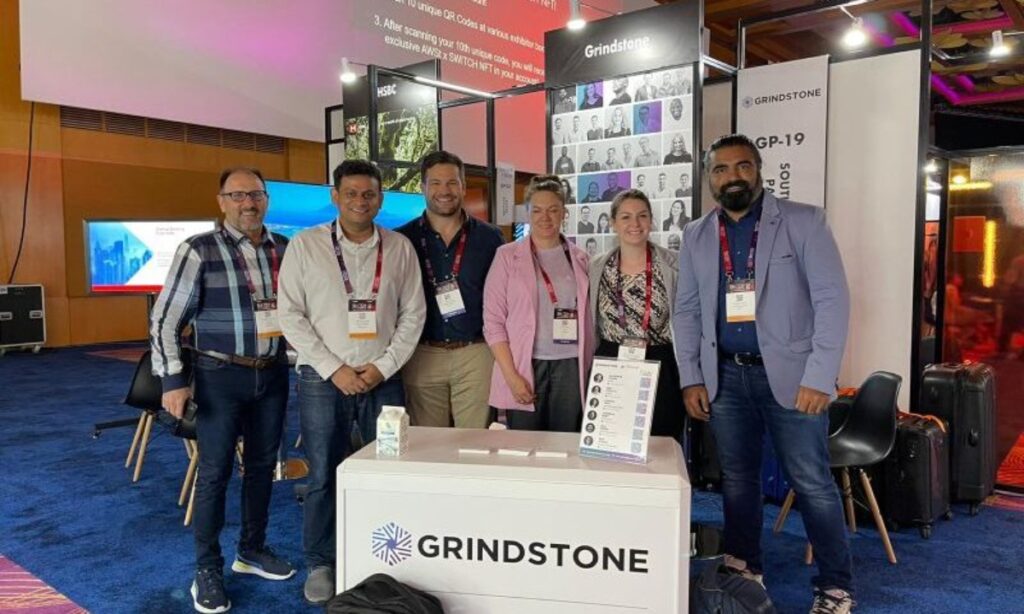
African technology companies are getting a new source of growth capital after Cape Town-based venture capital firm Grindstone Ventures launched a R500 million, approximately $31.2 million, fund focused on high-growth technology businesses across the continent.
The new fund is targeting a part of Africa’s startup market that has increasingly become difficult to finance: companies that have moved beyond the earliest stages of development but still need significant capital to scale, expand into new markets and attract larger institutional investors. Grindstone says it wants to address the funding gap between early commercial validation and the level of scale required for major institutional investment.
The New Fund Targets Companies Ready to Scale.
Grindstone Ventures is targeting high-growth, technology-enabled African businesses that have already demonstrated commercial potential. Instead of concentrating exclusively on startups at the idea or early seed stage, the fund is designed to support businesses that have moved closer to sustainable growth and are preparing for their next major expansion phase.
The strategy reflects a changing African startup investment environment. Investors have become increasingly selective as funding conditions have tightened, meaning entrepreneurs are now being pushed to demonstrate stronger revenues, clearer business models and a realistic pathway to profitability before securing significant institutional capital.

Grindstone’s new fund is positioned around that transition, providing capital to businesses that have survived the early startup phase but may still struggle to attract larger investors.
Grindstone Builds on Its Accelerator Experience.
The new venture fund follows Grindstone’s experience operating an accelerator programme for African technology businesses.
The accelerator was established in partnership with Knife Capital and Thinkroom, which co-own the Grindstone accelerator programme. Grindstone Ventures Fund I previously invested in seven portfolio companies and helped those businesses attract additional seed investment from South African funders.
The firm’s latest fund therefore represents an attempt to move beyond accelerator support and provide larger amounts of capital to companies entering a more demanding stage of growth.
That could be particularly important for African startups because the biggest financing challenge is increasingly not the ability to launch a company, but the ability to scale it across multiple markets.
Africa’s Startup Funding Market Is Changing.
The launch comes during a period of major change in African venture capital.
African startups continue to attract billions of dollars in investment, but the distribution of that capital is uneven. Fintech has historically captured a significant share of funding, while businesses in sectors such as artificial intelligence, enterprise software, climate technology, health technology and industrial technology have increasingly attracted investor attention.
At the same time, investors are placing greater emphasis on companies that can demonstrate real commercial traction.
That environment creates a gap for businesses that have proven that customers are willing to pay for their products but require additional financing to expand. Grindstone is effectively positioning its new fund in that middle ground.
Exit Potential Is Central to the Strategy.
One of the distinctive features of the new fund is its emphasis on eventual exits and investor returns.
The fund’s launch comes with an explicit focus on the problem of companies accumulating high valuations without providing investors with a clear route to realise those investments. Grindstone argues that strong valuations alone do not guarantee that investors will eventually recover their capital.
That approach reflects a broader challenge across Africa’s technology ecosystem. Startup founders need capital to grow, but investors also need functioning exit markets through acquisitions, secondary transactions or public listings to convert paper valuations into actual returns.
By placing greater emphasis on exit potential, Grindstone is betting on businesses that can eventually attract strategic buyers or larger institutional investors.
South Africa Remains a Major Technology Investment Hub.
Cape Town’s position as the home of the new fund also highlights South Africa’s continuing role in Africa’s technology and venture capital ecosystem.
The country has one of the continent’s more developed startup markets, with established technology companies, venture capital firms, accelerators and financial institutions providing an ecosystem for entrepreneurs.
But Grindstone’s ambitions extend beyond South Africa. The fund is intended for African technology businesses, creating the possibility of investment in companies operating across different markets and sectors.
That regional approach could become increasingly important as African startups attempt to build businesses that serve multiple countries rather than remaining dependent on a single domestic market.
The Bigger Business Opportunity.
For Africa’s technology sector, the significance of the R500 million fund goes beyond the amount of money being raised.
The continent needs more companies capable of progressing from promising startups into large regional and international businesses. That requires financing at every stage of the growth cycle, from early innovation through commercialisation and eventually expansion.
The biggest challenge is therefore not simply attracting more startup funding. It is building a deeper capital market capable of supporting companies as they become larger, more complex and more valuable.
Grindstone’s new fund is aimed directly at that challenge.
Its success will ultimately be measured by whether the businesses it backs can create substantial revenues, enter new African markets, attract follow-on investment and generate successful exits for investors.
If it achieves those goals, the $31.2 million Grindstone Ventures fund could help demonstrate that Africa’s technology sector is capable of producing companies that do more than raise successive funding rounds. It could help build a new generation of African technology businesses capable of scaling, creating jobs and competing internationally.

Comments (0)
No comments yet — be the first to share your thoughts.