

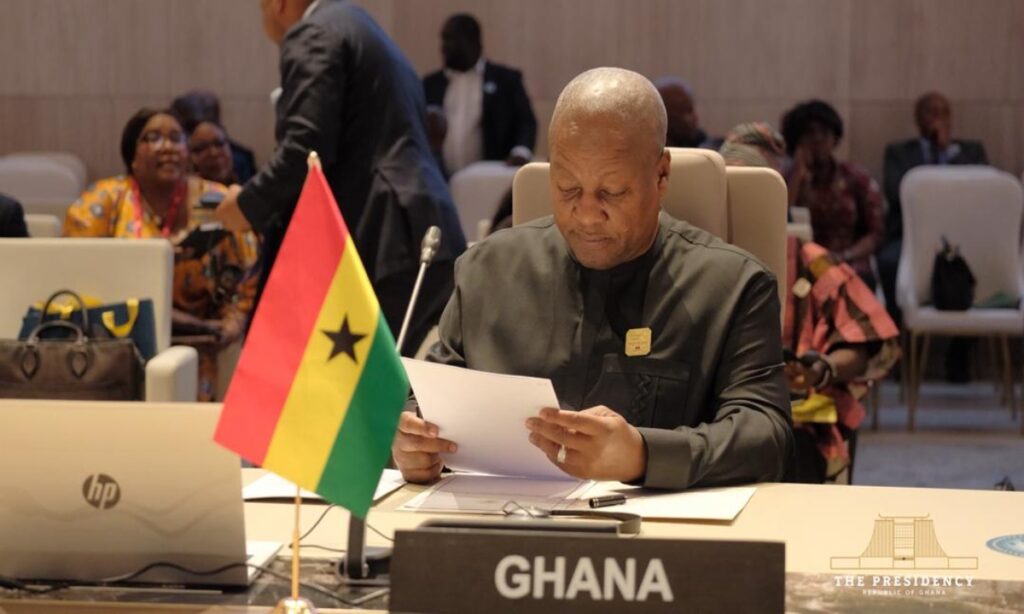
Mahama Pushes Africa’s Reparations Agenda Onto the Global Stage.
Ghana will host a high-level side event during the 81st United Nations General Assembly in September 2026 as part of efforts to advance the global campaign for reparatory justice for Africa and people of African descent. President John Dramani Mahama announced the initiative while addressing the African Union Extraordinary Summit in Luanda on August 30.
The planned event will provide an opportunity for Ghana’s newly established expert bodies on reparatory justice and cultural heritage restitution to present updates on their work. Mahama said the meeting would help translate the growing international discussion around reparations into concrete measures and a more coordinated global framework.
Ghana Takes the Lead.
Ghana has positioned itself at the centre of Africa’s reparations campaign after Mahama was designated the African Union Champion for Reparations. In June, Ghana hosted a Next Steps Conference in Accra that brought together African and international stakeholders to discuss how the continent could move beyond recognition of historical injustice towards practical action.
The conference established a high-level advisory council on reparatory justice, a global expert panel on the restitution of cultural heritage and a legal panel focused on developing the framework for reparatory justice.

UN Resolution Adds Momentum.
The initiative comes months after the United Nations General Assembly adopted a landmark resolution on March 25 recognising the trafficking of enslaved Africans and racialised chattel enslavement as the gravest crime against humanity. The resolution was adopted with 123 votes in favour and called for dialogue on reparatory justice and the restitution of cultural property.
The issue gained further momentum on August 31 when a UN committee said countries have obligations under the International Convention on the Elimination of All Forms of Racial Discrimination to consider reparations and address the continuing consequences of slavery and racial discrimination.
From Recognition to Action.
Mahama has argued that international recognition of slavery and the transatlantic slave trade must now be followed by practical measures. Ghana wants the reparations debate to address not only financial compensation but also cultural restitution, historical archives, institutional reforms and the continuing structural inequalities linked to the legacy of slavery.
The September UN event will therefore be closely watched as Ghana attempts to maintain international momentum around an issue that has increasingly moved from the margins of global diplomacy into mainstream discussions on justice and development.
For Ghana, the next stage is no longer simply about remembering Africa’s past. It is about establishing what meaningful reparatory justice should look like in the present. By taking the debate to the UN General Assembly, Accra is seeking to turn Africa’s demand for historical justice into a sustained international agenda.

Comments (0)
No comments yet — be the first to share your thoughts.