

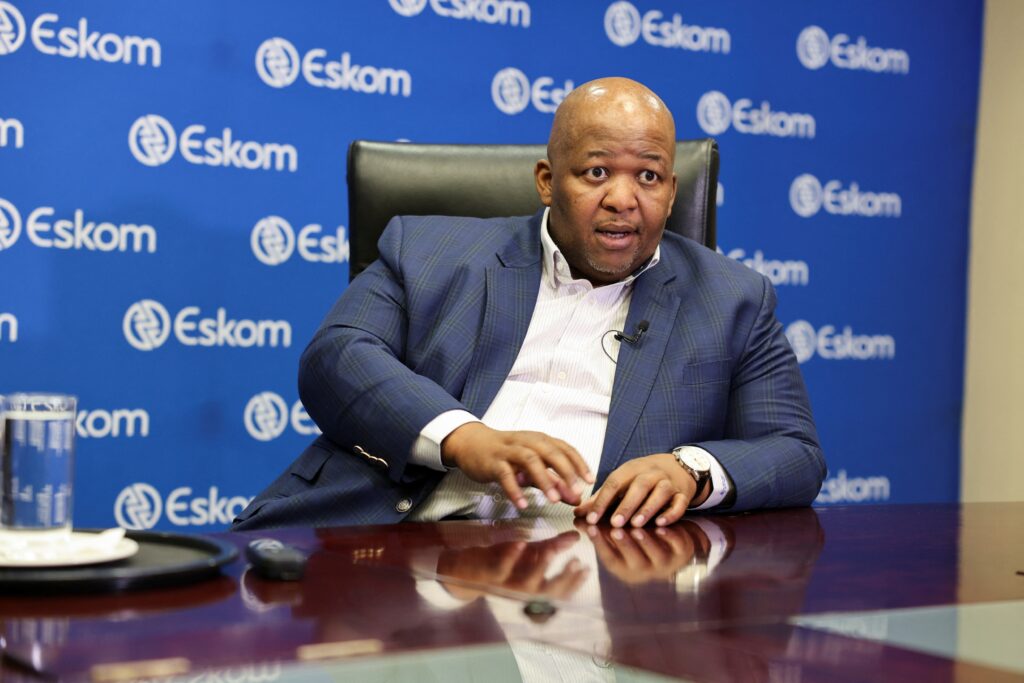
State Utility Records Second Consecutive Year of Profitability.
South Africa’s state-owned electricity utility Eskom has reported its second consecutive annual profit, marking a significant turnaround for a company that spent almost a decade recording losses. For the financial year ended March 2026, Eskom recorded R30.3 billion in profit after tax, more than double the restated R14 billion recorded the previous year.
The results were announced on Monday, August 31, as Eskom highlighted improvements in power-station performance, tighter cost controls and reduced dependence on expensive emergency diesel generation. The utility said its EBITDA margin increased to 30.63%, compared with 28.75% in the previous financial year.
Load Shedding Falls Dramatically.
The financial recovery has coincided with a major improvement in electricity availability. Eskom reported that South Africa experienced power cuts on only four days during the 2026 financial year, compared with 13 days the previous year and a record 329 days in 2024.
The improvement represents a major change for South Africa, where prolonged load shedding has been one of the country’s biggest economic and political challenges. Better generation performance has allowed Eskom to reduce its use of open-cycle gas turbines and cut diesel expenditure by about R10.6 billion.

Higher Tariffs Helped Drive the Recovery.
Eskom’s stronger financial position was not solely the result of selling more electricity. In fact, electricity sales volumes fell by 6.2% to 178 terawatt-hours, reflecting weaker industrial demand, increased private generation and energy-efficiency measures.
Revenue nevertheless increased by 4.1%, helped significantly by a 12.74% average electricity tariff increase approved for the financial year. Eskom says improved operational efficiency and lower energy costs also contributed to the turnaround.
Municipal Debt Remains a Major Threat.
Despite the encouraging results, Eskom’s financial recovery remains fragile. Municipalities owed the utility R111.6 billion in arrears at the end of the financial year, an increase of 17.9%. The debt had risen to approximately R119 billion by June 2026.
The utility has warned that municipal debt could become an increasingly serious threat to its ability to maintain profitability and invest in infrastructure. Eskom estimates that unpaid municipal bills could reach as much as R358 billion by 2031 without decisive intervention.
Eskom Plans Major Investment.
With the company now back in profit, Eskom says it plans to reinvest earnings into maintaining its generation fleet, expanding the national grid and supporting renewable-energy initiatives. Its capital expenditure programme is expected to increase from approximately R45 billion in FY2026 to more than R70 billion annually by FY2029.
The company is also preparing for the next stage of its transformation as South Africa attempts to build a more reliable and diversified electricity system.
At the same time, Eskom announced that Group Chief Financial Officer Calib Cassim will retire during the 2027 financial year after 24 years with the company. A successor is expected to be appointed before the end of 2026.
Eskom’s latest results offer South Africa a rare piece of good economic news: the country’s troubled power utility is profitable again, while load shedding has fallen dramatically. But the turnaround is not yet secure. Falling electricity demand, rising municipal debt and the need for massive infrastructure investment mean Eskom still has a long way to go before its financial recovery can be considered permanent.

Comments (0)
No comments yet — be the first to share your thoughts.