

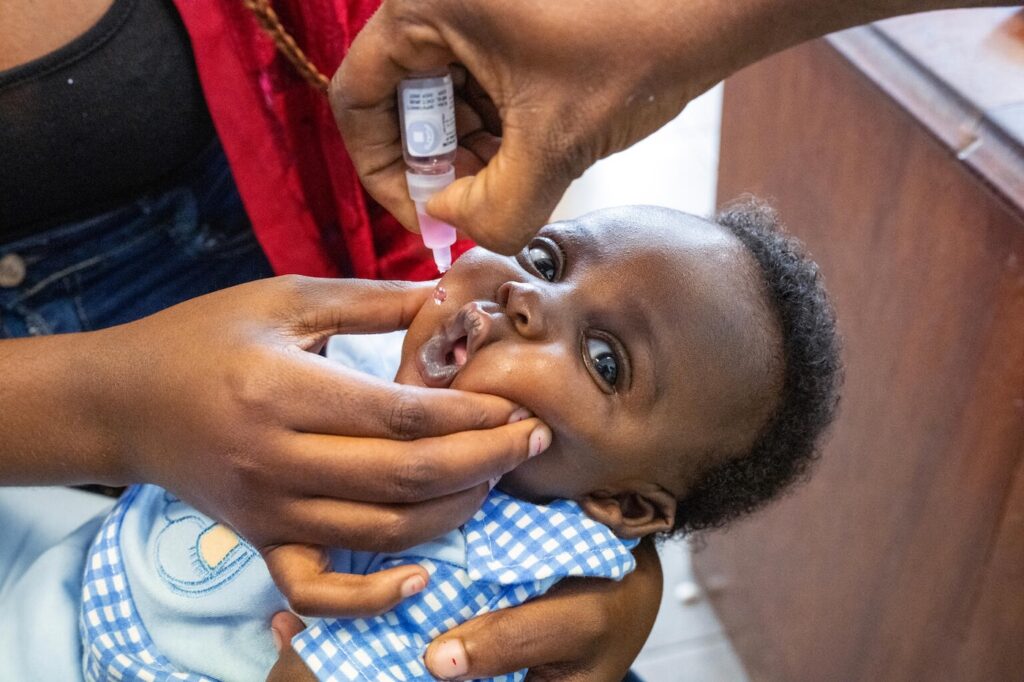
Childhood immunisation rates have continued to improve globally, offering hope in the fight against preventable diseases. However, health experts warn that millions of children across Africa are still missing out on life-saving vaccines, leaving them vulnerable to outbreaks of diseases such as measles, polio, and diphtheria.
The latest estimates released by the World Health Organization (WHO) and UNICEF show that global vaccination coverage recorded modest progress in 2025. Around 90 percent of infants received at least one dose of the diphtheria, tetanus, and pertussis (DTP) vaccine, while 85 percent completed the recommended three-dose series. Despite these gains, approximately 13.5 million children received no routine vaccinations at all during their first year of life.
Africa Still Carries a Heavy Burden
Sub-Saharan Africa continues to account for a significant share of the world’s unvaccinated children. Many live in countries affected by armed conflict, political instability, weak healthcare systems, and humanitarian crises.
Health officials say reaching children in remote communities remains a major challenge, while conflict and displacement have disrupted routine immunisation services in several parts of the continent. In some areas, health workers are unable to safely access communities, delaying vaccination campaigns and increasing the risk of disease outbreaks.

Progress Worth Celebrating
Despite the challenges, the report highlights encouraging progress in several African countries that have expanded vaccination programmes through stronger partnerships with governments, international organisations, and community health workers.
Increased investment in healthcare infrastructure, improved vaccine distribution systems, and public awareness campaigns have helped more children receive routine immunisations than in previous years. Health experts say these improvements demonstrate that sustained investment can deliver measurable results even in difficult environments.
Measles and Polio Remain Major Threats
The report warns that vaccination coverage for measles remains below the level required to prevent outbreaks. Experts say at least 95 percent of children need to be vaccinated to achieve herd immunity, yet global coverage remains well below that threshold.
Several African countries have also continued to battle outbreaks of vaccine-preventable diseases, including measles and circulating vaccine-derived polio. Public health specialists caution that even small declines in immunisation coverage can quickly lead to the return of diseases that had previously been brought under control.
Funding and Conflict Pose New Challenges
WHO and UNICEF have expressed concern that funding constraints and ongoing humanitarian emergencies could slow future progress.
Conflicts in parts of Africa and other regions continue to interrupt vaccination campaigns, while financial pressures facing health systems threaten routine immunisation programmes. Health officials say protecting recent gains will require continued investment from governments and international partners.
The agencies also stressed the importance of combating vaccine misinformation, which remains a barrier to immunisation in some communities. Building public trust and ensuring accurate health information reaches families will be essential to improving vaccine uptake.
A Call to Protect Every Child
WHO and UNICEF are urging governments, donors, and health organisations to intensify efforts to reach children who have never received a single vaccine. They say no child should be left behind because of where they live, conflict, poverty, or limited access to healthcare.
For Africa, expanding immunisation coverage remains one of the most effective ways to reduce child mortality, strengthen public health systems, and protect future generations from preventable diseases.
While the latest figures show that the world is moving in the right direction, health experts warn that much more work is needed to ensure every African child has access to the vaccines that can save lives and prevent future outbreaks.

Comments (0)
No comments yet — be the first to share your thoughts.