

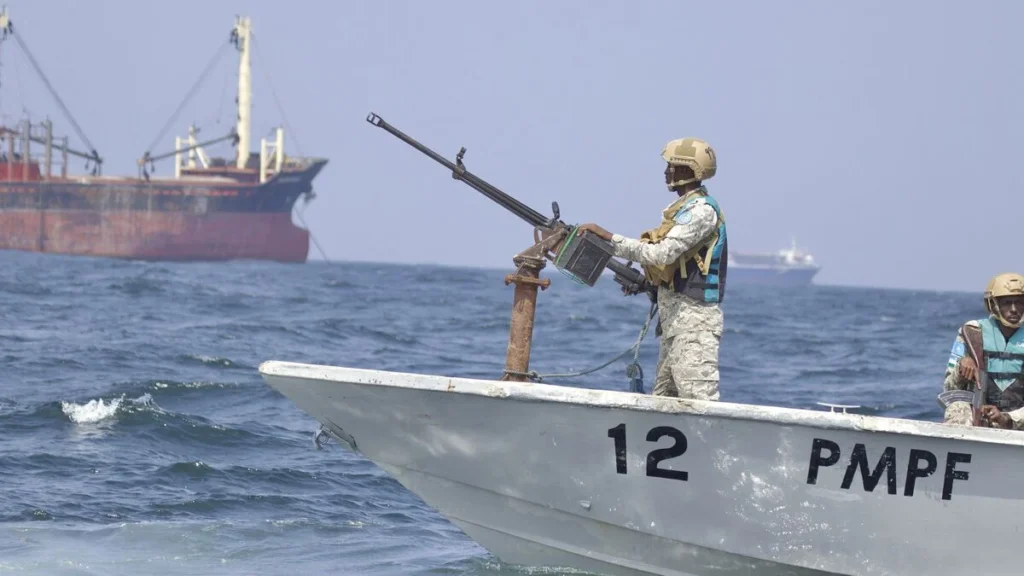
Lutuf Seized by Armed Men Off Somali Coast.
A Cameroon-flagged general cargo vessel has been hijacked off the coast of Somalia, raising fresh concerns over the return of piracy in the western Indian Ocean. The vessel, Lutuf, was boarded by eight armed men on Monday, 17 August 2026, approximately four nautical miles south of Mareeyo in Somali territorial waters. The incident was reported by the United Kingdom Maritime Trade Operations centre and subsequently classified as a hijacking. Multiple maritime security and shipping sources have independently identified the vessel as the Cameroon-flagged Lutuf.
The attack occurred at approximately 11:36 UTC, when the armed men boarded the vessel and took control. The Lutuf is a general cargo ship built in 1995, with a deadweight capacity of approximately 1,401 tonnes. Its declared destination was Dar es Salaam, Tanzania. The latest maritime reports indicate that authorities are monitoring the situation, while the exact condition and whereabouts of the crew have not been consistently confirmed in all reports.
A Cameroon Connection to a Renewed Piracy Crisis.
Although the attack occurred in Somali waters, the Cameroon flag on the vessel gives the incident a direct connection to Central Africa. The seizure also highlights the international nature of modern commercial shipping, where vessels may be owned, operated, crewed and flagged in different countries while travelling between ports across continents.
For Cameroon, the incident is particularly noteworthy because it places a Cameroon-registered vessel at the centre of a renewed maritime-security crisis. The attack also demonstrates that the consequences of insecurity around the Horn of Africa extend well beyond Somalia’s immediate coastline, potentially affecting international shipping networks, insurance costs, freight movements and African trade routes.

Somali Piracy Shows Signs of Returning.
The Lutuf hijacking is the latest in a series of incidents that have raised concerns about a resurgence of Somali piracy after years in which international naval patrols and improved security measures had significantly reduced attacks.
Maritime security assessments indicate that pirate groups have already seized several commercial vessels in 2026. As of 16 August, four other merchant ships were reportedly still being held by Somali pirates, involving dozens of seafarers. The latest seizure of Lutuf has therefore added another vessel to an increasingly worrying pattern.
The renewed activity is particularly concerning because it comes despite conditions that are generally considered less favourable for small pirate boats during the southwest monsoon. Maritime security authorities have nevertheless warned that opportunistic attacks remain possible, particularly in waters close to the Somali coast.
Crew Safety Remains the Immediate Concern.
The most urgent question following the hijacking is the safety of those aboard the Lutuf. Initial reports from maritime authorities said the status of the crew remained unconfirmed. Later reports have provided differing information, with some sources indicating that the crew may be safe, but there has not yet been sufficiently consistent official confirmation to treat that claim as definitive.
The European Union’s Operation Atalanta, which operates in the region as part of international efforts to combat piracy and protect maritime security, is monitoring the incident. Authorities are also attempting to establish the identity of the attackers and their objectives. No group had publicly claimed responsibility in the latest reports.
Why the Attack Matters Beyond Somalia.
The return of piracy has implications for one of the world’s most strategically important maritime regions. The waters surrounding the Horn of Africa connect major shipping routes between Asia, the Middle East, Africa and Europe. Any sustained increase in attacks can force shipping companies to reassess routes, security arrangements and insurance exposure.
The situation is further complicated by wider instability around the Red Sea and Gulf of Aden, where commercial shipping has already faced significant security risks. The combination of piracy off Somalia and attacks elsewhere in the region creates a difficult operating environment for international shipping companies.
For African economies, the consequences could also become more significant if piracy continues to increase. Higher maritime insurance premiums and shipping costs can ultimately feed into the price of imported goods, while disruptions to commercial routes can affect exporters and businesses dependent on reliable international logistics.
Regional Response Faces a New Test.
The latest attacks are already prompting renewed discussion about regional maritime cooperation. Countries participating in the Djibouti Code of Conduct and its Jeddah Amendment have endorsed the creation of a Combined Task Force intended to improve coordination among regional states and existing international maritime missions.
The challenge will be ensuring that the renewed security response is sufficiently coordinated to prevent piracy from developing into the sustained threat seen more than a decade ago. International naval deployments helped suppress Somali piracy during its previous peak, but the latest incidents demonstrate that the underlying capacity for maritime crime has not disappeared.
The Lutuf hijacking therefore serves as another warning that progress against piracy cannot be assumed to be permanent. Economic hardship, instability on land, weak maritime enforcement and the enormous distances involved in securing the western Indian Ocean continue to provide opportunities for criminal groups.
Cameroon Watches as Investigation Continues.
For now, the circumstances surrounding the seizure of the Lutuf remain under investigation. The vessel’s Cameroon registration has brought the incident particular attention in the country, while maritime authorities continue to monitor the ship and establish the condition of those aboard.
The incident is also a reminder of how closely African economies are connected through international trade. A vessel flying the Cameroon flag, operating in Somali waters and reportedly bound for Tanzania illustrates the increasingly interconnected nature of African commerce and the security risks that accompany it.
The immediate priority is the safe resolution of the hijacking and confirmation of the crew’s condition. Beyond that, however, the incident raises a larger question for governments and maritime authorities across the region: can the international community prevent the renewed wave of Somali piracy from becoming a sustained threat to African and global trade?
For now, the seizure of the Lutuf is the latest indication that the piracy problem off Somalia is far from over.

Comments (0)
No comments yet — be the first to share your thoughts.