
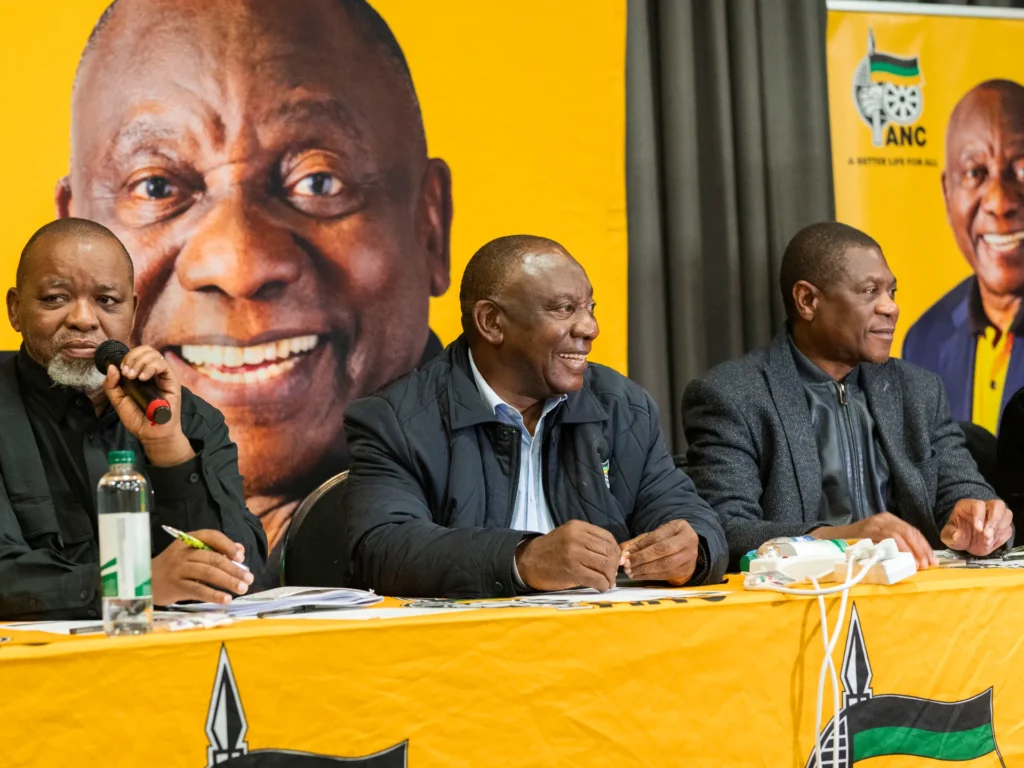
South Africa’s governing African National Congress has taken its dispute with the Electoral Commission of South Africa to the Electoral Court, turning a technical problem with an online nomination system into a significant political and legal battle ahead of the November 4 local government elections.
The ANC is challenging the IEC’s decision to reject 181 of its candidate nominations across six municipalities after the party said technical problems prevented its administrators from completing the final electronic submission before the August 28 deadline. The party wants the court to recognise the candidates as having been validly submitted and order the IEC to include them on the ballot.
The dispute is particularly sensitive because the ANC is already operating in a much more competitive political environment following its loss of its national parliamentary majority in the 2024 general election. The local government elections will provide another important measure of whether the party can rebuild its electoral strength or continues to lose ground to opposition parties.
The Dispute Centres on 181 Candidates.
The ANC says 181 of its candidates were affected by the failure, including 130 candidates on proportional-representation lists and 51 ward candidates. The affected submissions concern six municipalities: Sundays River Valley and Walter Sisulu in the Eastern Cape, Ngquza Hill and Port St Johns in the Eastern Cape, uMshwathi in KwaZulu-Natal and Mangaung Metropolitan Municipality in the Free State.

ANC Secretary-General Fikile Mbalula has stressed that the problem does not mean the party has disappeared from all ballots in those municipalities. In several of the affected councils, the ANC’s ward candidates remain registered, while the most serious disruptions affect Ngquza Hill and Port St Johns, where both ward and proportional-representation nominations are involved.
The party says its administrators completed the required forms and uploaded supporting documentation before the 5pm deadline on August 28. The problem, according to the ANC, came during the final stage when its operators were repeatedly logged out of the IEC’s Online Candidate Nomination System.
The ANC Says the System Failed at the Worst Possible Moment.
According to court papers, ANC administrators were logged out of the system at approximately 4.34pm on August 28 and again at 4.57pm, just minutes before the deadline. The party says the disruptions prevented them from pressing the system’s “submit as final” button even though the candidate information and supporting documents had already been uploaded.
The ANC argues that the information should be regarded as validly submitted because it had already entered the IEC’s designated electronic system and could be retrieved and processed by the commission.
That argument is at the centre of the legal case. The party says electoral law should not distinguish unfairly between candidates whose paperwork is physically delivered before a deadline and candidates whose completed information enters an official electronic system before the same deadline.
The IEC, however, maintains that being captured on the system is not the same as being formally submitted.
The IEC Has Rejected the Technical-Glitch Argument.
The electoral commission has taken a firm position that the affected candidates were not formally submitted before the deadline. The IEC says its system was operational and that candidates whose profiles remained captured rather than finally submitted could not be treated as valid nominations.
The commission’s position is important because electoral deadlines are designed to provide certainty for all political parties and candidates. Once the deadline passes, the IEC must move through a tightly controlled process of checking nominations, resolving duplicates, publishing final candidate lists and preparing ballot papers.
The commission has therefore refused to reopen the nomination system for the ANC.
The ANC, meanwhile, insists that it is not asking the IEC to accept new candidates after the deadline. It wants the commission to recognise information that was already inside its system before the deadline expired. Mbalula has argued that “there is not a single name” the ANC wants to enter into the system anew.
The Problem May Be Bigger Than the ANC.
One of the most important elements of the dispute is that the technical issue did not affect only the governing party.
According to figures cited in the ANC’s court papers, 2,274 candidate profiles from 45 political parties were captured on the IEC’s electronic system but were not recorded as final submissions. They included 1,794 ward candidates and 480 proportional-representation candidates.
The ANC says this raises a broader question about whether the electronic nomination system functioned fairly and reliably for all political parties.
The contrast between electronic and manual submissions has also become part of the argument. The ANC says that 299 parties used the electronic system, while 224 parties submitted nominations manually and did not experience a comparable failure.
That could make the case about more than the ANC’s own candidates. It could force the Electoral Court to examine whether the commission’s electronic process adequately protects political participation when technical problems occur close to an electoral deadline.
The Court Must Balance Participation and Electoral Certainty.
The ANC is relying partly on the principle that electoral law should encourage political participation rather than unnecessarily exclude candidates.
Its lawyers argue that once complete candidate information entered the IEC’s designated system and became capable of being retrieved and processed, the legal requirement for submission had effectively been met. The party is also asking the commission to examine electronic records, including timestamps, login histories, system logs and attempted submissions, to establish exactly what happened before 5pm.
The IEC’s counterargument is equally significant. If the court allows a party to bypass a formal electronic submission requirement after the deadline, it could create uncertainty about where the nomination process actually ends.
That is why the case has implications beyond the ANC.
South Africa’s electoral system depends heavily on clear deadlines and equal treatment. Political parties need to know that the same rules apply to everyone, while the IEC needs enough certainty to prepare ballots and administer elections without constantly reopening completed stages of the process.
The Timing Makes the Case Urgent.
The ANC is seeking an expedited legal process because the election timetable is already moving forward.
The IEC is scheduled to compile the final candidate lists on September 16, with the ballot-paper draw scheduled for September 23. The ANC therefore wants the Electoral Court to deal with its application before those stages become more difficult to reverse.
The Electoral Court is due to hear the ANC’s case on September 15, one day before the commission is scheduled to compile the final candidate lists.
That leaves very little room for delay.
A Test for Both the ANC and the IEC.
The political consequences of the dispute could extend beyond the 181 candidates.
For the ANC, the episode raises uncomfortable questions about organisational capacity. Political analysts have already pointed to internal organisational difficulties within the party, while the candidate dispute has created another public confrontation that could distract from its local election campaign.
For the IEC, the case represents another major test of public confidence in South Africa’s electoral administration. The commission remains one of the country’s most important democratic institutions, and its credibility depends heavily on convincing political parties and voters that its procedures are fair, transparent and consistently applied.
The court will therefore have to decide more than whether 181 ANC candidates should appear on the ballot.
It will have to determine how South Africa’s electoral laws should apply when technology, deadlines and political participation collide.
With the November 4 local government elections approaching, the outcome could shape not only the ANC’s candidate lists in six municipalities but also the rules governing how political parties interact with South Africa’s increasingly digital electoral system.

Comments (0)
No comments yet — be the first to share your thoughts.