

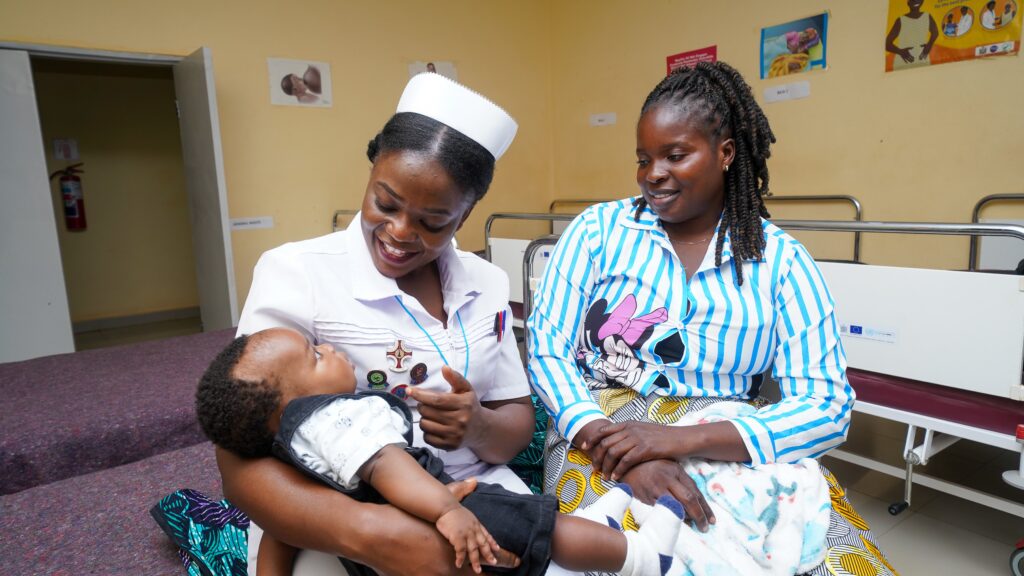
The continent’s maternal health future depends heavily on a workforce that remains under pressure.
Across Africa, thousands of women will give birth today, but for many of them, access to a skilled midwife could determine whether childbirth ends in celebration or tragedy.
A new analysis published on September 7 highlights the critical role midwives continue to play in reducing maternal and newborn deaths across the continent. The argument is increasingly clear: Africa cannot make major progress on maternal health without strengthening the workforce responsible for caring for women before, during and after childbirth.
Midwives are often the first trained health professionals to support women during pregnancy and delivery, particularly in rural and underserved communities. Yet many African health systems continue to face shortages of skilled personnel, inadequate facilities, limited equipment and difficult working conditions.
Rural women remain particularly vulnerable.
The challenge is most visible in communities where healthcare facilities are far from where people live.

For women in rural areas, reaching a hospital can involve long journeys, poor roads and significant transport costs. Where complications develop during labour, delays can quickly become life-threatening.
A midwife based within or close to a community can therefore provide much more than assistance during delivery. Midwives can identify pregnancy complications early, provide antenatal care, educate mothers and families, support newborns and refer patients requiring specialised treatment.
This makes investment in midwives a wider public health strategy rather than simply a staffing issue.
The workforce behind the numbers.
Maternal health statistics can sometimes make the problem appear abstract. Behind every maternal death, however, is a family and a community affected by the loss.
The same applies to newborn deaths. The first hours and days after birth are among the most vulnerable periods of a child’s life, making access to skilled care particularly important.
The pressure on healthcare workers is therefore also a social issue. When a small number of professionals are responsible for serving large populations, burnout, fatigue and staff shortages can undermine the quality and continuity of care.
Africa’s maternal health challenge cannot be solved simply by building more hospitals if there are not enough trained professionals to operate them effectively.
Training alone will not be enough.
Expanding the number of midwives is important, but governments also need to consider what happens after training.
Healthcare workers need decent working conditions, appropriate salaries, safe facilities, essential medicines and opportunities for professional development. Without these conditions, countries risk training professionals only to lose them to better opportunities elsewhere.
The issue is particularly important as African countries attempt to strengthen their health systems while facing competing demands on limited public finances.
Investing in midwives can, however, produce benefits that extend beyond individual pregnancies. Healthier mothers are more likely to care for their children, participate in economic activity and contribute to stronger households.
Africa needs to treat maternal health as a development priority.
The maternal health debate is sometimes framed primarily as a healthcare problem. It is also an economic and social development issue.
When women die during childbirth or suffer preventable complications, families can lose caregivers and income earners. Newborn health problems can also create long-term financial and emotional pressures for households.
Improving maternal and newborn health therefore contributes to broader development goals, including poverty reduction, education and women’s economic participation.
This is why the future of African healthcare cannot be separated from the future of African communities.
The people delivering Africa’s future need support.
Midwives occupy a unique position in that future. They are present at one of the most important moments in a person’s life: the arrival of a child.
But asking a relatively small and often overstretched workforce to carry the continent’s maternal health burden without sufficient investment is not sustainable.
African governments and development partners will need to look beyond emergency interventions and strengthen the systems that allow midwives to work effectively.
That means training more professionals, retaining those already in the system, improving working conditions and ensuring that women in rural and disadvantaged communities are not left without skilled care.
Africa’s demographic future is frequently discussed in terms of its rapidly growing population. But population growth only becomes an opportunity when mothers and children survive and communities have the health systems needed to support them.
The continent’s midwives are already doing much of that work. The question now is whether African societies will give them the resources and support necessary to do it safely and effectively.

Comments (0)
No comments yet — be the first to share your thoughts.