
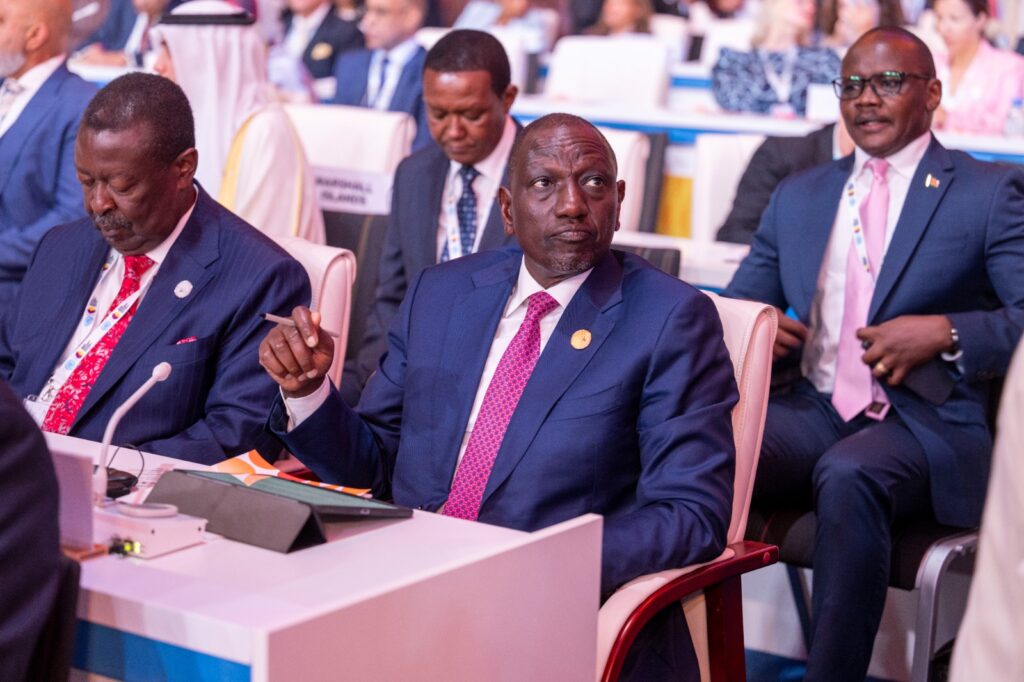
Kenyan President William Ruto has renewed Africa’s demand for permanent representation on the United Nations Security Council, arguing that the continent should have a permanent seat in the body responsible for some of the world’s most consequential decisions on peace and international security.
Speaking during the 81st United Nations General Assembly in New York on September 23, 2026, Ruto said the current structure of the Security Council no longer reflects the realities of the international system. He called for reforms that would give Africa a permanent voice in the council alongside the existing permanent members.
Ruto Says Africa Cannot Remain Without a Permanent Seat.
Ruto’s argument is part of a longstanding African campaign for reform of the UN Security Council. Africa currently has three non-permanent seats, which are elected for two-year terms, but none of the continent’s countries holds a permanent seat or veto power.
The Kenyan president said this arrangement leaves a continent of more than 1.4 billion people without permanent representation in an institution that regularly deals with conflicts and security crises affecting African countries.

He argued that meaningful reform should give Africa a permanent seat rather than relying exclusively on rotating representation.
Africa’s Reform Campaign Has a Long History.
The African Union’s common position on Security Council reform is outlined in the Ezulwini Consensus, adopted in 2005. Under that position, African countries have called for at least two permanent seats with veto rights and additional non-permanent seats for the continent.
The AU has maintained that Africa’s absence from the permanent membership structure is a historical imbalance that needs to be addressed as part of broader reform of the UN system.
Ruto’s latest intervention therefore reinforces a position that has been repeatedly presented by African leaders at the United Nations.
Kenya Wants Africa’s Voice Reflected in Global Decisions.
For Kenya, the issue extends beyond the number of seats. Ruto has repeatedly linked Security Council reform to broader questions about Africa’s role in global governance, international finance and decision-making.
African countries are frequently affected by decisions taken by international institutions, particularly on conflict prevention, sanctions, peacekeeping and humanitarian crises. Yet the continent remains underrepresented in the institutions that make many of those decisions.
Kenya has therefore continued to advocate for changes that would give African states a greater role in shaping international policy.
The Veto Remains a Major Point of Debate.
One of the most difficult issues surrounding Security Council reform is the veto power held by the five permanent members — China, France, Russia, the United Kingdom and the United States.
The African Union’s position has traditionally called for African permanent members to receive the same rights, including veto powers, while recognising that the long-term objective should be to eliminate the veto altogether.
Reaching agreement on this question would require negotiations among the existing permanent members as well as the wider UN membership.
Africa’s Push Comes as Global Power Structures Face Pressure.
Ruto’s intervention comes amid growing calls from countries across the Global South for changes to international institutions established after the Second World War.
African governments have increasingly argued that the continent’s economic and demographic importance should be reflected in global governance structures.
The Security Council reform debate, however, remains unresolved. Any major change would require an amendment to the UN Charter, meaning it would need broad support among UN member states and ratification by the required states, including the existing permanent members.
For Kenya and the African Union, the latest UN General Assembly discussions provide another opportunity to press the case for a permanent African presence at the centre of global security decision-making.

Comments (0)
No comments yet — be the first to share your thoughts.