

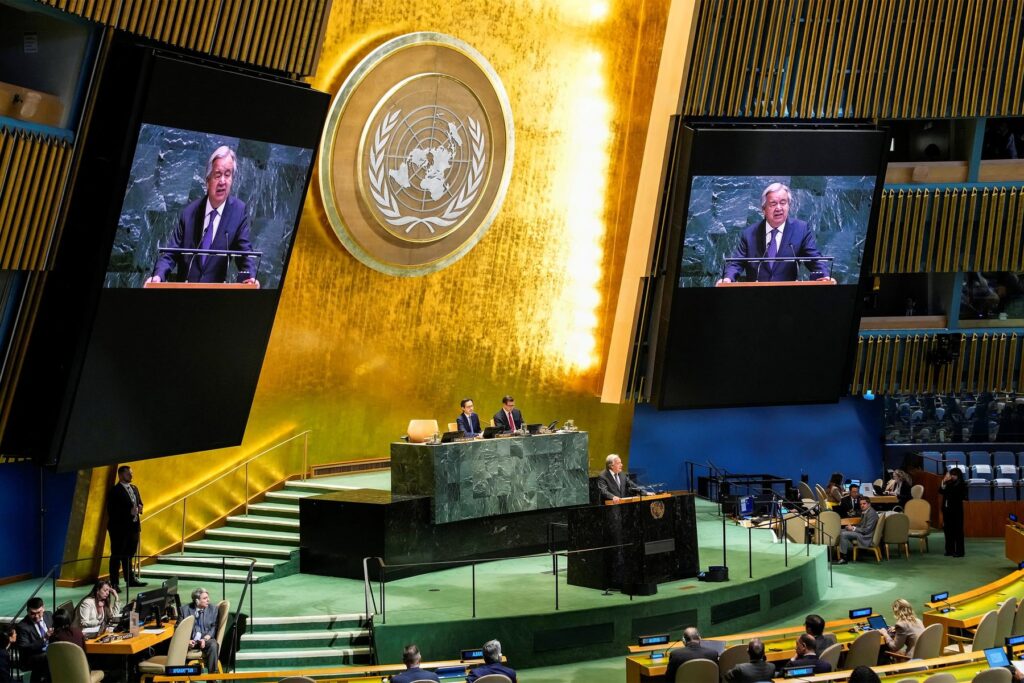
As world leaders gather in New York for the high-level week of the 81st United Nations General Assembly, African governments are arriving with a familiar but increasingly urgent set of demands: greater influence in global decision-making, reforms to the international financial system, more climate finance and stronger support for African-led peace and security efforts.
The 81st session officially opened on September 8, while the main General Debate begins on September 22. The African Union Commission Chairperson Mahmoud Ali Youssouf is leading the AU’s high-level engagement as African states seek to push continental priorities into discussions that will shape the international agenda.
A Bigger African Voice In Global Institutions.
One of Africa’s longest-running demands remains reform of global governance. The continent argues that institutions created decades ago do not adequately reflect today’s distribution of population, economic weight and political interests.
The UN Office of the Special Adviser on Africa identifies reform of the UN Security Council and other international institutions as a major African priority. Africa’s position is closely linked to the argument that the continent should have a more meaningful role in decisions concerning international peace, security and development.

This question becomes particularly important during a period of intense geopolitical competition, when decisions taken by major powers can have direct consequences for African economies and conflict zones.
Debt And The Cost Of Development.
Africa is also pressing for changes to the global financial architecture. The UN’s assessment highlights concerns over debt vulnerabilities, high borrowing costs, credit-rating methodologies and the limited availability of affordable development finance.
The demand is not simply for more money. African governments and institutions are increasingly arguing for financial rules that allow developing economies to borrow and invest without being trapped by debt-servicing costs that consume resources needed for infrastructure, health, education and industrial development.
The continent is also seeking greater use and reallocation of Special Drawing Rights and implementation of reforms emerging from international financing-for-development discussions.
Climate Finance And African Industrialisation.
Climate change forms another major part of Africa’s agenda. African countries contribute a relatively small share of global emissions but face severe exposure to droughts, floods, rising temperatures and other climate-related shocks.
The UN Office of the Special Adviser on Africa says African priorities include greater adaptation support, delivery on loss-and-damage commitments and increased climate finance. At the same time, African countries want to move beyond exporting raw materials by processing more of their natural resources locally.
Critical minerals are particularly important to that argument. Africa possesses major reserves of minerals required for the global energy transition, but African policymakers increasingly want extraction to be connected to processing, manufacturing, technology transfer and job creation rather than remaining primarily an export activity.
Peace And Security Remain Central.
Africa’s diplomatic agenda at the UN will also be shaped by conflicts across the continent, including crises in Sudan, the Sahel, the Horn of Africa and the Great Lakes region.
The African position increasingly emphasizes international support for African-led peace and security initiatives rather than approaches that leave African institutions on the margins of decisions affecting the continent.
The 81st General Assembly therefore represents more than another annual diplomatic gathering for Africa. It is an opportunity for the continent to connect political representation, financial reform, climate action, industrialisation and peace into a broader argument about how global institutions should engage with Africa.

Comments (0)
No comments yet — be the first to share your thoughts.