

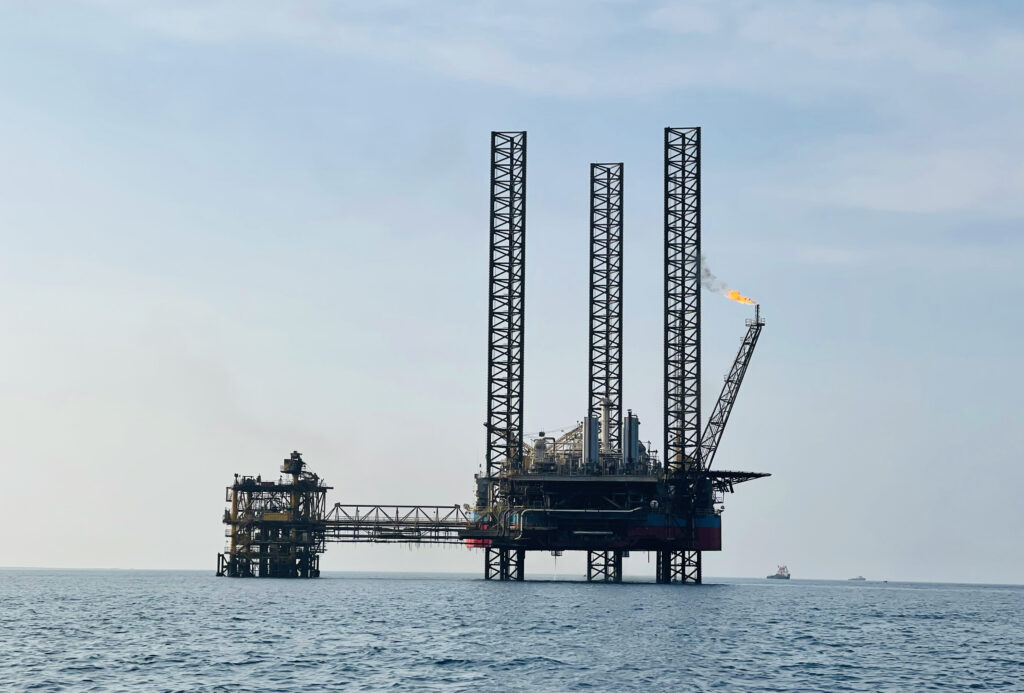
Angola is stepping up efforts to strengthen its position as one of Africa’s leading oil producers, with international energy companies committing billions of dollars to offshore exploration and production projects. The latest investment drive reflects the government’s determination to slow declining output from ageing oilfields, attract new capital and preserve petroleum revenues that remain central to the country’s economy.
In September 2026, French energy giant TotalEnergies announced plans to invest approximately $10 billion in Angola alongside its partners over the next five years. The company also reported a new offshore oil discovery and agreements to enter two additional exploration blocks. Meanwhile, the country’s oil regulator has outlined plans to accelerate the allocation of exploration concessions as part of a broader strategy to stimulate production. <Cite refs={[“turn314569news20″,”turn314569search1″,”turn314569search0”]}/>
Billions Flow Into Angola’s Offshore Oilfields.
One of the most significant developments in Angola’s offshore sector is the Greater PAJ project, approved in June 2026 by Azule Energy, a joint venture equally owned by BP and Eni. The project carries an estimated investment of $5.1 billion and involves partners including Norway’s Equinor, state-owned Sonangol and Angola’s National Agency for Petroleum, Gas and Biofuels.
Located offshore in Blocks 31 and 31/21, Greater PAJ will integrate five oilfields through a shared development system. The plan includes 17 wells connected to a new floating production, storage and offloading vessel, designed to process up to 95,000 barrels of oil per day. The project’s recoverable reserves are estimated at approximately 252 million barrels, with first oil expected in the first half of 2029. <Cite refs={[“turn314569news6″,”turn314569search2”]}/>

The project is important because it reflects a more integrated approach to offshore development. Rather than treating neighbouring oilfields as entirely separate operations, the partners plan to share key infrastructure, potentially reducing duplication and improving the economics of developing deepwater resources.
Greater PAJ is part of a wider investment push. TotalEnergies has identified Angola as a major focus for its upstream business, while other international operators are pursuing exploration opportunities in the country’s offshore basins. These commitments suggest that investors continue to see commercial potential in Angola’s established petroleum industry, even as energy markets face pressure from changing demand and the global transition towards lower-carbon energy.
Angola Wants to Reverse Years of Production Decline.
The investment drive is driven by a fundamental challenge: Angola must replace output lost as mature oilfields decline. Although the country remains a major crude exporter, production has fallen considerably from its historical peak, increasing pressure on the government to attract new exploration and bring additional projects online.
Angola is targeting oil production of around one million barrels per day, but maintaining that level requires continued investment in exploration, infrastructure and field development. New discoveries can help, although they do not immediately translate into additional supply. Companies must assess the commercial viability of reserves, secure approvals, drill wells and install the equipment needed to produce and transport crude.
TotalEnergies’ September announcement illustrates the strategy. The company said its Acacia-5 discovery in Block 17 could add approximately 6,000 barrels per day through a fast-track development linked to existing infrastructure. It also announced agreements to acquire operated interests in two additional exploration blocks in the Lower Congo Basin. <Cite refs={[“turn314569search1″,”turn314569news20”]}/>
The government is also seeking to make exploration more attractive by changing how concessions are awarded. In October, officials said Angola intended to speed up the process from next year, potentially reducing the time required to award concessions from six months to three. The proposed changes form part of a longer-term hydrocarbon strategy intended to encourage more drilling and investment across the sector. <Cite refs={[“turn314569search0”]}/>
What the Investment Could Mean for Angola’s Economy.
New offshore projects can create opportunities across a broad supply chain, including engineering, construction, maritime services, logistics, fabrication and specialised technical work. The Greater PAJ project, for example, will require extensive subsea infrastructure and a new production vessel. Other developments are also generating contracts for companies involved in offshore installation and engineering.
There are potential benefits for Angolan businesses and workers if local companies secure a meaningful share of these contracts. In September, engineering company Saipem announced an offshore contract worth approximately $350 million connected to the West Hub Tails project. The work includes subsea infrastructure, with fabrication activities planned at Saipem’s Ambriz yard in Angola and participation from local companies and workers. <Cite refs={[“turn314569search4”]}/>
However, the scale of investment should not be confused with the amount of money that will directly reach households or local businesses. Offshore oil development is capital-intensive, requiring specialised technology, equipment and highly skilled personnel. The wider economic benefits depend on how much work local suppliers can win, the jobs created, the taxes and royalties collected, and how effectively public revenues are managed.
For Angola, the challenge is therefore to convert large investment announcements into lasting domestic value. Stronger local procurement, technical training and transparent management of petroleum revenues could help the sector contribute more broadly to employment and economic diversification.
The Energy Transition Adds Another Challenge.
Angola’s renewed commitment to oil development comes as governments and companies face growing pressure to reduce greenhouse gas emissions and expand cleaner energy sources. International investors must balance the profitability of new petroleum projects against climate policies, market uncertainty and the possibility of changing demand over the life of long-term assets.
For Angola, an immediate reduction in reliance on oil is difficult because petroleum remains a major source of export earnings and public revenue. Yet continued dependence also exposes the economy to fluctuations in international prices and the risk that declining production could weaken government finances.
The strategic question is not simply whether Angola can find more oil, but whether it can use the revenue generated during the coming years to strengthen other sectors of its economy. Agriculture, manufacturing, electricity infrastructure and services could all benefit from investment if petroleum wealth is channelled towards productive activities beyond the oil industry.
A Race to Sustain Production and Secure Long-Term Growth.
Angola’s offshore expansion demonstrates that the country is not prepared to accept a gradual decline in oil production without attempting to replace lost barrels. Major investment commitments, new discoveries and proposed changes to concession procedures are central to that effort.
But the results will take time. Greater PAJ is not expected to produce its first oil until 2029, and exploration agreements will only deliver new production if drilling confirms commercially viable resources. The government must also ensure that its investment drive generates opportunities for Angolan companies and supports economic development beyond the petroleum sector.
The next phase of Angola’s oil strategy will therefore be measured not only by the billions committed by international energy companies, but by whether those investments can stabilise production, strengthen domestic industry and help prepare the economy for a future in which oil revenues may become less reliable.

Comments (0)
No comments yet — be the first to share your thoughts.