

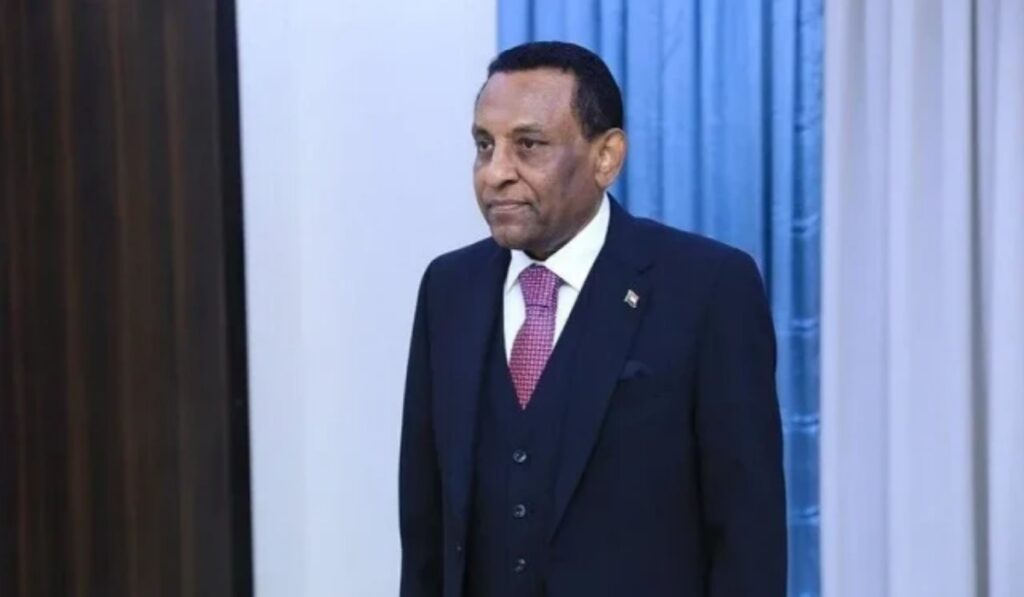
Government Signals Move Toward a Political Process Amid the Continuing War.
Sudan’s government says it is preparing to launch a political dialogue aimed at addressing the country’s deepening political crisis, offering a possible opening for a broader national process after more than three years of war between the Sudanese Armed Forces and the Rapid Support Forces.
Foreign Minister Mohieddin Salem said on Wednesday that the government would soon announce the beginning of a political dialogue, while Prime Minister Kamil Idris has also indicated that a political process is being prepared as part of efforts to restore stability and eventually return the country to civilian rule.
The announcement comes as Sudan remains divided by a devastating conflict that has displaced millions of people and created one of the world’s most serious humanitarian crises.
Dialogue Comes Amid a Prolonged War.
Sudan has been at war since April 2023, when fighting erupted between forces loyal to army chief General Abdel Fattah al-Burhan and the Rapid Support Forces commanded by General Mohamed Hamdan Dagalo, widely known as Hemedti.

The conflict began after disagreements over the country’s political transition and the proposed integration of the RSF into the regular army.
What initially appeared to be a power struggle between rival military factions has developed into a nationwide conflict involving competing territorial authorities, armed groups and political actors. Neither side has succeeded in securing a decisive victory, while civilians have paid the greatest price.
Government Wants a Broader Political Process.
The proposed dialogue is expected to focus on Sudan’s future political arrangements, reconciliation and the possibility of restoring a civilian-led government.
Prime Minister Kamil Idris has previously spoken of the need for a political process capable of bringing together Sudanese political forces and addressing the country’s constitutional future.
The government’s position is that political dialogue should contribute to restoring state institutions and eventually creating conditions for elections.
However, significant questions remain over who will participate and whether the process can gain legitimacy among Sudan’s divided political forces.
The Military’s Dominant Role Remains a Major Obstacle.
One of the central difficulties is the continuing dominance of the military in Sudan’s political affairs.
The country had been moving towards a civilian transition following the removal of longtime president Omar al-Bashir in 2019. That transition was disrupted by a military coup in October 2021 before the outbreak of full-scale war in 2023.
For many Sudanese political groups, returning to civilian rule remains a fundamental demand. Any dialogue that does not address the role of the military and armed groups in politics risks being viewed as another attempt to reorganise power among elites rather than establish a genuine civilian transition.
The RSF Question Cannot Be Ignored.
Another major challenge will be determining whether the Rapid Support Forces can or will participate in a political process.
The RSF controls significant territory and has established its own administrative structures in areas under its influence. The army-backed government has rejected the RSF’s political and military ambitions and continues to regard the group as a major threat to Sudan’s territorial integrity.
A meaningful national dialogue would therefore have to confront the question of armed groups, territorial control and the future structure of Sudan’s security institutions. That is an extremely difficult issue while fighting continues.
International Pressure Is Growing.
Sudan’s political crisis has attracted sustained international attention, with the United Nations, African Union and regional governments repeatedly calling for an end to the conflict and a return to a political process.
The United States has also indicated support for efforts aimed at establishing a civilian-led political dialogue in Sudan.
The international community has increasingly emphasised that military victory alone will not resolve Sudan’s crisis. Even if one side eventually gains greater territorial control, the country will still have to confront the political, social and economic consequences of the war.
Peace Talks Have Repeatedly Struggled.
Sudan has already experienced several diplomatic initiatives since the conflict began.
Negotiations involving regional and international mediators have repeatedly attempted to secure ceasefires, but previous agreements have largely failed to stop the fighting for long. That history means the announcement of another political dialogue will inevitably be met with caution.
For Sudanese civilians who have endured years of violence, displacement and food insecurity, another political process will only matter if it produces concrete improvements on the ground.
The Humanitarian Crisis Makes Political Progress Urgent.
The political discussions are taking place against an enormous humanitarian emergency. Millions of Sudanese have been displaced internally or forced to flee to neighbouring countries. Large parts of the country’s infrastructure have been destroyed, while food insecurity and limited access to healthcare have made civilian life increasingly difficult.
The war has also disrupted agriculture, trade and basic public services. For this reason, political dialogue cannot be separated from the humanitarian situation.
A sustainable political settlement will ultimately have to create the security conditions necessary for humanitarian organisations to operate and for displaced people to begin returning home.
Sudan Faces a Difficult Path Back to Civilian Rule.
The announcement that political dialogue could begin soon provides a potential opening, but it is only the beginning of what could be a very long process.
The success of the initiative will depend on who participates, whether the major armed actors accept the process and whether political groups can agree on the basic principles of Sudan’s future. It will also depend on whether the dialogue is genuinely inclusive.
Sudan’s political crisis cannot be resolved simply by bringing together a small group of political elites. Civilian organisations, women, youth groups, regional representatives and other groups affected by the war will need a meaningful voice in determining the country’s future.
The Real Test Will Be What Comes After the Announcement.
Sudan has heard promises of political transition before. What has been missing is a durable agreement capable of ending military confrontation and establishing legitimate civilian institutions.
The proposed dialogue therefore deserves attention, but also scrutiny. If it becomes a genuine effort to rebuild Sudan’s political system and restore civilian authority, it could represent an important step towards ending the country’s crisis. If it becomes another process conducted while the major actors continue fighting for territorial and political dominance, its chances of success will be far weaker.
Sudan’s announcement offers a small but potentially significant opening in a conflict that has resisted repeated attempts at mediation. The real question is no longer whether Sudan needs political dialogue. It is whether its military leaders, political forces and armed groups are finally prepared to accept that there can be no lasting victory without a political settlement.

Comments (0)
No comments yet — be the first to share your thoughts.