
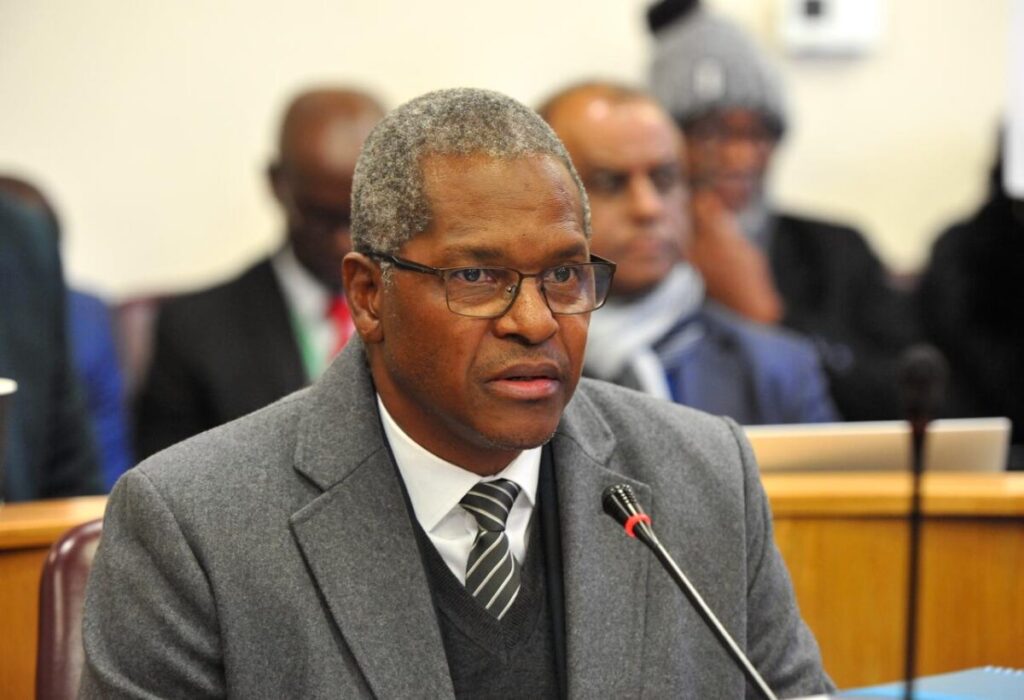
South Africa’s local government sector has taken a new step toward strengthening ethical leadership, with 100 municipalities across all nine provinces formally adopting a Code for Ethical Leadership in Local Government. The initiative comes as the country continues to confront concerns over corruption, weak accountability, political interference and failures in municipal administration.
Cooperative Governance and Traditional Affairs Minister Velenkosini Hlabisa welcomed the adoption on September 7, describing it as an important development in efforts to place ethical leadership, accountability and good governance at the centre of municipal government. The announcement was also highlighted by the South African government on September 8.
A Code Designed to Change Local Government Culture.
The Code for Ethical Leadership is the product of the Local Government Ethical Leadership Initiative, a partnership involving the Ethics Institute, the Department of Cooperative Governance and Traditional Affairs, the South African Local Government Association and the Moral Regeneration Movement.
The initiative was launched at a Summit on Ethical Leadership in Local Government held in Gauteng in March 2024. In October that year, the department and SALGA entered into an agreement encouraging municipalities across the country to formally adopt the code through council resolutions.

The code is intended to apply broadly across municipal leadership. Its scope includes political office bearers, councillors, traditional leaders, municipal managers and other administrative officials. Rather than functioning simply as a list of rules governing individual behaviour, it is designed to promote a broader culture of ethical decision-making and institutional accountability.
From Political Commitment to Institutional Accountability.
The adoption by 100 municipalities represents progress, but it is not the end of the process. The municipalities are now expected to develop implementation plans that translate the principles of the code into practical systems and everyday governance.
That distinction is important. South Africa has previously introduced laws, strategies and frameworks designed to combat corruption and improve municipal performance. The continuing challenge has often been implementation, particularly where political interests, administrative weaknesses and inadequate oversight intersect.
Hlabisa has therefore encouraged the municipalities that have not yet adopted the code to follow suit. The government says the objective is to ensure that ethical leadership becomes part of the institutional culture of local government rather than remaining a formal commitment on paper.
The Test Will Be Seen in Communities.
For ordinary residents, the value of the initiative will ultimately be measured less by the number of municipalities that sign or adopt the code and more by whether municipal services improve.
Local governments are responsible for many of the services that most directly affect citizens, including water, sanitation, waste management, local infrastructure and other basic municipal functions. Where leadership is weak or public resources are poorly managed, the consequences are immediately felt by communities.
The Ethics Institute and its partners have therefore positioned ethical leadership as a governance issue rather than simply an issue of personal morality. The aim is to encourage leaders to build institutions that are transparent, effective and capable of being held accountable by the communities they serve.
A Significant Moment Ahead of Local Elections.
The development also comes at a politically important moment for South Africa, with the 2026 local government elections scheduled for November 4. Political parties are already presenting candidates and campaigning around questions of municipal performance, leadership and service delivery.
That makes the ethics initiative particularly significant. Voters will have an opportunity to judge not only political promises but also the credibility of candidates and parties in managing public institutions.
For the 100 municipalities that have adopted the code, the challenge will now be to demonstrate that commitment through procurement decisions, financial management, staffing, public participation and the delivery of services.
The Hard Part Begins Now.
South Africa’s new ethical leadership push sends a clear message that improving local government requires more than administrative reforms. It requires political and institutional leaders who are prepared to accept responsibility, operate transparently and put public interests ahead of personal or political gain.
The adoption of the code by 100 municipalities is therefore an important starting point, but its real significance will depend on what happens next. If implementation plans lead to measurable improvements in accountability and municipal performance, the initiative could become an important part of South Africa’s broader effort to rebuild confidence in local government.
If implementation remains largely symbolic, however, the code risks becoming another governance framework that exists on paper without significantly changing the experience of citizens.
The coming months will begin to show whether South Africa’s municipalities can turn a commitment to ethical leadership into a measurable change in how local government is run.

Comments (0)
No comments yet — be the first to share your thoughts.