
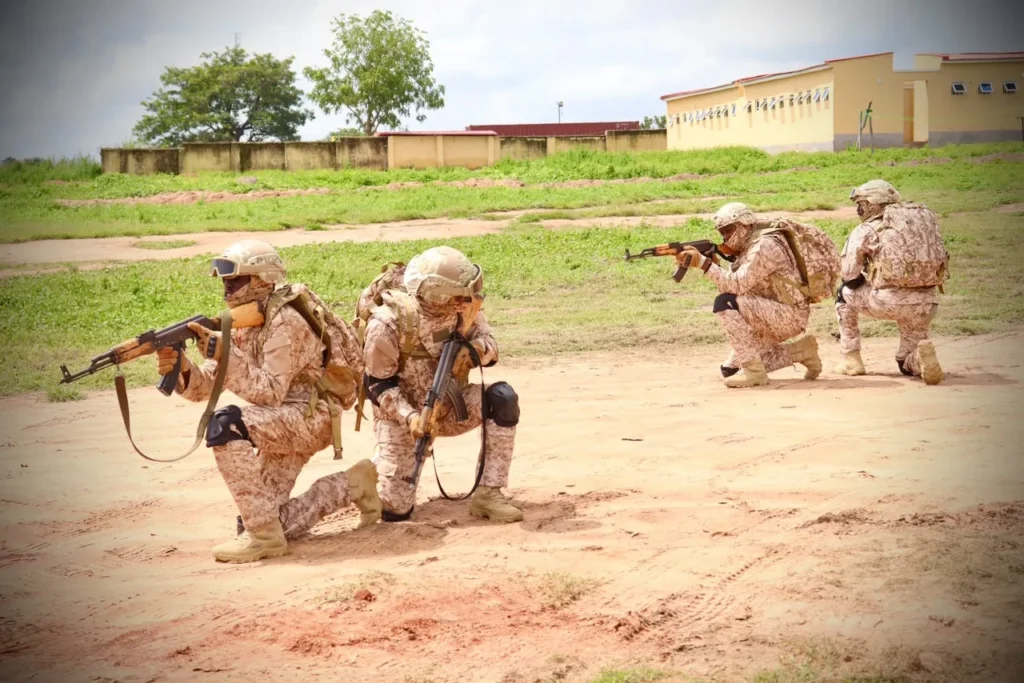
Nigerian security forces have reportedly rescued 50 abducted people and killed 36 suspected terrorists during a week of military operations, highlighting the continuing battle to contain armed violence across parts of the country. The reported results offer a measure of relief for families affected by kidnappings, but they also underline the scale of the security challenge facing Nigeria.
Kidnapping for ransom, attacks on rural communities and assaults on security personnel have remained major concerns in several regions. Armed groups operate with different motives and structures, ranging from jihadist insurgencies in the northeast to criminal kidnapping networks and armed groups active in the northwest and other parts of the country.
The latest reported operations demonstrate the role of military pressure in disrupting armed groups, although the longer-term impact will depend on whether rescued communities can remain safe after troops leave an area.
Nigeria’s Continuing Kidnapping Crisis.
Abductions have become one of the most visible manifestations of Nigeria’s wider security problems. Victims have included schoolchildren, travellers, farmers, religious worshippers and residents of communities targeted by armed groups. In many cases, families face intense pressure to raise ransom payments, while communities struggle to resume normal activities after attacks.

Kidnappings have consequences far beyond the immediate trauma experienced by victims. Parents may keep children away from school, farmers may abandon fields and businesses may reduce operations because of fears about travelling or remaining in vulnerable locations. These disruptions can deepen poverty and weaken local economies.
Rescuing abducted people is therefore an important measure of security progress. However, the number of people rescued does not by itself show whether kidnapping networks have been dismantled or whether communities face a reduced risk of future attacks.
Military Operations and the Challenge of Lasting Security.
Nigerian security forces have used patrols, intelligence-led raids, air operations and ground offensives to target armed groups. Such operations can disrupt camps, recover weapons and free people held captive. They can also limit the ability of armed groups to move freely or organise attacks.
Yet the country’s security challenges are complex. Some armed groups exploit difficult terrain and weak state presence, while criminal networks may move between locations or rely on informants to identify targets. Military operations can achieve immediate gains, but sustained security requires reliable intelligence, coordination between agencies and the protection of communities after operations conclude.
Authorities must also ensure that investigations and security measures respect the rights of civilians. Accurate reporting on casualties, rescued victims and suspected militants is essential for public confidence and for assessing whether operations are achieving their intended objectives.
Why Communities Remain Vulnerable.
Insecurity is often reinforced by economic hardship, limited infrastructure and inadequate access to public services. In remote areas, slow emergency responses and weak transport links can leave communities exposed when armed groups strike. Where trust in security institutions is low, residents may also be reluctant to share information that could help prevent attacks.
These problems mean that military action must be supported by broader efforts. Improving local policing, strengthening intelligence-sharing, protecting transport routes and ensuring that communities can report threats safely could make it harder for armed groups to operate.
Support for victims is equally important. People freed from captivity may require medical treatment, psychological assistance and help returning to their families. Communities affected by repeated attacks also need support to restore livelihoods and rebuild confidence in public institutions.
Can Nigeria Turn Tactical Gains Into Security Progress?
The reported rescue of 50 abductees is a significant development for those freed and their families, while the reported deaths of 36 suspected terrorists may indicate disruption to armed networks. However, these figures need to be assessed alongside independent verification, subsequent security incidents and evidence of whether affected areas remain safe.
Nigeria’s broader objective must be to reduce the frequency of abductions and attacks, rather than measure progress solely by the results of individual operations. That requires sustained pressure on armed groups, stronger intelligence capabilities, effective prosecution of criminal networks and investment in vulnerable communities.
For families living under the threat of kidnapping, the most meaningful sign of progress will be the ability to travel, attend school, farm and conduct business without fear. Military operations can contribute to that goal, but lasting security will depend on whether the state can protect communities consistently and prevent armed groups from returning once an operation ends.

Comments (0)
No comments yet — be the first to share your thoughts.