

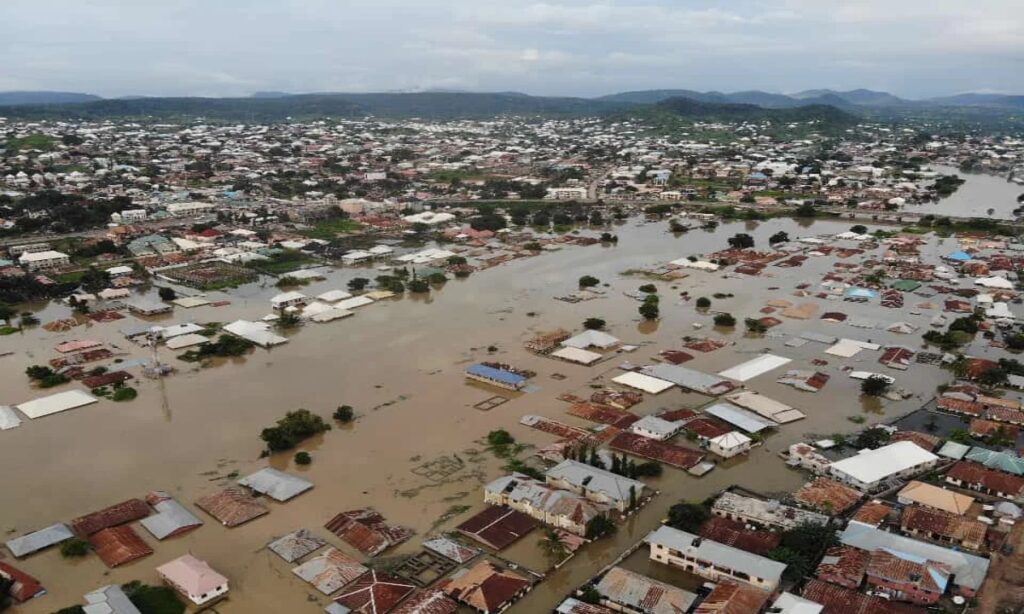
Floods and windstorms have reportedly damaged homes and farmland across seven local government areas in Nigeria’s Taraba State, leaving affected communities facing potential losses of shelter, food supplies and income. The incidents highlight the vulnerability of rural communities to extreme weather and the growing challenge of protecting livelihoods when severe conditions strike during the agricultural season.
Taraba, located in northeastern Nigeria, has communities that depend heavily on farming for food and household income. When storms damage houses or floods destroy crops, the consequences can extend beyond immediate property losses, affecting food availability, school attendance, local trade and the ability of families to recover financially.
The reported damage across several local government areas raises concerns about the resources available for emergency relief and the measures needed to help residents rebuild before further weather-related incidents occur.
How Extreme Weather Threatens Rural Livelihoods.
Flooding can destroy standing crops, wash away fertile topsoil and damage roads that farmers use to transport produce to markets. When roads become impassable, even crops that survive may be difficult to sell, increasing losses for farmers and contributing to disruptions in local food supply chains.

Windstorms create a different but equally serious set of risks. Strong winds can tear roofs from homes, damage storage facilities and destroy crops before harvest. Families whose houses are damaged may be forced to seek temporary shelter with relatives or in community facilities, while farmers may lose the savings and labour invested in a growing season.
For households with limited financial reserves, rebuilding can be difficult. Families may borrow money, sell livestock or reduce spending on healthcare and education to cover repairs and replace lost agricultural equipment.
The impact can be particularly severe when flooding and wind damage occur in the same communities, leaving residents to cope with both damaged shelter and declining food production.
The Pressure on Emergency Response.
When several local government areas are affected simultaneously, emergency agencies face the challenge of identifying the most urgent needs and distributing assistance fairly. Assessments are necessary to establish how many people have been affected, the extent of damage to homes and farmland, and whether residents require temporary shelter, food, clean water or medical assistance.
Rapid support can prevent an initial weather emergency from developing into a longer humanitarian problem. However, the effectiveness of relief efforts depends on accurate information, accessible roads, adequate funding and coordination between state authorities, local governments and emergency-management agencies.
Agricultural support is also important. Farmers may need replacement seeds, tools and other inputs to resume production, while households whose homes have been damaged may require building materials or financial assistance. Without timely intervention, families could miss planting opportunities or remain displaced for extended periods.
Climate Risks and Nigeria’s Vulnerable Communities.
Flooding and severe storms have repeatedly exposed weaknesses in infrastructure and disaster preparedness across Nigeria. In vulnerable areas, poor drainage, settlements in flood-prone locations, inadequate early-warning systems and limited access to emergency services can increase the damage caused by extreme weather.
Climate change is contributing to changes in weather patterns and increasing the intensity of some extreme events, although the cause of any particular incident requires specific scientific assessment. Regardless of the precise cause, communities need practical measures to reduce their exposure to flooding and destructive winds.
These measures include improving drainage, protecting waterways, strengthening buildings, restoring vegetation and providing residents with timely warnings. Local authorities can also help communities identify safer locations for homes and essential infrastructure.
Can Taraba Build Greater Resilience?
The reported damage across seven local government areas presents an immediate relief challenge and a longer-term development concern. Emergency assistance can help affected families meet urgent needs, but recovery also requires investment in infrastructure and systems that reduce future losses.
State authorities will need reliable damage assessments to determine where assistance is most urgently required. Farmers, in particular, need support that allows them to resume production, while vulnerable households may require targeted help to repair homes and replace essential possessions.
For Taraba, the wider lesson is that disaster response cannot begin only after homes and crops have been destroyed. Stronger early-warning systems, resilient infrastructure and community preparedness can reduce the human and economic costs of extreme weather.
The immediate priority is helping affected residents recover their shelter and livelihoods. The longer-term challenge is ensuring that the next severe storm or flood does not leave the same communities facing the same losses again.

Comments (0)
No comments yet — be the first to share your thoughts.