

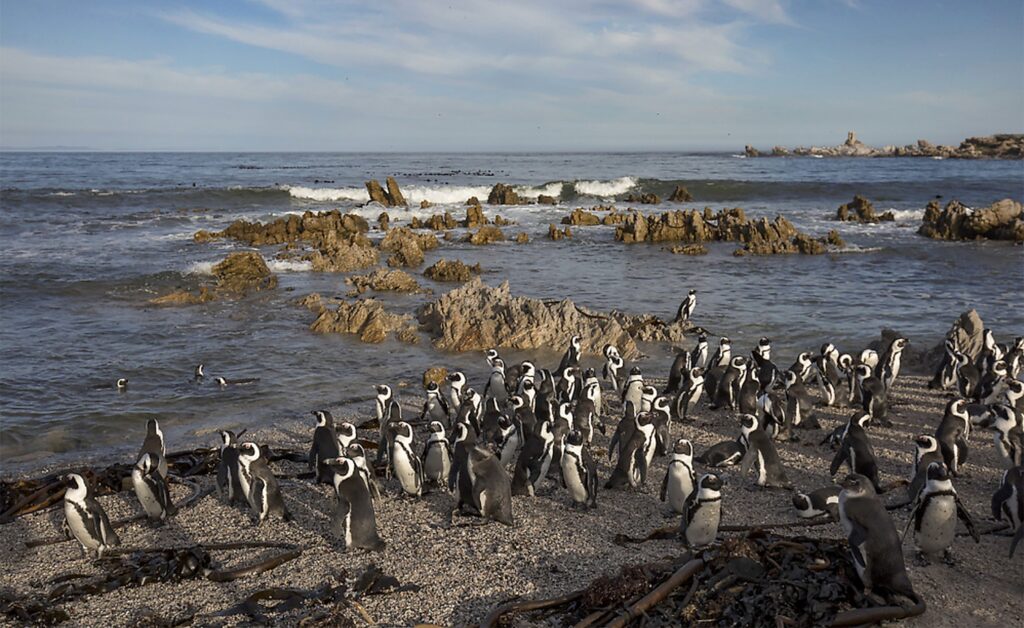
African penguins are facing renewed concerns over food availability as pressure on sardine stocks threatens an important source of prey for the endangered seabirds. The issue highlights the close relationship between marine ecosystems and wildlife survival, particularly along South Africa and Namibia’s coastlines, where penguin populations have declined sharply over recent decades.
African penguins depend heavily on small schooling fish, including sardines and anchovies. When these fish become less available near breeding colonies, adult penguins may need to travel farther to find food, leaving them with less energy to maintain their own health and feed their chicks.
The concern extends beyond the survival of individual birds. African penguins are an important indicator of the health of coastal marine ecosystems, and their declining numbers have raised questions about how fishing, changing ocean conditions and habitat pressures are affecting wildlife.
Why Sardine Stocks Matter.
Sardines are a major component of the marine food web. They provide food for seabirds, larger fish and marine mammals, while also supporting commercial fisheries that supply food and employment to coastal communities.

For African penguins, access to sufficient prey can determine whether breeding attempts succeed. Adult birds must find enough food to sustain themselves and deliver regular meals to their chicks. If fish are scarce or concentrated far from breeding sites, adults may spend more time searching and return less frequently with food.
This can leave chicks vulnerable to starvation and reduce the number of young birds that survive to adulthood. Poor food availability can also affect adult condition and their ability to reproduce successfully in subsequent breeding seasons.
However, sardine availability varies naturally with ocean conditions, and the relationship between fish stocks and penguin survival is complex. Changes in prey distribution, fishing pressure and environmental conditions can interact, making long-term monitoring essential.
A Species Under Severe Pressure.
The African penguin, found naturally along the southwestern coast of Africa, has experienced a dramatic population decline. Conservation concerns have centred on a combination of factors, including food shortages, habitat disturbance, oil pollution, disease and changing environmental conditions.
The loss of breeding habitat and difficulties finding food can reinforce one another. Even when suitable nesting sites remain available, breeding colonies may struggle if nearby waters do not provide enough prey. Conservation efforts must therefore consider conditions both on land and at sea.
South Africa has introduced measures intended to protect penguin colonies and manage fishing near important breeding areas. Conservation organisations have also advocated stronger protection of feeding grounds and improved coordination between fisheries management and wildlife protection.
The effectiveness of such measures depends on reliable scientific data, consistent enforcement and the ability to adapt policies as fish populations and ocean conditions change.
Balancing Fisheries and Conservation.
Sardines are commercially valuable, creating a difficult policy challenge. Fishing supports livelihoods and contributes to food supplies, but excessive pressure on fish populations can undermine the marine ecosystem and threaten species that depend on the same resources.
A balanced approach requires fisheries decisions to account for the needs of wildlife as well as commercial catches. Scientists need to monitor fish abundance and distribution, while regulators must consider how fishing activity overlaps with the feeding areas used by penguins.
Temporary restrictions or carefully managed fishing zones may help protect important feeding grounds, although the appropriate measures depend on local evidence and the condition of fish stocks. Conservation strategies must also consider climate-driven changes that can shift prey into different areas, potentially reducing the effectiveness of fixed protections.
Coastal communities should be involved in these decisions because conservation policies can affect employment and household income. Transparent consultation and reliable scientific explanations can help build support for measures that protect both marine biodiversity and sustainable fishing.
Can African Penguins Recover?
Protecting African penguins will require sustained action across several fronts. Authorities and conservation groups must safeguard breeding colonies, reduce disturbance, monitor disease and pollution, and ensure that fisheries management takes the birds’ food requirements into account.
Public awareness also matters. The decline of a species that depends on accessible coastal habitats demonstrates how environmental pressures can accumulate until populations reach a critical point.
Yet recovery remains possible when conservation measures are evidence-based, consistently applied and supported over time. The key is to act before further losses make recovery increasingly difficult.
The pressure on sardine stocks is therefore more than a fisheries concern. It is a warning about the balance between human use of marine resources and the survival of wildlife. For African penguins, a future depends not only on protecting the places where they breed, but also on ensuring that the surrounding ocean continues to provide enough food for them to survive and reproduce.

Comments (0)
No comments yet — be the first to share your thoughts.