

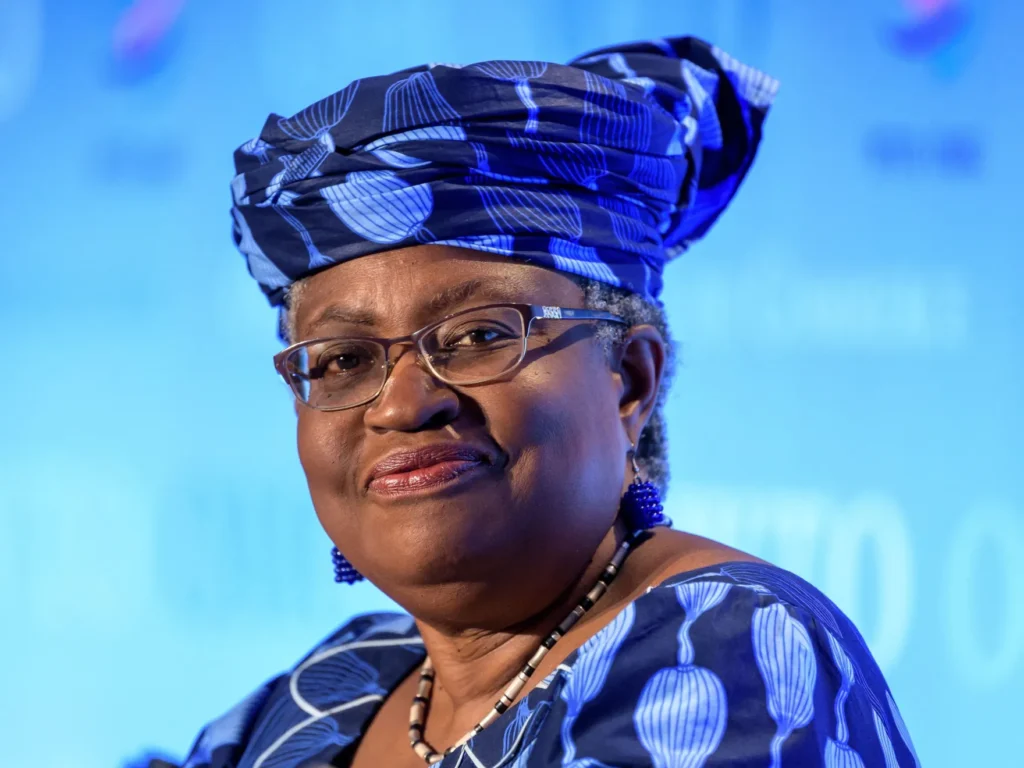
Africa Has a Seat at the Table.
When Ngozi Okonjo-Iweala became Director-General of the World Trade Organization in 2021, her appointment carried significance beyond her personal achievement. She became the first woman and the first African to lead the organisation, giving the continent one of its strongest voices at the centre of global trade policymaking.
But her position also raises a difficult question for Africa: having a seat at the global table is one thing; having enough economic power to influence what happens at that table is another.
The Trade Imbalance Remains.
Africa possesses enormous natural resources, a rapidly growing consumer market and a young workforce. Yet many African economies remain heavily dependent on exporting commodities while importing finished products.
This structure leaves countries vulnerable to fluctuations in global commodity prices and limits the amount of value created within Africa.

For decades, African governments have discussed moving from exporting raw materials to developing manufacturing and processing industries. The challenge has been turning that ambition into competitive industries operating at continental scale.
Okonjo-Iweala’s Challenge Is Bigger Than the WTO.
As WTO Director-General, Okonjo-Iweala has repeatedly highlighted the importance of trade as a driver of development.
The WTO has also supported efforts to strengthen trade among developing economies and improve the participation of developing countries in global commerce.
But international institutions can only create part of the framework. African countries themselves must develop the productive capacity required to take advantage of global trade opportunities.
AfCFTA Could Change the Equation.
One of Africa’s biggest opportunities is the African Continental Free Trade Area, which aims to create a single continental market and increase trade between African countries.
The agreement has the potential to reduce Africa’s dependence on markets outside the continent by making it easier for African companies to sell products and services across national borders.
However, signing trade agreements is easier than implementing them.
Infrastructure Remains a Major Barrier.
An African company may have a competitive product, but transporting it across several borders can still be expensive and complicated.
Poor roads, inefficient ports, unreliable electricity, complicated customs procedures and different national regulations can make intra-African trade more difficult than trading with markets outside the continent.
If AfCFTA is to deliver its full potential, governments will need to treat infrastructure and border efficiency as central parts of trade policy.
Africa Needs More Than Exporters.
The continent cannot build stronger bargaining power simply by exporting more commodities.
Africa needs companies capable of processing minerals, refining resources, manufacturing goods, developing technology and providing sophisticated services.
That would allow African countries to capture more value before products reach international markets.
The Question of African Negotiating Power.
This is where Okonjo-Iweala’s position becomes particularly interesting.
African countries can negotiate collectively through institutions such as the African Union and AfCFTA, but their influence ultimately depends on the strength of their economies.
A country with limited industrial capacity has fewer options when negotiating with a much larger economic power.
Economic strength therefore becomes diplomatic strength.
The Private Sector Must Be Part of the Strategy.
Governments cannot build Africa’s trade future alone. African businesses need access to finance, reliable infrastructure, skilled workers and larger markets. Entrepreneurs also need policies that make it easier to establish businesses in one country and expand into others.
This is where Africa’s growing private sector becomes critical. The continent needs companies that can compete not only in African markets but also in Asia, Europe, North America and the Middle East.
Africa’s Opportunity Is Growing.
The global economy is changing, and Africa has an opportunity to negotiate from a stronger position if it can build industries around its resources and consumer markets.
The continent’s young population, growing digital economy and strategic minerals give African countries assets that major global economies increasingly need.
But opportunity alone does not create power.
From Representation to Influence.
Ngozi Okonjo-Iweala’s rise represents an important achievement for Africa, but the larger objective should be to create an economic environment in which Africa does not depend on individual personalities to have influence internationally.
The continent needs stronger institutions, competitive businesses, integrated markets and governments capable of negotiating collectively.
Africa has increasingly gained representation in global institutions. The next challenge is converting that representation into genuine economic influence.

Comments (0)
No comments yet — be the first to share your thoughts.