

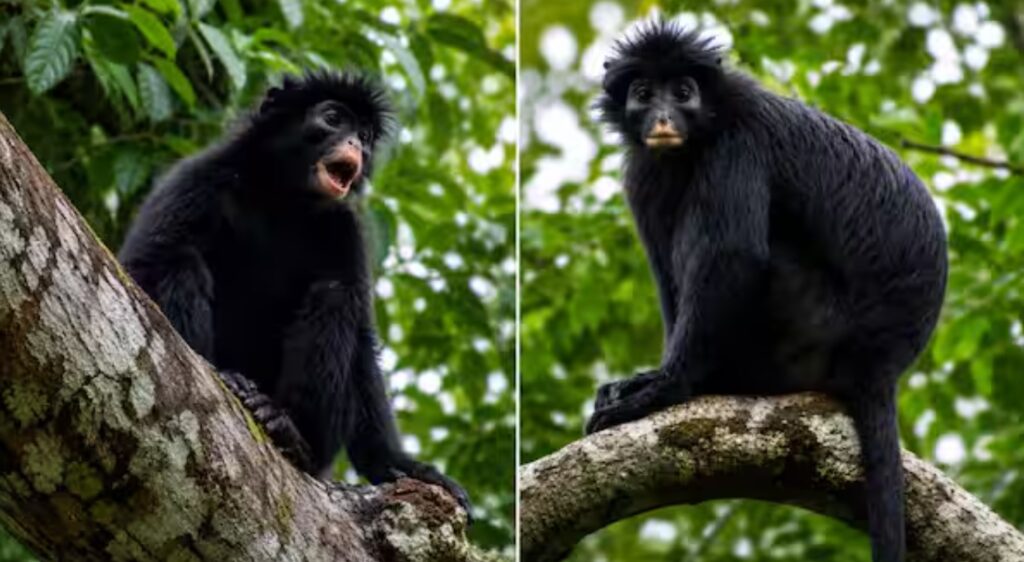
Scientists have confirmed the discovery of a previously unknown monkey species in the Democratic Republic of the Congo (DRC), a breakthrough that is being hailed as one of the most significant wildlife discoveries in Central Africa in recent years.
The new primate, identified after years of field research and genetic analysis, was found in the dense rainforests of the Congo Basin, one of the world’s richest ecosystems. Researchers say the discovery highlights the extraordinary biodiversity of the region and underscores the importance of protecting one of the planet’s largest remaining tropical forests.
Years of Research Led to the Discovery
The discovery follows extensive scientific expeditions involving wildlife experts, conservationists, and local communities who have long reported sightings of a monkey unlike any previously documented species.
Researchers collected photographs, behavioural observations, and genetic samples over several years before confirming that the animal is genetically distinct from other known monkey species found in Central Africa.

Scientists say modern DNA analysis played a crucial role in verifying that the primate represents an entirely separate species rather than a variation of an existing one.
Unique Characteristics Identified
The newly identified monkey is distinguished by its unique facial markings, body coloration, vocalisations, and genetic profile.
Researchers also observed differences in its feeding habits, social behaviour, and habitat preferences compared with closely related monkey species living in the Congo Basin.
Although scientists are continuing to study the animal, early findings suggest it has adapted to a very specific forest environment, making its long-term survival closely tied to the health of its habitat.
Congo Basin Remains a Global Biodiversity Hotspot
The discovery once again highlights the ecological importance of the Congo Basin, the world’s second-largest tropical rainforest after the Amazon.
Stretching across several Central African countries, the forest is home to thousands of plant and animal species, many of which are found nowhere else on Earth. It also plays a vital role in regulating the global climate by storing vast amounts of carbon and supporting regional rainfall patterns.
Scientists believe the region still contains many undiscovered species because large areas remain difficult to access and have never been comprehensively studied.
Conservation Challenges Persist
Despite its ecological importance, the Congo Basin continues to face mounting pressure from deforestation, illegal logging, mining, agriculture, and wildlife trafficking.
Conservationists warn that habitat destruction remains one of the greatest threats to newly discovered species, many of which could become endangered before they are fully understood.
Researchers are calling for stronger protection of the forests where the new monkey was found, arguing that preserving these habitats is essential not only for wildlife but also for local communities that depend on the forest for their livelihoods.
A Boost for African Science
The discovery is being celebrated by the scientific community as evidence that Africa continues to make important contributions to global biodiversity research.
Wildlife experts say the finding demonstrates the value of collaboration between local researchers, international scientists, and Indigenous communities, whose knowledge of the forest often provides the first clues leading to major discoveries.
The research is also expected to encourage further scientific exploration in the Congo Basin, where many experts believe additional undiscovered species may still exist.
Looking Ahead
Scientists are continuing to study the new monkey to better understand its population size, behaviour, and conservation status.
Future research will focus on mapping its distribution, assessing potential threats, and developing conservation strategies to ensure the species is protected for generations to come.
The discovery serves as a reminder that even in the 21st century, Africa’s vast rainforests continue to reveal remarkable new wildlife, reinforcing the continent’s importance as one of the world’s greatest centres of biodiversity.

Comments (0)
No comments yet — be the first to share your thoughts.