

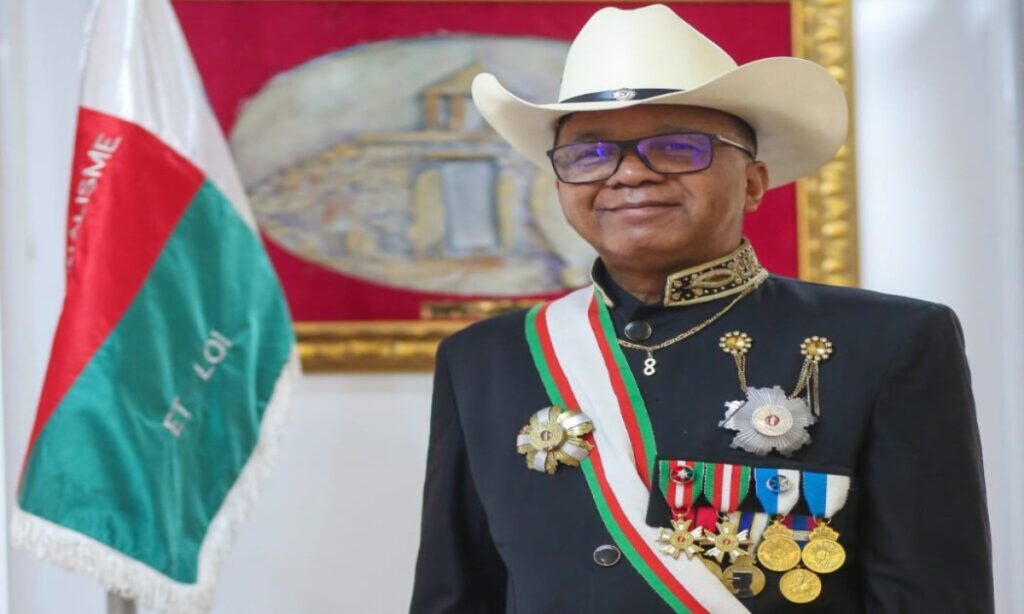
Madagascar’s former Senate president Richard Ravalomanana has been sentenced to 10 years of hard labour over his alleged role in the violent suppression of youth-led protests that shook the country in 2025. The verdict, delivered by an ordinary criminal court in Antananarivo on September 1 and widely reported on September 2, marks a major development in the continuing legal reckoning surrounding the political crisis that eventually brought down former President Andry Rajoelina’s government.
Ravalomanana, a retired general and former senior figure within Madagascar’s security establishment, was convicted of complicity in murder and other offences connected to the crackdown. Prosecutors accused him of using his influence within the security forces to direct violent action against demonstrators during protests in September and October 2025. The unrest initially centred on persistent shortages of electricity and water but quickly developed into a wider movement against the government of Rajoelina.
A Verdict Linked to Madagascar’s Political Crisis.
The protests became one of the most consequential episodes in Madagascar’s recent political history. What began as frustration over basic public services developed into a broader challenge to the government, particularly among younger Malagasy citizens. According to figures cited by Africanews, at least 22 people were killed and more than 100 injured during the unrest. The demonstrations ultimately contributed to a political crisis that ended with Rajoelina leaving office and a new administration emerging under Colonel Michael Randrianirina.
Ravalomanana occupied an influential position during the period. He was serving as president of the Senate and had previously held senior responsibilities within the gendarmerie. Prosecutors argued that this position gave him influence over the security response to the demonstrations and that he played a role in directing the violent suppression of protesters.

The court’s decision therefore carries significance beyond the individual case. It represents one of the clearest attempts by Madagascar’s new political order to hold senior figures from the previous administration accountable for events surrounding the protests.
Ravalomanana Rejects the Accusations.
Ravalomanana has consistently denied responsibility for the violence and rejected the prosecution’s central argument that he directed security forces to attack demonstrators. His defence questioned whether prosecutors had produced any written or verbal order directly connecting him to the alleged violence.
A former national police chief who appeared as a defence witness also reportedly disputed the prosecution’s account, saying Ravalomanana was not part of the operational chain of command during the crackdown. His lawyers therefore argued that his political and institutional position should not be interpreted as proof that he ordered the actions carried out by security forces.
The court nevertheless found sufficient grounds to convict him. A separate allegation involving a death threat was dismissed after the court accepted that the accusation was too old to prosecute. The remaining convictions resulted in the 10-year sentence.
Defence Announces Appeal.
Ravalomanana’s legal team has indicated that it will challenge the conviction. His lawyer has announced an appeal to the higher courts, arguing that the evidence presented during the trial did not establish a direct connection between the former Senate president and the violence committed during the demonstrations.
The appeal could therefore prolong one of the most politically sensitive legal cases arising from Madagascar’s 2025 crisis. It could also become an important test of how the country’s new authorities handle accountability for officials associated with the former government.
The case is particularly significant because Ravalomanana is not the only former senior official facing legal scrutiny. Africanews reports that several figures associated with Rajoelina’s former government have faced legal proceedings following the change of power, while Ravalomanana himself remains linked to a separate corruption investigation.
From Senate President to Prisoner.
Ravalomanana’s fall has been dramatic. He was removed from the presidency of the Senate in October 2025, shortly after the protests, before being arrested in December after failing to respond to a summons from the gendarmerie. He subsequently spent months in pre-trial detention at the high-security prison in Imerintsiatosika, outside Antananarivo.
His conviction now places one of the most prominent figures of the former political establishment on the wrong side of Madagascar’s changing political landscape. The sentence also demonstrates the extent to which the consequences of the 2025 protests continue to shape the country nearly a year after the demonstrations began.
What the Verdict Means for Madagascar.
The Ravalomanana case comes at a delicate moment for Madagascar. The country is still dealing with the institutional and political consequences of the events that followed the youth-led protests. The conviction could be welcomed by citizens who demanded accountability for the deaths and injuries recorded during the demonstrations, while critics may question whether judicial proceedings against former officials are being conducted with sufficient independence.
That tension will likely become more important as the appeal progresses. For the government, demonstrating that accountability is based on evidence rather than political retaliation will be essential. For Ravalomanana and his defence team, the appeal represents the opportunity to challenge the court’s interpretation of his role in the security response.
The broader issue is whether Madagascar can emerge from its political crisis with stronger institutions and greater public confidence. The protests were driven initially by basic grievances over electricity and water shortages, but they eventually exposed deeper dissatisfaction with governance and political accountability. The sentencing of Richard Ravalomanana shows that those grievances have now moved from the streets into the courts.
For Madagascar, the case is therefore about more than one former Senate president. It is part of a much larger struggle over accountability, institutional power and the country’s political future following the upheaval of 2025.

Comments (0)
No comments yet — be the first to share your thoughts.