

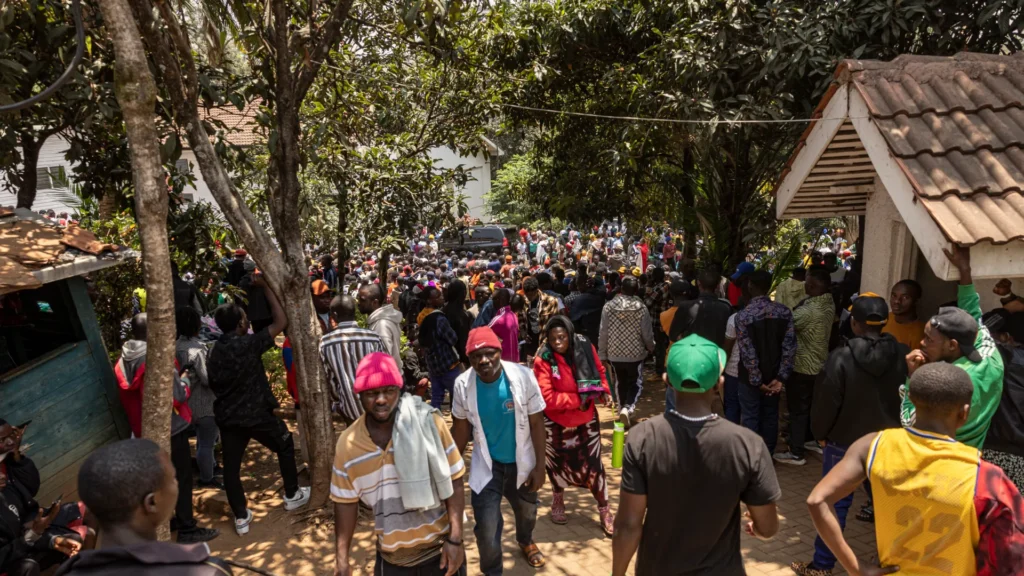
Kenya has announced a temporary amnesty for undocumented East African nationals living in the country, in an effort to calm growing anxiety after President William Ruto ordered a crackdown on small-scale businesses operated by foreign traders.
The announcement came after hundreds of Burundians gathered outside their embassy in Nairobi on September 7 seeking travel documents, amid fears that the government’s new enforcement campaign could force them to leave Kenya. The situation has also raised concerns about harassment and xenophobia involving foreign nationals.
Government Moves to Ease Tensions.
Kenyan authorities say the initiative is designed to bring undocumented East African nationals into the formal system rather than simply remove them from the country.
The government has urged undocumented citizens of other East African countries, particularly Burundians, to register formally through their respective embassies. During the registration period, those undergoing the process will be presumed to be legally present in Kenya, allowing them access to essential services and legal protections while their status is regularised.

The administration has also stressed that it has zero tolerance for harassment, intimidation or xenophobia, an important clarification as anxiety spread among migrant communities following Ruto’s announcement.
Ruto’s Crackdown Triggered Confusion.
President Ruto announced the crackdown after meeting Kenyan traders who had been protesting over tax reforms and competition from foreign businesses. His directive called for the closure of small-scale businesses operated by foreign traders.
Kenya’s Trade Ministry subsequently clarified that the measure was directed at foreigners operating businesses without the required work permits rather than being a blanket order against all foreign traders.
That distinction, however, did not immediately prevent confusion. Hundreds of Burundians rushed to their embassy in Nairobi, with some carrying luggage and seeking documents that would enable them to return home. Reports also emerged of threats and harassment directed at some foreign traders.
A Sensitive Issue Within East Africa.
The development is particularly sensitive because Kenya is part of the East African Community, whose integration framework provides for movement of citizens among member states.
Burundi is one of the EAC countries whose nationals have long travelled to Kenya for work, trade and other economic opportunities. The United Nations estimates that about 16,000 Burundian refugees and asylum seekers are living in Kenya, many of whom are involved in small-scale economic activities.
This means that enforcement against undocumented traders has implications beyond immigration policy. It also touches on regional integration, informal commerce and the economic relationship between Kenya and its neighbours.
Government Faces Pressure to Prevent Xenophobia.
The immediate challenge for Nairobi is to enforce immigration and business regulations without allowing the policy to develop into hostility toward foreigners.
The government has attempted to make that distinction clear, arguing that the crackdown concerns legal status and work permits rather than nationality. The temporary registration window could therefore provide an opportunity for undocumented migrants to regularise their status without immediately facing removal.
However, reports of fear among Burundian and Ugandan traders demonstrate how quickly immigration enforcement can become a wider social issue when government communication is unclear.
Political Pressure Is Also Growing.
The controversy comes as Kenya approaches another important political period, with Ruto facing growing pressure over economic conditions and criticism of his government’s handling of business and employment concerns.
Critics have argued that targeting foreign traders risks turning economic frustrations into a debate about migration and nationality. The government, meanwhile, maintains that Kenyan traders must be protected from businesses operating outside the legal framework.
The temporary amnesty may therefore represent an attempt to balance those competing pressures: enforcing Kenya’s labour and immigration rules while avoiding a broader confrontation with East African citizens.
A Test for Regional Integration.
Kenya’s decision will now be watched closely across the East African Community.
If the registration programme succeeds, it could provide a structured way of bringing undocumented migrants into the legal economy while preserving regional relationships. If enforcement is perceived as discriminatory or excessively harsh, however, it could deepen tensions between Kenya and communities from neighbouring countries.
For now, Nairobi appears to be trying to move from a potentially disruptive crackdown toward a more controlled regularisation process. The effectiveness of that approach will depend on whether undocumented migrants feel safe enough to register and whether authorities can enforce the rules without fuelling xenophobia.
The coming weeks will reveal whether Kenya’s temporary amnesty becomes a practical solution to undocumented migration or merely a pause in a much wider debate about foreign traders, employment and regional integration.

Comments (0)
No comments yet — be the first to share your thoughts.