

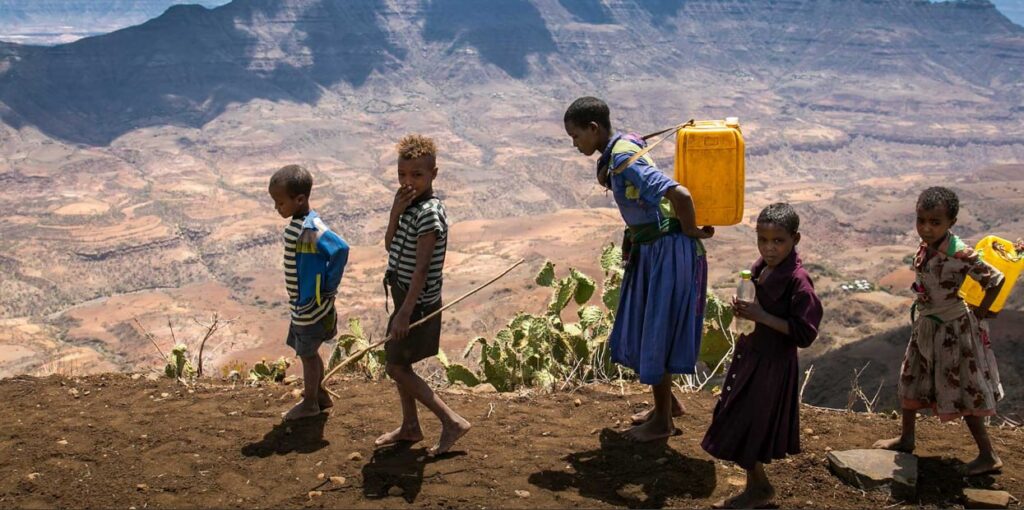
More than 162 million children, representing over two-thirds of all children across Eastern and Southern Africa, are living in areas exposed to the effects of a strengthening El Niño climate pattern, UNICEF has warned.
The warning, issued on September 1, comes as forecasts point to intensifying climate pressures through late 2026 and into 2027. UNICEF says drought, extreme heat and flooding could disrupt children’s access to food, healthcare, clean water, education and protection, creating a crisis that could affect families across a wide part of the continent.
A predictable crisis is approaching.
Unlike sudden disasters that can strike with little warning, the coming El Niño impacts are being forecast months in advance. UNICEF says this gives governments, humanitarian agencies and donors an important opportunity to prepare before conditions deteriorate further.
The organisation is calling for early investment in nutrition services, healthcare, water and sanitation systems, education infrastructure and child-protection programmes. It argues that acting before the worst effects arrive can reduce both human suffering and the eventual cost of emergency response.

UNICEF estimates that it urgently needs $173 million within its existing 2026 humanitarian requirements to provide anticipatory and life-saving assistance to children and families across 13 priority countries. The organisation says early investment in disaster-risk reduction can save significantly more money during later recovery efforts.
Climate impacts will differ across the region.
The effects of El Niño will not be identical everywhere.
In parts of East Africa, the immediate concern includes an increased risk of heavy rainfall and flooding during the short-rains season. Flooding can destroy homes, contaminate water supplies, damage roads and schools and increase the spread of waterborne diseases.
Further south, poor rainfall and drought could place greater pressure on agricultural production and household food supplies. UNICEF warns that declining harvests could deepen food insecurity and increase the risk of malnutrition among children.
Countries identified for heightened attention include Somalia, Ethiopia and South Sudan, alongside countries across the Horn of Africa, East Africa and Southern Africa. UNICEF is already working with governments and local organisations to strengthen preparedness.
Food and nutrition face another test.
Agriculture remains a major source of livelihoods across much of Eastern and Southern Africa, meaning climate shocks can quickly become household crises.
Drought can reduce crop production, while excessive rainfall and flooding can destroy crops that have already been planted. For families with limited savings or access to insurance, a failed harvest can mean less food at home and less money available for school fees, healthcare and other essential expenses.
Children are particularly vulnerable because inadequate nutrition can affect physical development, immunity and learning. UNICEF is therefore calling for life-saving nutrition supplies to be positioned ahead of the expected crisis and for early screening and treatment to be expanded.
Schools could also come under pressure.
The threat extends beyond food and health.
Extreme weather can damage classrooms, prevent teachers and students from reaching schools and force families to relocate. Flooding can also destroy school infrastructure and interrupt education for extended periods.
UNICEF is urging governments to reinforce school infrastructure and prepare alternative learning spaces before disruptions occur. The organisation has previously warned that climate-related disasters are already causing significant damage to education systems across Eastern and Southern Africa.
The concern is that another major climate shock could deepen existing inequalities, particularly for children living in poor, rural or conflict-affected communities.
Water and disease risks are growing.
Changes in rainfall and temperatures can also create conditions favourable to the spread of infectious diseases.
Flooding can contaminate drinking-water sources, while drought can force families to rely on unsafe water supplies. UNICEF is calling for stronger disease surveillance, vaccination campaigns and investment in water, sanitation and hygiene services as part of preparations for the coming months.
These risks become even more serious in communities where healthcare systems are already operating under pressure from conflict, displacement or limited resources.
The poorest families face the greatest danger.
The coming climate shock is unlikely to affect every household equally.
Families with savings, secure housing and access to reliable services may be better positioned to cope with droughts, floods or food-price increases. Poor households, displaced families and communities already experiencing humanitarian emergencies have fewer options.
UNICEF is therefore advocating for shock-responsive social protection, including systems that can quickly provide cash assistance and other support when early-warning indicators show that a crisis is developing.
The approach represents a shift from waiting for humanitarian emergencies to become visible before responding.
Africa has a narrow window to prepare.
The scale of the warning makes the coming months particularly important. More than 162 million children are already considered exposed, but UNICEF stresses that the severity of the eventual impacts will depend partly on how governments and international partners respond now.
The organisation is urging donors to provide flexible financing, while governments are being encouraged to strengthen national systems capable of responding rapidly to climate shocks.
For African families, the issue is ultimately much bigger than a weather forecast. A prolonged drought or major flood can determine whether a child eats adequately, stays in school, has access to clean water or receives medical treatment.
With El Niño expected to strengthen through late 2026 and its consequences potentially extending into 2027, Eastern and Southern Africa is entering a critical period. The challenge for governments and humanitarian organisations is to act while there is still time to prevent a predictable climate threat from becoming another major crisis for the continent’s children.

Comments (0)
No comments yet — be the first to share your thoughts.