

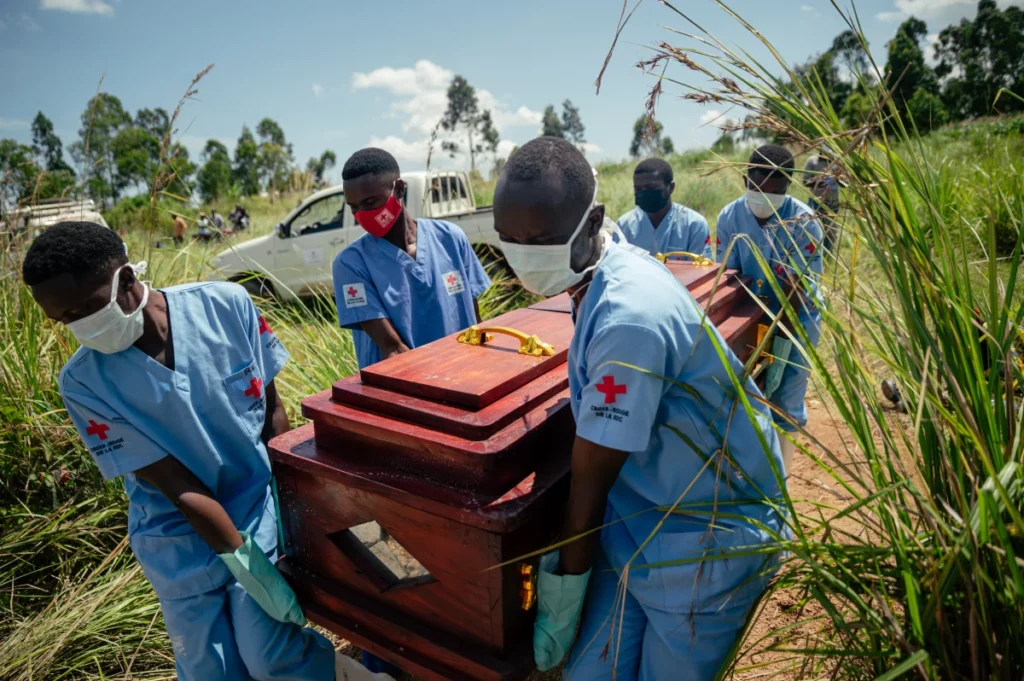
The Ebola outbreak in the Democratic Republic of the Congo (DRC) is continuing to accelerate, with health officials warning that the virus is spreading faster than response teams can contain it. The latest figures show that the outbreak has surpassed 2,000 confirmed cases, making it one of the largest Ebola epidemics ever recorded in Africa.
While neighbouring Uganda has entered the final phase before being declared Ebola-free, the situation in eastern Congo remains critical as health workers struggle with rising infections, insecurity, and community resistance.
Deaths Continue to Rise
According to Congolese health authorities and the World Health Organization (WHO), the outbreak has recorded more than 2,000 confirmed infections and over 700 deaths since it was declared in May.
Health experts believe the actual number of infections could be significantly higher because many cases are never reported or are discovered only after patients have died. New infections continue to be concentrated in the eastern provinces of Ituri, North Kivu, and Haut-Uele, where conflict and population movements have made disease surveillance extremely difficult.

Transporting Bodies Fuels the Spread
The International Organization for Migration (IOM) has raised fresh concerns over the movement of Ebola victims’ bodies between communities.
Health officials say the Bundibugyo strain of Ebola remains highly infectious after death, meaning traditional funeral practices and the transport of bodies can quickly spread the virus to new areas.
The IOM has documented more than 100 cases in which bodies of Ebola victims were moved between districts, with at least one incident directly linked to new infections. Officials are urging families to allow trained burial teams to conduct safe and dignified burials to prevent further transmission.
Conflict Hampers Response Efforts
Containing the outbreak has become increasingly difficult because many of the affected communities are located in areas plagued by armed conflict.
Ongoing violence has restricted access for healthcare workers, delayed contact tracing, and disrupted vaccination and surveillance activities. Humanitarian organisations say insecurity has also forced some treatment centres to reduce operations, limiting access to life-saving care for infected patients.
Health workers continue to face mistrust from some communities, where misinformation about Ebola has discouraged people from seeking treatment or cooperating with response teams.
Uganda Moves Towards Recovery
While the outbreak worsens in Congo, Uganda has made significant progress in controlling imported cases.
On Thursday, Ugandan health authorities discharged the country’s last Ebola patient, triggering the mandatory 42-day countdown required before the World Health Organization can officially declare the outbreak over.
Uganda recorded 20 confirmed cases during the outbreak, most of them linked to infections imported from the DRC. If no new cases are detected during the monitoring period, the country will once again be declared Ebola-free.
International Support Intensifies
The growing outbreak has prompted international agencies to strengthen their response.
The WHO, Africa Centres for Disease Control and Prevention (Africa CDC), IOM, Médecins Sans Frontières (MSF), and other humanitarian organisations continue to deploy medical personnel, laboratory specialists, and emergency supplies to affected areas.
Response teams are focusing on expanding treatment centres, improving surveillance, tracing contacts, conducting safe burials, and educating communities about preventing infection. Officials stress that winning public trust remains one of the most important tools in stopping the outbreak.
Outlook Remains Concerning
Health experts warn that the coming weeks will be critical in determining whether the outbreak can be brought under control.
Although international support has increased, continued insecurity, population movement, and gaps in contact tracing continue to fuel transmission. Authorities are urging communities to report suspected cases quickly, cooperate with health workers, and follow public health guidelines to prevent further spread.
As Uganda moves closer to eliminating the virus, the Democratic Republic of the Congo remains at the centre of Africa’s largest public health emergency, highlighting the urgent need for sustained international support and stronger community engagement.

Comments (0)
No comments yet — be the first to share your thoughts.