

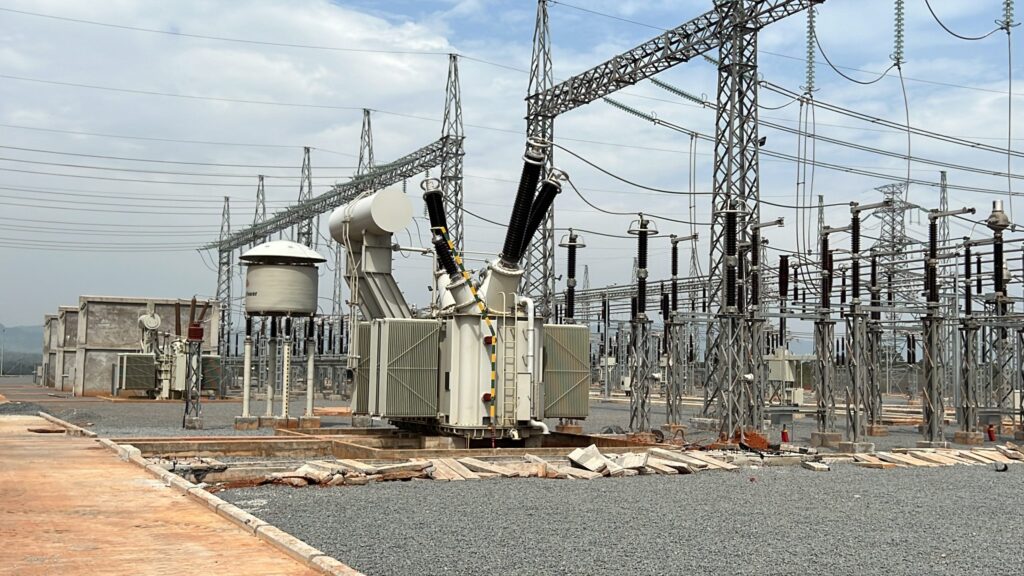
Sonatrel Moves Forward With Cross-Border Electricity Infrastructure.
Cameroon has taken another concrete step toward strengthening electricity trade with Chad after the National Electricity Transmission Company (Sonatrel) launched two international tenders on 17 August 2026 for works linked to the Cameroon–Chad Power Interconnection Project. The development was reported on 18 August, placing it firmly within the 48-hour window for fresh news.
The tenders represent an important stage in a project that has been under development for several years and is designed to connect Cameroon’s electricity network with Chad’s system. The broader objective is to allow Cameroon to export electricity to Chad while also strengthening transmission infrastructure inside Cameroon. The World Bank identifies the project’s objectives as interconnecting Cameroon’s southern and northern power systems, enabling electricity trade with Chad and increasing electricity access in N’Djamena.
A Strategic Energy Project for Central Africa.
The Cameroon–Chad interconnection is one of the region’s major electricity infrastructure projects. It is intended to make greater use of Cameroon’s electricity-generation capacity while addressing chronic power shortages in northern Cameroon and Chad.
The project involves major high-voltage transmission infrastructure linking the two countries. Earlier project documentation indicates that the wider transmission network includes hundreds of kilometres of new high-voltage lines and substations, creating the physical infrastructure required to move electricity from generation centres in southern Cameroon towards northern regions and eventually into Chad.

The latest tender announcement therefore represents more than a procurement exercise. It signals continued movement from project planning and financing toward physical implementation.
Cameroon Could Become a Major Regional Electricity Supplier.
Cameroon has significant electricity-generation potential, particularly from hydropower. The country’s southern electricity system has access to large generation facilities, while demand and supply conditions vary considerably across the national territory.
The interconnection project is designed to help move electricity from areas with greater generation capacity towards northern Cameroon and subsequently towards Chad. This could strengthen Cameroon’s position as an electricity supplier within Central Africa.
Earlier assessments of the project indicated that Cameroon could eventually supply 100 MW of electricity to Chad, while the wider infrastructure would improve electricity access for communities located along the transmission corridor.
For Chad, the project could be particularly important because N’Djamena and other parts of the country face significant electricity-access challenges.
Project Expected to Benefit Millions.
The African Development Bank estimates that the project will directly affect approximately 8.9 million people, including around 6.5 million in Cameroon and 2.4 million in Chad.
The potential benefits extend beyond simply increasing the amount of electricity available.
Improved electricity supply can support businesses, hospitals, schools, telecommunications infrastructure, water systems and manufacturing. For households, more reliable electricity can improve living conditions and reduce dependence on expensive alternative power sources.
For businesses operating along the transmission corridor, stronger electricity infrastructure could also reduce one of the major constraints on productivity.
Financing Has Been a Major Part of the Project.
The Cameroon–Chad interconnection has attracted support from several international financial institutions, including the World Bank, African Development Bank and Islamic Development Bank.
World Bank project documentation shows that the programme has a financing commitment of more than US$400 million from the International Development Association, with Sonatrel responsible for implementation on the Cameroonian side. The project’s current closing date is 31 December 2027.
The Islamic Development Bank has also been involved in financing infrastructure associated with the project, including transmission lines, substations and community-development components. Its financing has been designed not only to support electricity infrastructure but also to provide benefits to communities affected by the project.
Infrastructure Development Could Create Wider Economic Benefits.
The significance of the project goes beyond the energy sector.
Reliable electricity is one of the most important requirements for industrialisation. Companies cannot operate efficiently when power supply is unreliable or when they must depend heavily on diesel generators and other expensive alternatives.
A stronger Cameroon–Chad electricity connection could therefore support economic activity along the transmission corridor, particularly if governments and private investors develop industrial, agricultural and commercial activities around improved power availability.
For Cameroon, this could strengthen the economic potential of its northern regions. For Chad, access to additional electricity could support industrial and urban development around N’Djamena and other areas.
The Project Has Faced Delays.
Despite its importance, the interconnection project has faced delays and financing challenges.
A Cameroonian government presentation to Parliament in 2025 indicated that the Cameroon–Chad component faced a financing shortfall of approximately 287 billion CFA francs, with 150 billion CFA francs attributed to the Cameroon side and 137 billion CFA francs to Chad. The government said a phased approach was being considered depending on available funding.
That history makes the latest tender announcement particularly significant. Moving forward with procurement suggests that efforts to overcome the project’s financing and implementation challenges are producing tangible results.
However, tenders do not automatically mean immediate completion. Contractors still need to be selected, contracts signed and construction completed before the full economic benefits become visible.
Electricity Trade Could Strengthen Cameroon-Chad Relations.
The project also has a strategic regional dimension.
Cameroon and Chad are members of the Economic and Monetary Community of Central Africa (CEMAC), where governments have repeatedly promoted greater regional economic integration.
Electricity trading could become an important component of that integration. Instead of each country attempting to meet all of its energy needs independently, regional power systems can share electricity according to generation capacity and demand.
Cameroon could benefit from selling surplus electricity, while Chad could gain access to a more stable external source of power. Such arrangements could eventually encourage similar cross-border energy projects elsewhere in Central Africa.
The Next Challenge Is Delivery.
The launch of the tenders is an encouraging development, but the real test will be implementation.
The project involves complex infrastructure requiring transmission lines, substations, land acquisition, environmental safeguards, financing and coordination between two national electricity systems.
There are also communities along the project corridor whose livelihoods and land use can be affected by construction. Previous project financing has therefore included provisions for resettlement, community infrastructure and social-development programmes.
Ensuring that those commitments are fulfilled will be important for maintaining public support.
A Potential Turning Point for Central African Energy.
The latest tenders indicate that the Cameroon–Chad electricity interconnection is moving into another important phase.
For Cameroon, the project could strengthen its role as a regional electricity exporter while improving connections between its southern and northern power systems. For Chad, it offers the prospect of greater access to electricity and a more diversified power supply.
But the project’s ultimate significance will depend on whether procurement is followed by timely construction, commissioning and reliable electricity transmission.
For now, Sonatrel’s decision to launch the latest tenders is a significant step forward. After years of planning, financing negotiations and delays, the Cameroon–Chad power corridor is moving closer to becoming a functioning piece of Central Africa’s energy infrastructure.

Comments (0)
No comments yet — be the first to share your thoughts.