

New Competition Moves Closer to Implementation.
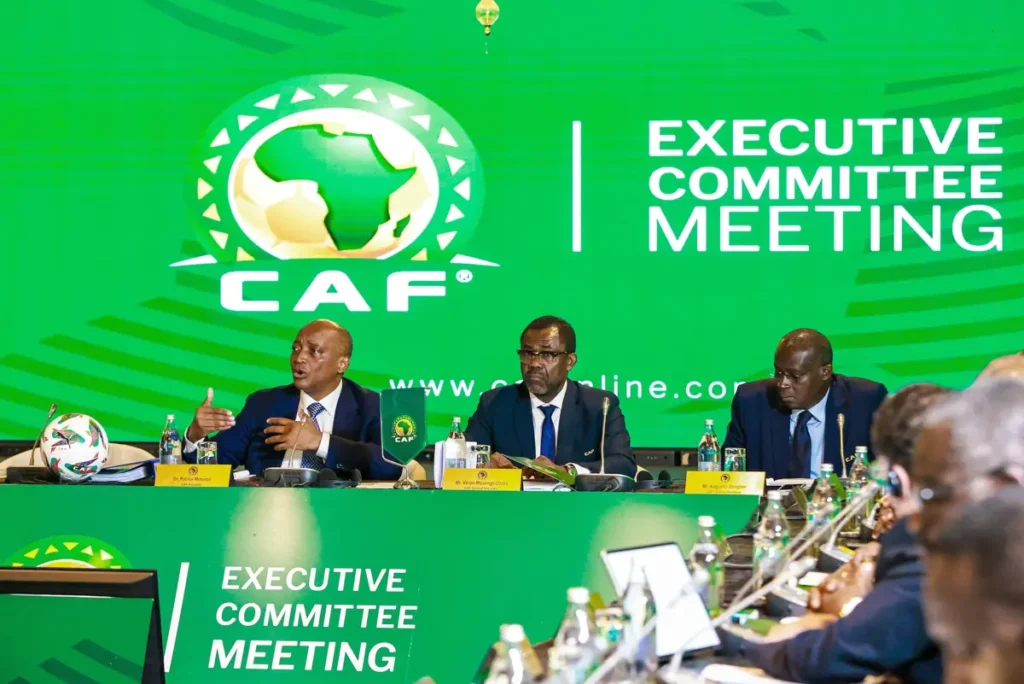
The Confederation of African Football has taken another step towards establishing a new African Nations League, forming a committee tasked with examining how the proposed continental competition can be implemented. The development, reported on 17 August 2026, comes as CAF continues to reshape the international football calendar and create new competitions capable of providing African national teams with more meaningful fixtures and additional commercial opportunities.
The committee has already begun discussions, with some meetings held virtually as officials work towards developing a framework for the proposed competition. Among those identified as members are CAF President Fouzi Lekjaa, Football Kenya Federation President Wallace Karia and Eritrean football administrator Paulos Weldehaimanot. The committee is expected to prepare detailed recommendations before presenting them to the CAF Executive Committee for further consideration.
CAF Sees Commercial and Sporting Potential.
The African Nations League forms part of CAF’s broader attempt to strengthen the international football calendar. The organisation has increasingly argued that African national teams need more competitive matches outside the Africa Cup of Nations and FIFA World Cup qualification cycles, while broadcasters and sponsors require competitions with a more predictable structure and stronger commercial value.
CAF itself confirmed on 10 August that significant progress had been made on the proposed competition, noting that the format had already been discussed within the Executive Committee. The organisation said the project is intended to create more meaningful and commercially attractive international football opportunities for its member associations.

The proposed Nations League is particularly significant because CAF is also restructuring the frequency of its flagship competitions. The 2027 Africa Cup of Nations in Kenya, Tanzania and Uganda is scheduled for 19 June to 17 July 2027, while the qualification competition is due to begin in September 2026. CAF’s broader calendar reforms are designed to give national associations, players, broadcasters and commercial partners greater certainty.
What the Competition Could Mean for African Football.
If implemented successfully, the African Nations League could give national teams more competitive opportunities, particularly those that struggle to secure high-quality friendly matches. A structured competition could also allow emerging football nations to play regularly against opponents of a comparable level while providing stronger teams with meaningful preparation for major tournaments.
The commercial argument could prove equally important. African football has historically struggled to maximise the value of international competitions outside AFCON and World Cup qualification. A regular Nations League could provide CAF with additional broadcast inventory, sponsorship opportunities and match-day revenue while giving national federations another competition through which to generate income.
However, the creation of another major competition would also raise questions about the already crowded football calendar. African players increasingly compete across domestic leagues, continental club competitions and international tournaments, while many of the continent’s leading players are based in Europe and must travel long distances for national-team assignments. CAF will therefore have to balance its commercial ambitions with player welfare and the practical realities facing national associations.
CAF Still Has Work to Do.
The formation of the committee does not mean that the African Nations League has officially begun. The competition remains a project under development, and its proposed format, scheduling, qualification system and final implementation arrangements still require further decisions.
That process will now become increasingly important. CAF will need to determine how the competition can fit alongside AFCON, World Cup qualification, FIFA international windows and existing regional competitions without creating additional logistical pressure on national teams.
For now, however, the establishment of the committee represents a clear indication that the idea has moved beyond a purely conceptual stage. CAF is actively working on a structure that could fundamentally change how African national teams compete between major tournaments.
If the project succeeds, the African Nations League could become one of the most significant additions to the continent’s international football calendar in the coming years.

Comments (0)
No comments yet — be the first to share your thoughts.