
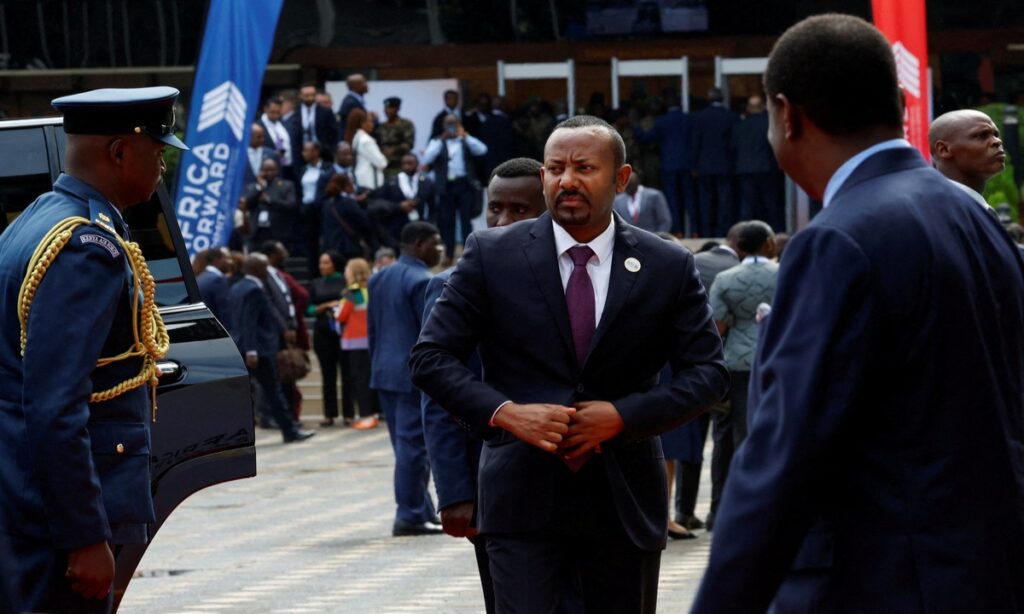
Seven Ethiopian armed groups have announced a new alliance aimed at overthrowing the government of Prime Minister Abiy Ahmed, bringing together organisations that have previously been divided by ethnicity, geography and even armed conflict with one another.
The coalition, calling itself the Ethiopian Peoples’ Forces Alliance for Survival, includes the Tigray People’s Liberation Front and the Amhara Fano National Movement, two forces that were previously on opposing sides during Ethiopia’s 2020–2022 Tigray war.
The announcement represents a significant development in Ethiopia’s already complicated security environment, although the groups remain divided on several territorial and political questions.
Former Enemies Are Now Working Together.
The alliance brings together armed organisations from different parts of Ethiopia.

Among them are forces from Tigray and Amhara, regions that have experienced some of the country’s most serious conflicts in recent years. The TPLF fought against the federal government during the Tigray war, while Fano groups initially fought alongside federal forces against the TPLF before later turning against Abiy’s government.
Their decision to cooperate reflects a shared opposition to the current government despite the unresolved disagreements between the groups themselves.
Their Objective Is To Remove Abiy’s Government.
The coalition has openly stated that its objective is to overthrow Abiy’s government and establish a transitional administration.
Fano leader Zemene Kassie said the groups believe they have a responsibility to challenge what they describe as an increasingly centralised political system. The government, however, says it has launched a national dialogue intended to address political divisions and internal conflicts.
That means the two sides are presenting fundamentally different interpretations of the country’s political crisis.
Tigray Has Become A Major Flashpoint Again.
The announcement comes as tensions have been rising again in Tigray.
The TPLF has reasserted control in parts of the region, while clashes involving federal and Tigrayan forces have raised concerns about the durability of the 2022 peace agreement that ended the major phase of the Tigray war.
The emergence of a wider armed alliance adds another layer to the situation because the TPLF is now declaring cooperation with groups that previously fought against it.
Ethiopia Says Eritrea May Be Behind The Alliance.
Ethiopian Prime Minister Abiy Ahmed’s government has accused neighbouring Eritrea of providing financial backing to members of the new alliance.
Abiy’s spokesperson Billene Seyoum said the announcement confirmed what the government had previously alleged about collaboration involving Eritrea. Eritrea has repeatedly denied similar accusations and had not immediately responded to the latest claim, according to Reuters.
The allegation is particularly sensitive because Ethiopia and Eritrea have a long history of conflict, while relations between the two countries have deteriorated since the end of Ethiopia’s Tigray war.
The Alliance Still Faces Internal Problems.
Despite the dramatic announcement, the seven groups do not suddenly share all of the same political objectives.
They remain divided over territory, regional authority and other questions. Some of the organisations have also fought each other in the past, meaning that maintaining a common command structure could prove difficult.
That makes the alliance’s ability to coordinate military operations across Ethiopia an important unanswered question.
What The Alliance Means For Ethiopia.
The new coalition gives several armed movements a common political message at a time when Ethiopia is already facing insecurity in multiple regions.
For the government, the immediate challenge is managing the renewed fighting while preventing conflicts in Tigray and Amhara from becoming connected to other regional insurgencies.
For the groups involved, the alliance provides a platform for presenting their opposition to Abiy as a national movement rather than a series of separate regional rebellions.
Whether that cooperation can survive the groups’ existing differences remains uncertain, but their decision to announce a common objective of removing Abiy’s government marks a significant new development in Ethiopia’s political and security crisis.

Comments (0)
No comments yet — be the first to share your thoughts.