

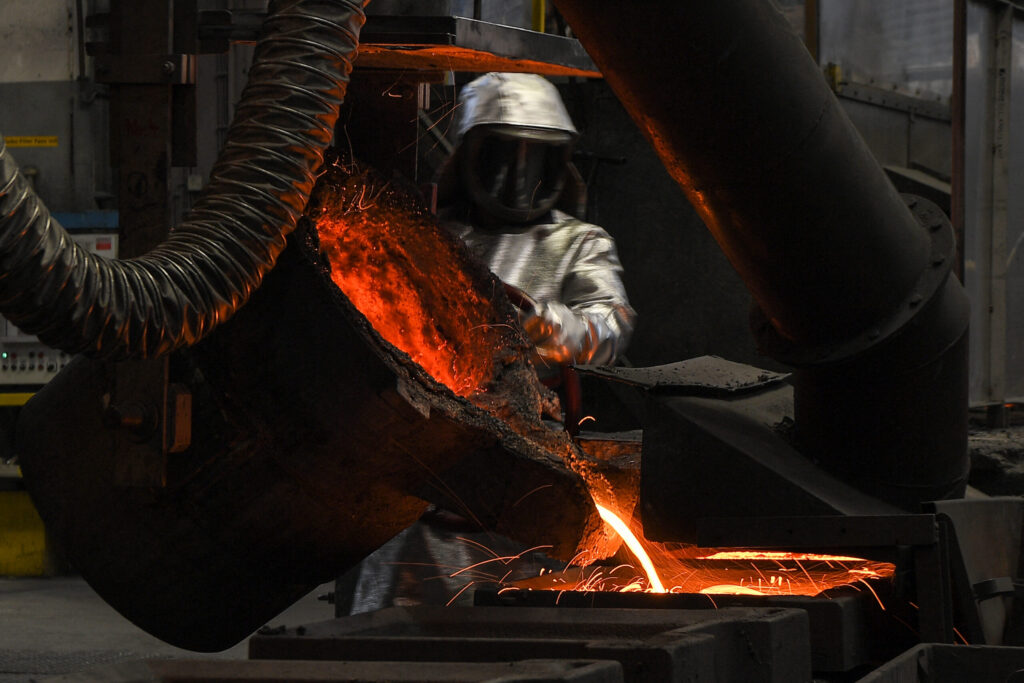
Africa’s ambition to move beyond exporting raw minerals is gaining momentum, but an important obstacle threatens to undermine that industrial transformation: the continent’s ability to provide reliable and affordable electricity. From Guinea’s vast bauxite reserves to the lithium deposits attracting investors across several African countries, governments are increasingly seeking to process more resources at home instead of exporting them in their least valuable form. Yet without sufficient power, the factories, refineries and processing plants needed to achieve that goal may struggle to operate competitively.
The issue is particularly important for Guinea, one of the world’s major producers of bauxite, the raw material used to manufacture aluminium. The country has attracted substantial interest from mining companies because of its mineral wealth, but turning that advantage into broader economic development requires more than extracting and shipping ore. It requires energy infrastructure, transport networks, skilled workers and investment in industrial facilities capable of producing higher-value goods.
For Guinea and other resource-rich African economies, the question is no longer simply how much mineral wealth lies underground. It is how much of that wealth can be converted into domestic manufacturing, employment and long-term economic value.
Guinea’s Bauxite Wealth and the Refining Challenge.
Guinea occupies a strategic position in the global aluminium supply chain because of its extensive bauxite deposits. The mineral is refined into alumina, which is subsequently processed into aluminium. Each stage creates opportunities for industrial activity, but each also requires infrastructure, technical expertise and dependable energy supplies.

Exporting raw bauxite allows Guinea to earn revenue from mining and international trade. However, refining the ore domestically could create additional opportunities through construction, engineering, transport, maintenance and industrial services. It could also allow the country to capture a greater share of the value generated from its natural resources.
That potential explains why mineral-producing countries increasingly want mining companies to invest in local processing facilities rather than concentrate their operations on extraction and exports. Governments can use mining agreements, licensing arrangements and investment incentives to encourage this transition.
The challenge is making such projects economically viable. Alumina refining is energy-intensive, and aluminium smelting requires even greater quantities of electricity. A country that cannot provide reliable power at competitive prices may find it difficult to attract investors willing to commit billions of dollars to industrial production.
For Guinea, expanding electricity generation and transmission is therefore inseparable from its mineral-processing ambitions.
Why Electricity Could Determine Africa’s Industrial Future.
Electricity is one of the foundations of modern industrialisation. Mining operations need power for extraction and processing, while factories depend on stable supplies to maintain production schedules, protect equipment and meet delivery commitments.
Where electricity is unreliable, businesses may have to rely on costly backup generators, absorb losses from interruptions or reduce production. These additional expenses can make locally processed products more expensive than goods produced in countries with stronger infrastructure.
The problem extends beyond Guinea. Across parts of Africa, electricity shortages, high operating costs and limited transmission capacity continue to constrain manufacturing. Even countries with substantial energy resources can struggle to deliver affordable electricity to industrial zones if generation, transmission and distribution systems are inadequate.
This creates a difficult contradiction. Africa possesses many of the minerals required by global industries, including aluminium, batteries, electric vehicles and renewable-energy technologies. Yet the continent risks capturing only a limited share of the manufacturing opportunities associated with those industries if it cannot support large-scale processing at home.
The industrial opportunity is substantial, but mineral deposits alone cannot guarantee success.
The Cost of Remaining a Raw-Material Exporter.
When African countries export unprocessed or minimally processed minerals, much of the higher-value manufacturing activity takes place elsewhere. The exporting country may benefit from royalties, taxes, wages and infrastructure investment, but it can miss additional opportunities associated with refining, component production and industrial supply chains.
Domestic processing can potentially broaden these benefits. A refinery requires engineers, technicians, construction companies, logistics providers and maintenance specialists. Local suppliers may also gain opportunities to provide equipment, materials and services.
However, processing minerals locally is not automatically more profitable than exporting them. Industrial projects must compete on energy prices, transport costs, financing, technology, market access and environmental standards. Governments must therefore assess whether proposed facilities can operate sustainably rather than assume that every processing project will deliver economic gains.
The strongest strategy is one that links mineral extraction to a realistic industrial development plan. That means identifying which stages of production can be carried out competitively, training workers for the jobs created and ensuring that infrastructure investments benefit more than a single mining operation.
Without those connections, mineral-processing policies risk producing expensive facilities that depend heavily on government support or struggle to find markets for their output.
Can Renewable Energy Close the Gap?
Africa’s energy resources offer several possible routes towards supporting industrial growth. Hydropower, solar, wind and natural gas can all contribute to electricity generation, although their suitability varies by location, cost and industrial demand.
Guinea has considerable hydropower potential, which could support its industrial ambitions if generation capacity is matched by reliable transmission infrastructure and effective electricity management. Solar power could complement existing supplies, while regional electricity interconnections could help improve access to power where cross-border systems are commercially and technically viable.
Yet industrial consumers require more than installed generation capacity. They need electricity delivered consistently, at predictable prices and in sufficient quantities. Renewable-energy projects must therefore be integrated into wider power systems, with appropriate transmission networks, storage or other balancing arrangements where necessary.
Financing remains another major obstacle. Large power projects require substantial upfront investment, and governments must balance industrial development with the cost of expanding electricity access to households, schools, hospitals and smaller businesses.
A credible energy strategy must address both objectives rather than prioritise export-oriented industry at the expense of the wider population.
The Investment and Governance Questions.
Africa’s mineral-processing ambitions will also depend on the quality of agreements negotiated with mining companies and industrial investors. Governments need to establish clear rules covering electricity supply, taxation, environmental protection, employment and the responsibilities of investors.
Public authorities must be careful not to offer unsustainable subsidies or guarantee low electricity prices for industrial projects while households and small businesses face high costs or unreliable service. Any incentives should be transparent, economically justified and linked to measurable benefits, such as local employment, skills transfer and investment in supporting infrastructure.
Environmental safeguards are equally important. Mining and refining can place pressure on water resources, ecosystems and surrounding communities. Industrial development should therefore include effective monitoring, responsible waste management and meaningful consultation with people living near mining and processing sites.
Governments must also ensure that mineral revenues contribute to long-term development. This includes investment in education, technical training, transport, power systems and institutions capable of managing complex industrial projects.
Africa’s Opportunity Goes Beyond Mining.
The global transition towards cleaner energy and new technologies is increasing demand for many minerals found across Africa. This creates an opportunity for countries to negotiate a more valuable position in international supply chains, but the opportunity will not automatically translate into industrial prosperity.
Guinea’s bauxite sector illustrates the central challenge facing resource-rich economies: natural wealth creates the possibility of industrialisation, while electricity and infrastructure determine whether that possibility can become reality.
For Cameroon and other African countries pursuing local processing of minerals and agricultural commodities, the lesson is equally relevant. Industrial growth depends on reliable energy, affordable transport, technical skills and policies that encourage productive investment.
Africa does not need to process every raw material domestically to succeed. It needs to identify viable industries, build the infrastructure those industries require and negotiate investment agreements that produce lasting economic benefits.
The decisive question is whether governments can turn mineral wealth into a broader productive economy. Until reliable electricity becomes available at the scale and cost industry requires, Africa’s ambition to move up the value chain will remain constrained by one of its most persistent development challenges.

Comments (0)
No comments yet — be the first to share your thoughts.