

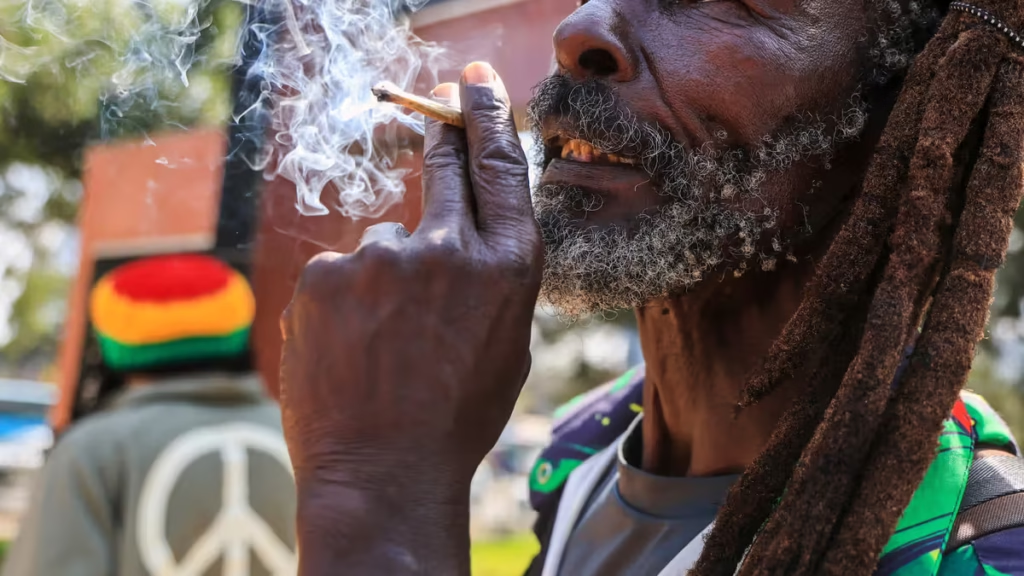
Kenya’s High Court has dismissed a petition by members of the Rastafarian community seeking legal permission to use cannabis for religious purposes, ruling that the country’s existing drug laws do not violate the constitutional right to freedom of religion.
The decision, delivered by Justice Bahati Mwamuye, upholds Kenya’s Narcotic Drugs and Psychotropic Substances (Control) Act, which prohibits the cultivation, possession, and use of cannabis. The ruling marks the end of a closely watched legal battle that sparked national debate over the balance between religious freedom and public health.
Court Upholds Existing Drug Laws
In his judgment, Justice Mwamuye ruled that the Rastafarian Society of Kenya had not provided sufficient constitutional grounds to justify an exemption from the country’s cannabis laws.
While acknowledging that freedom of religion is protected under Kenya’s Constitution, the judge noted that the right is not absolute and may be limited where necessary to protect public health, safety, and the wider public interest. He added that creating a religious exemption for cannabis use would require a stronger legal and constitutional basis than what had been presented before the court.

Rastafarians Express Disappointment
Members of the Rastafarian community, who gathered outside Nairobi’s Milimani Law Courts, expressed disappointment with the ruling.
The petitioners argued that cannabis is regarded as a sacred sacrament within their faith and forms an important part of their religious practices. They maintained that criminalising its use infringes upon their constitutional rights to worship freely.
Following the judgment, lawyers representing the Rastafarian Society indicated they intend to appeal the decision in a higher court, insisting that the legal battle for religious recognition is far from over.
Debate Over Drug Policy Continues
Although the court upheld the existing law, Justice Mwamuye suggested that Kenya should have a broader national conversation about its drug policy.
He observed that the issue extends beyond the Rastafarian community and raises wider questions about public health, criminal justice, and changing global attitudes toward cannabis regulation.
In recent years, several countries have relaxed restrictions on cannabis for medical, industrial, or recreational use. Kenya, however, continues to maintain strict penalties for possession, cultivation, and trafficking under its current legislation.
Mixed Public Reaction
The ruling has generated mixed reactions across the country.
Supporters of the decision argue that maintaining the ban helps protect public health and reinforces existing anti-drug laws. Others believe the case raises important questions about minority religious rights and whether certain faith-based practices should receive legal accommodation.
Legal analysts say the judgment is likely to remain an important reference in future constitutional cases involving the relationship between religious freedom and laws enacted to protect public welfare.
What Comes Next
With the petition dismissed, Kenya’s cannabis laws remain unchanged, and the possession, cultivation, and use of marijuana continue to be criminal offences.
However, the planned appeal means the issue is unlikely to disappear from public debate. As conversations around cannabis reform continue in different parts of the world, the Kenyan case has renewed discussion about how countries should balance religious liberty, public health, and evolving social attitudes.
For now, the High Court’s ruling reinforces the government’s position that any changes to cannabis legislation must come through constitutional and legislative processes rather than judicial exemptions.

Comments (0)
No comments yet — be the first to share your thoughts.