

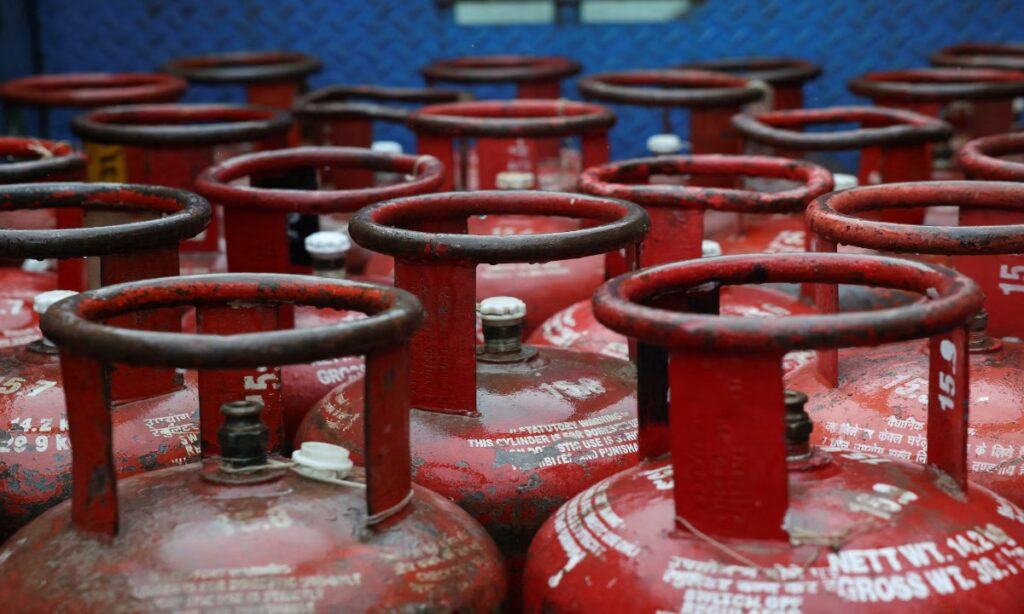
For weeks, finding a bottle of cooking gas has become an unexpected challenge for households in Cameroon. In Yaoundé and Douala, consumers have been moving from one depot or service station to another, often carrying empty cylinders and returning home without being served. The shortage has also been reported in other parts of the country, turning what initially appeared to be a problem affecting a few distributors into a much wider supply crisis.
The situation is particularly frustrating because cooking gas is not a luxury product for the households that depend on it. When supplies disappear, families are forced to search for alternative sources of cooking fuel, while restaurants, food vendors and other small businesses face additional pressure on their daily operations.
The shortage has spread beyond one brand.
One of the reasons the current situation has become more serious is that the problem is no longer limited to SCTM, one of the country’s major LPG distributors. The disappearance of SCTM products from many outlets initially pushed some of its customers towards other brands, but distributors including Tradex, Bocom and Neptune have also experienced supply difficulties as demand shifted towards them.
In Yaoundé, consumers have reported visiting several outlets without finding filled cylinders. Cameroon Tribune reported that some wholesalers were already operating with extremely limited stocks, with one wholesaler saying his remaining inventory had fallen to only a handful of cylinders. Similar shortages have been reported in Buea and other parts of the country.

This explains why simply switching brands has not necessarily solved the problem.
What happened to SCTM?
A major part of the story goes back to the difficulties facing the Société Camerounaise de Transformation Métallique, commonly known as SCTM.
The company, which has historically been one of the largest distributors of domestic gas in Cameroon, has experienced financial difficulties that have affected its ability to maintain normal supplies. Reporting by EcoMatin says the company has faced a dispute with the Société Camerounaise des Dépôts Pétroliers, or SCDP, over unpaid debts, affecting its ability to collect gas from the country’s storage infrastructure. The consequences have extended beyond SCTM customers.
When consumers who normally bought SCTM gas began looking for alternatives, other distributors suddenly faced much greater demand. The result has been a supply chain under pressure from both sides: one major operator has struggled to maintain its normal position while competitors have had to absorb additional customers.
Demand is rising at the same time.
According to Cameroon Tribune, national demand for LPG has increased by about 15 percent, while production has declined. The newspaper also reported that delays in the arrival of butane-carrying vessels have contributed to the shortage.
That combination creates a difficult equation.
If demand increases while production falls, the country needs additional imports or stocks to close the gap. When shipments arrive late, distributors have even less room to absorb sudden increases in demand.
This is why the current shortage cannot be explained entirely by the problems of one company.
A shipment could finally bring relief.
There is, however, some movement towards resolving the crisis.
Cameroon Tribune reported on September 17 that a butane vessel had arrived at the port of Douala and that the first supplies were expected to progressively reach the market. The newspaper described the arrival as a development that could begin easing the shortages after several weeks of disruption.
The government’s response has also included plans to increase imports. EcoMatin reported that authorities launched an operation to import 60,000 metric tonnes of LPG for the second half of 2026, a volume equivalent to a substantial share of the country’s previous annual imports.
The intention is to increase the amount of product available and prevent further interruptions in the domestic market.
But getting gas into Cameroon is only part of the problem.
Even when additional supplies arrive, another question remains: how quickly can the gas move from the country’s storage facilities to consumers?
Cameroon has been investing in storage capacity. At the SCDP facility in Bonabéri, Douala, a new 1,000-tonne LPG storage sphere increased the site’s capacity from 2,500 to 3,500 tonnes.
That additional capacity should provide more room to manage imports and fluctuations in demand.
But infrastructure alone cannot solve a supply crisis if distributors are experiencing financial difficulties, shipments arrive late or demand rises faster than the market can respond.
The current shortage has therefore exposed several points of vulnerability in Cameroon’s LPG supply chain at the same time.
Households are paying the price.
For consumers, the technical explanations are less important than the practical reality. People need to cook.
When a household visits several outlets without finding gas, the shortage becomes a daily problem. For restaurants and food vendors, the consequences can be even more immediate because cooking fuel is directly connected to their ability to operate.
Some consumers have already reported turning to charcoal and other alternatives because they cannot find gas.
That creates additional pressure on household budgets and changes the economics of small businesses that depend on regular access to LPG.
The real question is whether the next shipment will be enough.
Cameroon now has several measures moving in the same direction: additional imports, new supplies arriving through Douala and efforts to address the difficulties surrounding SCTM.
The immediate priority is getting enough gas back into retail outlets so that consumers can buy it without travelling from one station to another.
The crisis has shown how quickly a problem affecting one major distributor can spread across the wider market when demand rises and supply chains have limited room to absorb the shock.
For now, the arrival of new butane supplies offers some hope that the queues will begin to disappear.
But until consumers can walk into an ordinary neighbourhood outlet and reliably find a filled cylinder, Cameroon’s cooking-gas crisis is not comp

Comments (0)
No comments yet — be the first to share your thoughts.