

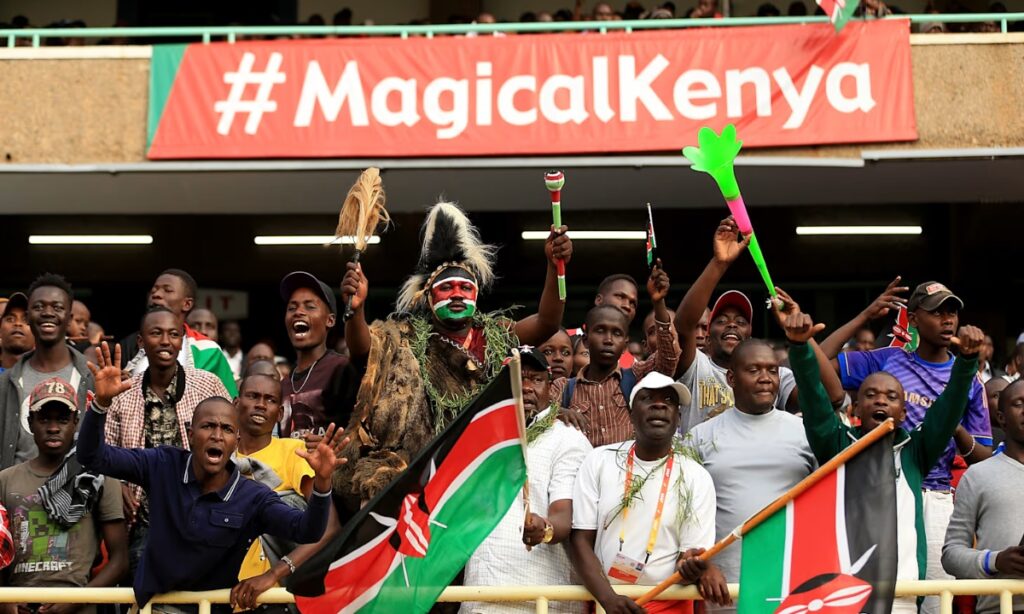
Nairobi has won the right to host the 2029 World Athletics Championships, delivering a historic breakthrough for African sport and defeating competing bids from London and Rome in a decision announced by World Athletics in Budapest on Tuesday. The Kenyan capital will become the first African city to stage the World Athletics Championships, bringing the sport’s biggest global competition to a continent that has produced generations of world-class athletes but has never hosted its flagship senior championship.
The decision represents a major victory for Kenya’s long-running campaign to bring the championships to African soil. Sebastian Coe, president of World Athletics, praised Nairobi’s proposal as a compelling bid and said the time was right for the championships to come to Africa. The 2029 edition will be staged at Kasarani Stadium, which is currently undergoing renovations in preparation for the 2027 Africa Cup of Nations.
Kenya Finally Gets Its World Championship Moment.
For Kenya, the announcement carries enormous symbolic weight. The country has spent decades establishing itself as one of the world’s great athletics nations, particularly through its dominance of distance running, yet it had never been given the opportunity to host the sport’s biggest senior global championship.
That changes in 2029. Nairobi will now welcome athletes from around the world to a country whose sporting identity is deeply connected to athletics. Kenya has previously hosted the World Under-18 Championships in 2017 and the World Under-20 Championships in 2021, giving the country valuable experience in staging international athletics events.

The new hosting rights therefore represent both recognition of Kenya’s athletics heritage and a vote of confidence in its ability to organise an event on a much larger scale.
London’s Strong Bid Falls Short.
Nairobi’s victory is particularly significant because London had been considered a serious contender. The British capital hosted the 2017 World Athletics Championships successfully and presented a bid built around its experience, infrastructure and the London Stadium.
However, London’s proposal faced challenges during the bidding process, including uncertainty surrounding stadium availability because of the demands of the football season. The final decision ultimately went in Nairobi’s favour, with World Athletics selecting the Kenyan capital after considering four strong proposals.
The result means London will not get the opportunity to host the championships again just 12 years after its successful 2017 edition. For Nairobi, defeating such an experienced European host makes the victory even more significant.
A Historic First for Africa.
The biggest story, however, is not Nairobi’s victory over London. It is what the decision means for an entire continent.
Africa has produced some of the greatest athletes in the history of track and field, from Eliud Kipchoge and David Rudisha to Faith Kipyegon and Beatrice Chebet. Kenyan, Ethiopian, South African, Nigerian, Botswanan and other African athletes have repeatedly won Olympic and World Championship medals.
Yet the continent has never hosted the World Athletics Championships.
That contradiction will finally end in 2029. Nairobi’s selection places Africa at the centre of the global athletics calendar and demonstrates that the continent is increasingly being considered not merely as a source of elite sporting talent, but as a destination capable of hosting major international competitions.
Kasarani Stadium Becomes the Centre of the Project.
The championships will be staged at Nairobi’s Kasarani Stadium, which is being upgraded as part of preparations for the 2027 Africa Cup of Nations. The stadium will therefore form part of a broader investment in Kenya’s sporting infrastructure rather than being developed solely for the World Athletics Championships.
That infrastructure investment will be closely watched in the years ahead. Hosting a World Athletics Championships requires far more than an adequate stadium. Kenya will have to deliver efficient transport, accommodation, training facilities, athlete services, media infrastructure, security and a smooth experience for thousands of visitors.
The success of the 2029 event will consequently depend on how effectively Kenya uses the next three years to turn the excitement of winning the bid into a detailed delivery programme.
The Economic Opportunity Is Huge.
The World Athletics Championships could also become a significant economic opportunity for Kenya. Thousands of athletes, coaches, officials, journalists and supporters are expected to travel to Nairobi, creating additional demand for hotels, airlines, restaurants, transport services, retail businesses and tourism operators.
The global television audience could provide another major benefit. Kenya will have an opportunity to present itself not only as an athletics powerhouse but also as a destination for tourism, investment and international business.
This is where the championships could become much bigger than a sporting event. If Kenya links the competition to tourism campaigns, cultural programmes, youth development and private-sector investment, the 2029 championships could become a vehicle for promoting Nairobi and the wider country to a global audience.
Kenya’s Athletics Legacy Will Be on Display.
Few host countries could offer the same emotional connection to athletics as Kenya. Running is deeply embedded in the country’s sporting culture, and Kenyan athletes have spent decades dominating global distance events.
That heritage gives Nairobi something that cannot be manufactured through infrastructure alone. The championships will be coming to a country where athletics is already part of the national identity.
The presence of Kenyan stars at the competition could make the event even more powerful. By 2029, the country could have a new generation of global champions competing in front of a home crowd, creating the possibility of defining moments for Kenyan sport.
For young athletes watching from across Africa, the significance could be equally profound. The world’s best athletes will be competing on African soil, allowing aspiring runners to see global athletics at the highest level without travelling to Europe, Asia or North America.
The Decision Changes Africa’s Sporting Ambitions.
Nairobi’s victory could encourage other African cities to become more ambitious in pursuing global sporting events. The message is that African cities can compete against established European hosts when they present credible infrastructure, strong government backing, sporting heritage and a compelling vision.
The significance goes beyond athletics. Africa continues to seek a larger role in the global sports economy, from football and basketball to motorsport, tennis and major multi-sport events.
The success of Nairobi could therefore strengthen the argument that the continent should be considered for more major international championships.
Munich Gets 2031 as World Athletics Looks Beyond Europe.
World Athletics also awarded the 2031 championships to Munich, meaning Germany will host the competition again after previously staging editions in Stuttgart in 1993 and Berlin in 2009. The 2027 championships will take place in Beijing before the competition moves to Nairobi in 2029 and then Munich in 2031.
The sequence gives World Athletics an opportunity to broaden the geographical reach of its flagship event while returning to an experienced European host two years after its historic African edition.
For Nairobi, however, the focus is now firmly on 2029.
Nairobi Has Won the Bid. Now Comes the Hard Part.
Winning the hosting rights is an extraordinary achievement, but it is only the beginning. Kenya now has three years to deliver an event that will be judged not only as a Kenyan championship but as Africa’s first World Athletics Championships.
The pressure will be enormous. The continent will be watching, and the success or failure of the event could influence how international sporting bodies view future African bids.
But the opportunity is equally enormous. Nairobi can use the championships to showcase African sporting talent, strengthen its tourism industry, upgrade infrastructure and demonstrate that major global sporting events can succeed on African soil.
For Sebastian Coe and World Athletics, the decision represents a historic expansion of the championship’s global footprint. For Kenya, it is recognition of a sporting culture that has produced some of the world’s greatest runners.
And for Africa, Nairobi’s victory means something even bigger: the world’s premier athletics championship is finally coming home to a continent that has spent generations producing its champions.

Comments (0)
No comments yet — be the first to share your thoughts.