

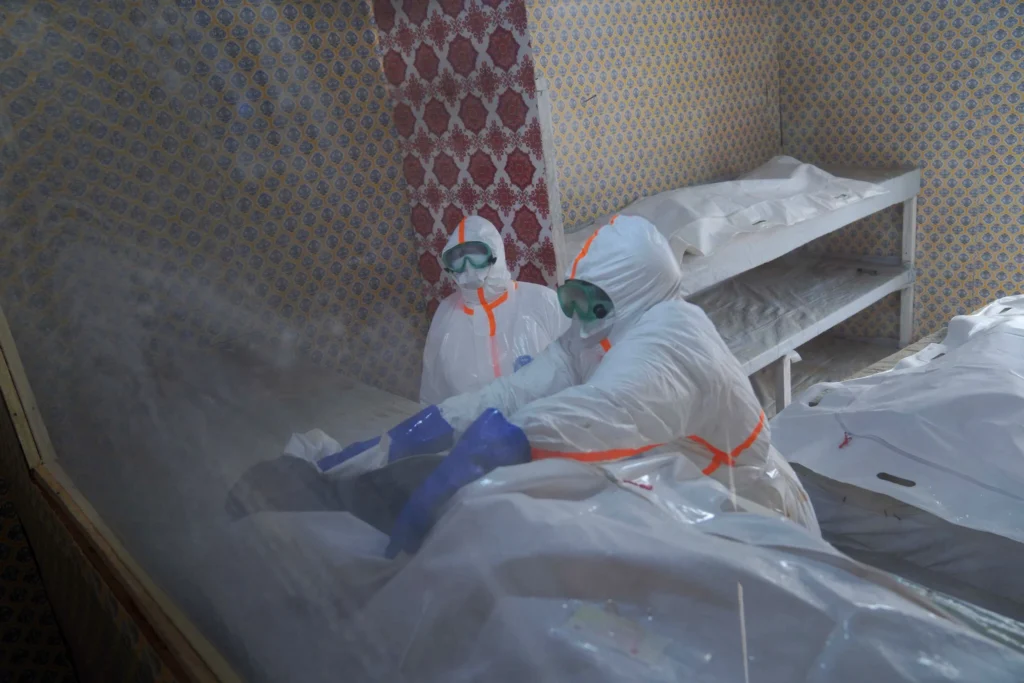
The Democratic Republic of Congo is facing its most serious Ebola outbreak on record, with more than 7,000 confirmed cases and nearly 3,400 deaths as the disease expands into another part of the country.
Health authorities reported 7,022 confirmed cases and 3,398 deaths by September 10, giving the outbreak a case-fatality rate of about 48.4 percent. The disease has now reached seven provinces, with South-Ubangi in northwestern DR Congo becoming the latest to report a confirmed case.
The outbreak involves Bundibugyo virus, a relatively rare Ebola species, and was first officially detected in DR Congo in May. It began in Ituri Province in the northeast before spreading into several other provinces, many of which are already dealing with conflict, displacement and weak health infrastructure.
The scale of the outbreak is now raising concerns about whether DR Congo can prevent further geographic expansion while maintaining treatment and surveillance capacity across such a large territory.

A New Province Raises Regional Concerns.
The arrival of Ebola in South-Ubangi is particularly significant because the province borders both the Central African Republic and the Republic of Congo.
The first confirmed patient was a 23-year-old man who had travelled extensively from South Kivu before reaching South-Ubangi. He later died from the disease. Investigators are working to establish the full chain of transmission and identify people who may have been exposed during his journey.
The case demonstrates the difficulty of containing an outbreak in a country where millions of people regularly move between provinces for work, trade, family reasons and because of conflict.
The World Health Organization has warned that the sustained transmission creates a risk of cross-border spread. It has classified the risk inside DR Congo as very high and the risk to countries sharing land borders with the country as high, although the wider African and global risks remain lower.
Ituri Remains the Epicentre.
Ituri continues to account for the largest share of infections.
According to the WHO’s September 10 disease outbreak report, more than 5,400 confirmed cases had been recorded in Ituri by September 7. North Kivu was the second-most affected province, with more than 1,000 confirmed cases.
The outbreak has expanded to dozens of health zones, putting enormous pressure on health workers who must identify cases, trace contacts, provide treatment and maintain infection-prevention measures at the same time.
WHO reported that 61 health zones across six provinces were affected as of September 7, before the subsequent confirmation in South-Ubangi. More than 21,000 contacts were being monitored during the reporting period, illustrating the enormous logistical burden of containing the disease.
Conflict Is Making the Response Harder.
DR Congo’s Ebola crisis cannot be separated from the country’s wider humanitarian emergency.
Large parts of eastern Congo remain affected by armed conflict and displacement. WHO says insecurity and population movements are restricting access to healthcare and making surveillance, contact tracing and case investigation more difficult.
More than one million internally displaced people are estimated to be living in Ituri alone, while overcrowding and inadequate water, sanitation and hygiene services create additional challenges for controlling infectious diseases.
The situation is especially difficult in remote communities and informal settlements, where people may have limited access to health facilities and where delayed detection can allow transmission to continue before authorities are alerted.
Vaccination and Treatment Efforts Continue.
Health authorities and international partners are responding with vaccination, treatment and clinical research.
The Ervebo vaccine, which is licensed against the Zaire species of Ebola, is being used for frontline health workers within a research framework because its effectiveness against Bundibugyo virus has not been established. WHO reported that more than 2,000 people had been vaccinated by September 6.
At the same time, researchers are testing potential treatments specifically for Bundibugyo virus disease.
A clinical trial known as the PARTNERS trial began enrolling patients in July and is operating in several treatment facilities in Ituri. More than 300 confirmed patients had been enrolled by the latest WHO update.
The research is important because Bundibugyo Ebola is less well understood than some other Ebola species, leaving health authorities with fewer proven tools specifically designed for the strain responsible for the current outbreak.
Schools Are Also Becoming a Concern.
The outbreak is increasingly affecting everyday life in communities where children have returned to school.
Ebola cases have been detected among school communities in Ituri, creating anxiety among parents and health workers who fear that crowded classrooms could become another pathway for transmission if infected individuals are not identified quickly.
The concern highlights one of the hardest aspects of Ebola control: governments must maintain essential services while simultaneously limiting opportunities for transmission.
Keeping schools open, allowing people to travel and maintaining economic activity all require stronger surveillance and public-health communication rather than simply restricting movement.
Africa Is Watching Closely.
The current outbreak has already become a continental concern because of its speed and geographical expansion.
As the virus moves beyond the original epicentre, neighbouring countries are strengthening surveillance at borders and preparing health systems for possible imported cases. WHO says monitoring is taking place at airports, ports and official land crossings, although informal border routes remain difficult to control.
DR Congo’s experience is also a reminder that infectious disease outbreaks do not occur in isolation. Conflict, displacement, poverty, weak infrastructure and population mobility can all determine how quickly a disease spreads and how effectively governments can respond.
For DR Congo, the immediate priority is to stop the virus from establishing transmission chains in additional provinces.
But with more than 7,000 cases already recorded and the outbreak continuing to expand geographically, the country’s health authorities face a race against time to contain an epidemic that is increasingly testing the limits of Africa’s disease-response capacity.

Comments (0)
No comments yet — be the first to share your thoughts.