

Africa’s Digital Future Needs African Builders.
Africa’s digital transformation is accelerating, but a fundamental question remains: who will own and control the infrastructure that powers the continent’s digital economy?
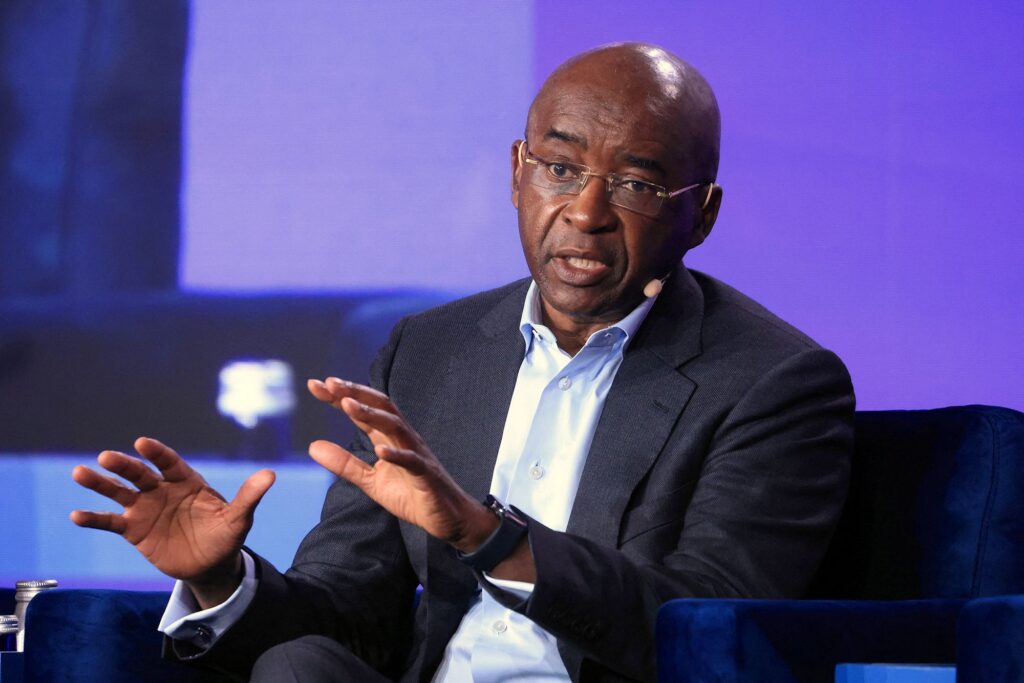
Few African entrepreneurs illustrate this question better than Zimbabwean businessman Strive Masiyiwa. Through Econet and Cassava Technologies, Masiyiwa has spent decades building businesses around telecommunications, fibre connectivity, data centres, cloud services and other digital infrastructure.
From Telecommunications to Infrastructure.
Masiyiwa’s significance goes beyond the creation of a successful telecommunications company. His businesses have increasingly moved toward the infrastructure underneath Africa’s digital economy.
Cassava Technologies includes Liquid Intelligent Technologies, Africa Data Centres, cloud and cybersecurity businesses and other technology platforms. The group says its fibre infrastructure spans more than 68,000 miles, while its broader operations extend across multiple African markets.

This matters because Africa cannot build a serious digital economy simply by importing smartphones, using foreign applications and connecting to platforms developed elsewhere. The continent also needs the networks, data centres, computing capacity and technical expertise required to operate those services.
The AI Race Changes the Stakes.
Africa is becoming a major consumer of AI tools, but consumption alone will not create technological independence. African countries need computing infrastructure, data centres, skilled engineers and locally relevant AI systems if they are going to participate in the production side of the technology revolution.
Cassava has been moving in this direction, including investments in AI infrastructure and computing capacity. Econet also announced in July that it was recruiting more than 100 AI engineers, signalling the growing importance of artificial intelligence within its technology strategy.
Connectivity Is Only the Beginning.
For years, Africa’s digital challenge was largely described as a connectivity problem. Governments and companies focused on getting more people online and expanding mobile networks.
That remains important, but the challenge has changed. Once people are connected, the continent needs sufficient infrastructure to support digital banking, cloud computing, e-commerce, online education, artificial intelligence, cybersecurity and increasingly data-intensive businesses.
This is where Masiyiwa’s business strategy offers an important lesson: digital transformation requires infrastructure at several levels, not simply internet access.
Africa Cannot Leave Technology to Foreign Companies.
Foreign technology companies will continue to play an important role in Africa. Companies such as Microsoft, Google, Amazon and others have the capital, technology and global networks to contribute significantly to the continent’s digital expansion.
The problem arises when Africa becomes primarily a consumer rather than an owner and producer.
Recent concerns around data-centre expansion in South Africa demonstrate that digital infrastructure also raises questions about electricity, water, land and environmental sustainability. South Africa already hosts an estimated 70% of Africa’s data-centre capacity, according to reporting by the Associated Press.
The Real Test Is Ownership.
Masiyiwa’s career therefore raises a bigger question for African governments and entrepreneurs: where will African ownership sit in the next phase of the digital economy?
It is not enough to attract foreign technology companies to build infrastructure. Africa should also be creating companies capable of owning networks, operating data centres, developing AI systems and providing cloud and cybersecurity services.
That requires patient capital, strong regulation, reliable electricity, technical education and policies that allow African technology companies to scale beyond individual national markets.
Governments Have a Role to Play.
African governments cannot simply expect private entrepreneurs to solve the continent’s digital infrastructure problems.
They must create conditions that make long-term investment possible. This includes improving electricity systems, protecting digital rights, establishing predictable regulations and making it easier for technology businesses to operate across borders.
Africa also needs stronger cooperation between governments because digital infrastructure does not respect national boundaries. Fibre networks, cloud systems, data centres and digital payment platforms all benefit from larger interconnected markets.
Masiyiwa’s Example Is Bigger Than Masiyiwa.
Strive Masiyiwa recently received an honorary doctorate from Princeton University in recognition of his contributions to business, education and humanitarian efforts in Africa. But the most important part of his story is not the recognition. It is the question his career leaves behind.
Africa has millions of young people who will enter an increasingly digital economy over the next decade. The continent will need far more than entrepreneurs like Masiyiwa to meet that demand.
It needs hundreds of African technology companies, engineers, investors and institutions willing to build the infrastructure behind Africa’s digital future.
The ultimate measure of Africa’s digital transformation should therefore not be how many people use global technology platforms. It should be how much of the infrastructure, technology and intellectual property behind that transformation is built, owned and controlled by Africans.

Comments (0)
No comments yet — be the first to share your thoughts.