
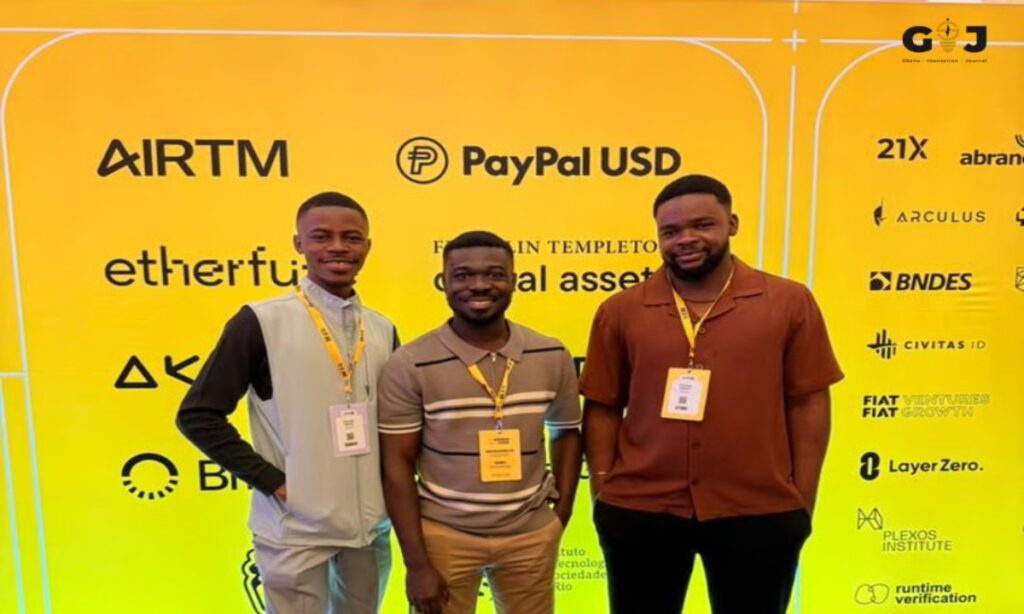
Ghanaian fintech startup Seevcash has secured US$333,000 in funding through the Stellar Community Fund and affiliated ecosystem programmes, giving the young company additional capital to expand its cross-border payment infrastructure for African diaspora communities. The funding announcement, made on September 3, 2026, comes alongside the launch of a new Seevcash Visa card, marking a significant expansion from the company’s original focus on remittances and peer-to-peer money transfers.
Founded in 2022 by Dawuda Iddrissu, Charles Owusu and Cosmos Appiah, Seevcash has positioned itself around one of the most persistent challenges in African finance: moving money across borders quickly, affordably and conveniently. The platform initially focused on enabling people, particularly members of the African diaspora, to send and request money between countries. Its growing connection to the Stellar blockchain has now allowed the company to build a broader financial ecosystem around those transfers.
Four Awards Have Taken Seevcash’s Stellar Funding to $333,000.
The US$333,000 raised by Seevcash does not represent a single traditional venture-capital investment. The money comes through four separate awards, including two Stellar Community Fund grants and two ecosystem growth programmes. The Stellar Community Fund is operated by the Stellar Development Foundation and uses community participation to support startups and developers building products on the Stellar network.
Stellar’s own project records show that Seevcash has previously received substantial support through the ecosystem. One earlier award, SCF #36, provided approximately US$142,300 for its peer-to-peer payment product, while a later Build award listed approximately US$149,400 for further development of personal and corporate cards, MoneyGram integration and Ghana cedi on-ramp and off-ramp infrastructure.

The cumulative support demonstrates how Seevcash has progressively developed its relationship with the Stellar ecosystem. Rather than treating blockchain simply as a technical feature, the Ghanaian fintech is building its payments infrastructure around Stellar’s low-cost settlement capabilities and stablecoin technology.
Seevcash Is Moving Beyond Remittances.
The launch of the Visa card represents the company’s most visible expansion beyond its original remittance proposition. Users will be able to spend funds through the Seevcash Visa card anywhere Visa is accepted, both online and in physical locations. The company says the card is intended to address a recurring request from customers who wanted a way to spend money after receiving or transferring funds through the platform.
That shift is strategically important. Remittance platforms often face the challenge of maintaining customer engagement between transfers. A customer may use a service only when sending money home, creating limited opportunities for the company to generate additional activity. A payment card changes that relationship by allowing customers to keep using the platform for everyday spending.
For Seevcash, the card therefore represents more than a new product. It is an attempt to turn a remittance relationship into a broader financial-services relationship.
MoneyGram Partnership Strengthens the Platform.
The new card also builds on Seevcash’s existing partnership with MoneyGram, which provides another connection between digital funds and traditional cash-based financial infrastructure. The partnership is particularly relevant in markets where cash remains an important part of everyday financial activity.
Stellar’s project documentation shows that Seevcash has been developing MoneyGram cash-in and cash-out functionality alongside its blockchain infrastructure. The company’s model allows users to move between digital assets and physical cash through established financial channels, potentially making blockchain-based payments more accessible to people who may never directly interact with cryptocurrency technology.
That approach reflects a broader trend in African fintech. Instead of attempting to replace traditional financial institutions overnight, newer companies are increasingly building bridges between digital payments, mobile money, banking, cash networks and blockchain infrastructure.
Stellar Provides the Blockchain Infrastructure.
Seevcash’s relationship with Stellar is central to its technology strategy. Stellar is a blockchain network designed for fast and relatively low-cost movement of digital assets, and its ecosystem has increasingly focused on real-world payment applications.
The Stellar Community Fund says it supports teams building on Stellar from early development through launch and growth. Its current programme provides funding and support for projects developing practical applications on the network.
For Seevcash, the technology is particularly relevant to cross-border payments. The company has been developing infrastructure that uses Stellar and USDC to facilitate transactions and settlement, while also working on connections between Ghanaian cedis and digital dollars.
The objective is not simply to put remittances on a blockchain. It is to use blockchain infrastructure behind the scenes to make international money movement faster and cheaper while allowing users to interact with a familiar financial product.
Ghanaian Migrants Remain a Key Market.
Seevcash’s strategy is closely linked to the financial needs of Ghanaian migrants and the wider African diaspora. The company’s Stellar Community Fund application identified Ghanaian migrants and freelancers sending money from the United States to Ghana as one of its strongest customer segments.
This corridor is commercially significant because remittances remain a major source of foreign exchange and household income across many African economies. However, traditional international transfers can involve fees, delays, exchange-rate spreads and complicated cash-out processes.
Fintech companies such as Seevcash are attempting to compete by reducing those frictions. The challenge is that the remittance market is already highly competitive, with established global operators, banks, mobile-money platforms and a growing number of African fintech startups competing for the same customers.
Seevcash’s answer is to build a broader ecosystem around the transfer itself. If users can send money, receive funds, hold digital dollars and spend through a card within the same platform, the company has more opportunities to retain customers and generate recurring activity.
The Company’s Earlier Growth Provides a Foundation.
Seevcash’s Stellar application provides evidence of significant early growth. The company reported that its user base increased from approximately 15,000 to more than 24,000 during the first quarter of 2026, while cumulative processed transaction volume rose from approximately US$327,000 at the end of 2025 to US$630,000 during the first quarter of 2026. Monthly active users also increased from around 500 to approximately 2,500.
Those figures remain small compared with the largest African fintech platforms, but they demonstrate that Seevcash has moved beyond the conceptual stage. The company is attempting to build a functioning financial product with measurable transaction activity and an expanding user base.
The next stage will be considerably harder. Growth in users does not automatically translate into sustainable profitability, particularly in remittances where transaction margins can be thin and customer acquisition can be expensive.
Cards Could Help Seevcash Build Recurring Revenue.
The Visa card could become an important component of the company’s strategy to address that challenge. A customer who uses Seevcash only to send money may generate activity once or twice a month. A customer who also uses the company’s card for everyday purchases potentially generates much more frequent transactions.
That creates the possibility of building a more diversified revenue model around payments rather than depending entirely on remittance fees. Seevcash has not disclosed detailed revenue projections for the new card, so it remains too early to determine how significant that contribution will become.
The company’s broader product roadmap includes personal cards, corporate cards, Ghana cedi on-ramp and off-ramp services, USDC wallets and international virtual accounts. Its Stellar funding has been directed toward developing these different components.
If successfully executed, the strategy could transform Seevcash from a remittance application into a broader financial platform serving migrants, freelancers, businesses and families operating across borders.
The Bigger Opportunity Is African Cross-Border Finance.
Seevcash’s expansion comes at a time when African fintech companies are increasingly looking beyond domestic payment markets. The continent’s fragmented financial systems create significant difficulties for people and businesses operating across borders, but those same difficulties create opportunities for technology companies capable of connecting different currencies, payment systems and financial institutions.
Blockchain-based settlement is one possible solution. Stablecoins such as USDC can potentially provide a common digital settlement layer between markets with different currencies and financial infrastructures. Companies still need to address regulation, compliance, liquidity and consumer protection, but the underlying technology offers another tool for reducing the friction associated with international payments.
For Ghana, the development is particularly notable because local fintech entrepreneurs are increasingly participating in the global digital-finance ecosystem rather than simply adapting foreign financial products for domestic use.
The Next Test Will Be Scale.
The US$333,000 funding provides Seevcash with additional resources, but funding itself will not determine whether the company succeeds. The critical test will be whether Seevcash can convert its technology, Stellar backing and Visa partnership into sustained user growth and recurring transaction activity.
The company now has several pieces of the puzzle: a remittance platform, blockchain infrastructure, a MoneyGram relationship and a Visa card. Bringing those products together into a seamless experience could give Seevcash a competitive advantage among African diaspora customers.
But the fintech market is unforgiving. Larger international payment companies have greater resources, while African competitors continue to introduce cheaper and faster ways of moving money. Regulatory requirements are also likely to become more demanding as digital-dollar and blockchain-based financial services expand.
For Seevcash, therefore, the September 2026 funding represents an important opportunity rather than a guaranteed breakthrough. If the company can successfully turn its Ghana-US remittance base into a wider cross-border financial network, the startup could become an important example of how African fintech companies are using blockchain infrastructure to build financial products for a global African customer base.

Comments (0)
No comments yet — be the first to share your thoughts.