

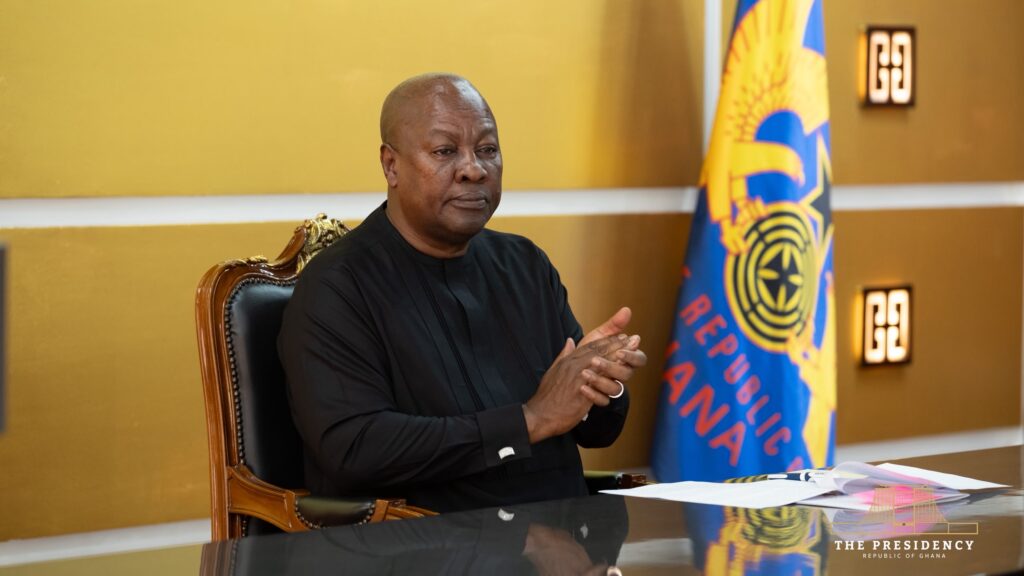
President John Dramani Mahama has dissolved the governing boards of nine major Ghanaian state institutions with immediate effect, opening a new phase in his administration’s efforts to reorganise leadership across strategic public enterprises and agencies. The decision, announced on September 2, affects institutions operating in petroleum, banking, mining, infrastructure, housing, postal services and sports, including the Ghana National Petroleum Corporation (GNPC), Bulk Oil Storage and Transportation Company Limited (BOST), Consolidated Bank Ghana Limited (CBG) and the National Sports Authority (NSA).
The Presidency did not provide a specific reason for dissolving the boards, but directed the relevant sector ministers to take all necessary steps, in accordance with the applicable laws and governing instruments, to implement the decision. It also confirmed that the affected boards would be reconstituted in due course, meaning the move is a restructuring of the governing bodies rather than a shutdown or dissolution of the institutions themselves.
Nine Strategic Institutions Are Affected.
The institutions whose boards have been dissolved are Prestea Sankofa Gold Limited, BOST, Volta Aluminium Company Limited (VALCO), CBG, Ghana Post Company Limited, the Road Maintenance Trust Fund, TDC Ghana Limited, GNPC and the National Sports Authority. Together, they cover some of the most economically and strategically important areas of Ghana’s public sector.
GNPC sits at the centre of Ghana’s petroleum industry, while BOST manages critical petroleum storage and transportation infrastructure. VALCO remains an important component of Ghana’s industrial and aluminium ambitions, and Prestea Sankofa Gold operates in the country’s mining sector. CBG, meanwhile, is a state-owned financial institution created during Ghana’s banking-sector restructuring and continues to play a role in the country’s financial system.

The other affected institutions also have important public responsibilities. TDC Ghana is involved in housing and urban development, the Road Maintenance Trust Fund supports road maintenance financing, Ghana Post manages the country’s postal network, while the National Sports Authority oversees sports development and related infrastructure. The breadth of the affected institutions suggests that the decision is part of a wider administrative intervention rather than a sector-specific restructuring.
Existing Management Teams Will Continue Operations.
The dissolution of the boards does not mean that the nine institutions will stop functioning. Their management teams will continue handling day-to-day operations while the government prepares to appoint new governing boards.
However, there are restrictions on what management can do during the transition. According to a letter from the Office of the President, management teams are not permitted to make major policy, financial or contractual decisions requiring board approval without prior authorisation from the appropriate authority.
That interim arrangement is designed to prevent major commitments from being made while the institutions operate without formally constituted boards. It also gives the government time to select and appoint new board members without creating a vacuum in the everyday administration of the affected organisations.
For institutions such as GNPC, BOST and CBG, the restriction could be particularly significant because their operations involve large financial commitments, contracts and strategic decisions. The quality and speed of the transition will therefore matter not only from a governance perspective but also for business continuity.
The Move Comes Amid Scrutiny of State-Owned Enterprises.
The board shake-up comes at a time when the performance of Ghana’s state-owned enterprises and agencies is receiving increased attention. Recent assessments of state-owned institutions have renewed discussion about financial performance, accountability, efficiency and the extent to which public enterprises contribute to national development.
The latest decision gives the Mahama administration an opportunity to place new leadership structures over institutions that have considerable influence on Ghana’s economy. However, dissolving boards by itself will not resolve the deeper problems facing state-owned enterprises. New boards will ultimately be judged by whether they can improve governance, financial discipline, operational performance and public accountability.
The challenge will be particularly pronounced in sectors where government institutions operate in commercially sensitive environments. Petroleum, banking, mining and industrial production require boards with technical expertise, financial independence and a clear understanding of both commercial and public-policy objectives.
National Sports Authority Board Also Dissolved.
The National Sports Authority is one of the most visible institutions affected by the decision. Its 15-member governing board, chaired by Dr Fred Awaah, has been dissolved along with the boards of the eight other institutions. The board had been sworn in in December 2025.
The change comes at an important period for Ghanaian sports, as the government continues to face pressure to improve sports infrastructure, administration and athlete development. The National Sports Authority plays a central role in managing sports facilities and coordinating aspects of national sports development, making the eventual composition of its replacement board particularly important.
For Ghana’s sports community, attention will now turn to whether the incoming board brings stronger representation from sporting federations, athletes, administrators and technical professionals. The government has not yet announced the names or composition of the replacement boards.
GNPC and BOST Carry Particularly High Economic Stakes.
Among the affected institutions, the changes at GNPC and BOST could attract the greatest economic attention. Ghana’s petroleum sector remains an important source of government revenue, foreign exchange and investment, while BOST plays a strategic role in the movement and storage of petroleum products.
Any leadership transition at these institutions therefore has implications beyond internal administration. Decisions involving petroleum infrastructure, commercial partnerships, investments and operational efficiency can affect the wider economy.
The government will consequently face pressure to ensure that new board appointments are based on competence and clearly defined responsibilities. While political governments traditionally have considerable influence over appointments to state institutions, the effectiveness of the new boards will depend on whether they can combine government policy priorities with professional oversight.
CBG and Other Institutions Face Different Challenges.
The situation at Consolidated Bank Ghana is different but equally significant. CBG emerged from Ghana’s banking-sector clean-up and was established as a state-owned institution following the consolidation of several financial institutions. Its board therefore carries responsibilities that extend beyond ordinary corporate governance, including maintaining financial stability and ensuring that the institution remains commercially sustainable.
Ghana Post, TDC, VALCO and Prestea Sankofa Gold similarly operate in sectors with different commercial and public-policy pressures. This means the incoming boards cannot simply follow a single governance model. Each institution will require a clear mandate reflecting its sector, financial position and strategic importance.
The government will therefore have to balance political accountability with technical expertise when the boards are eventually reconstituted.
Mahama’s Institutional Reorganisation Continues.
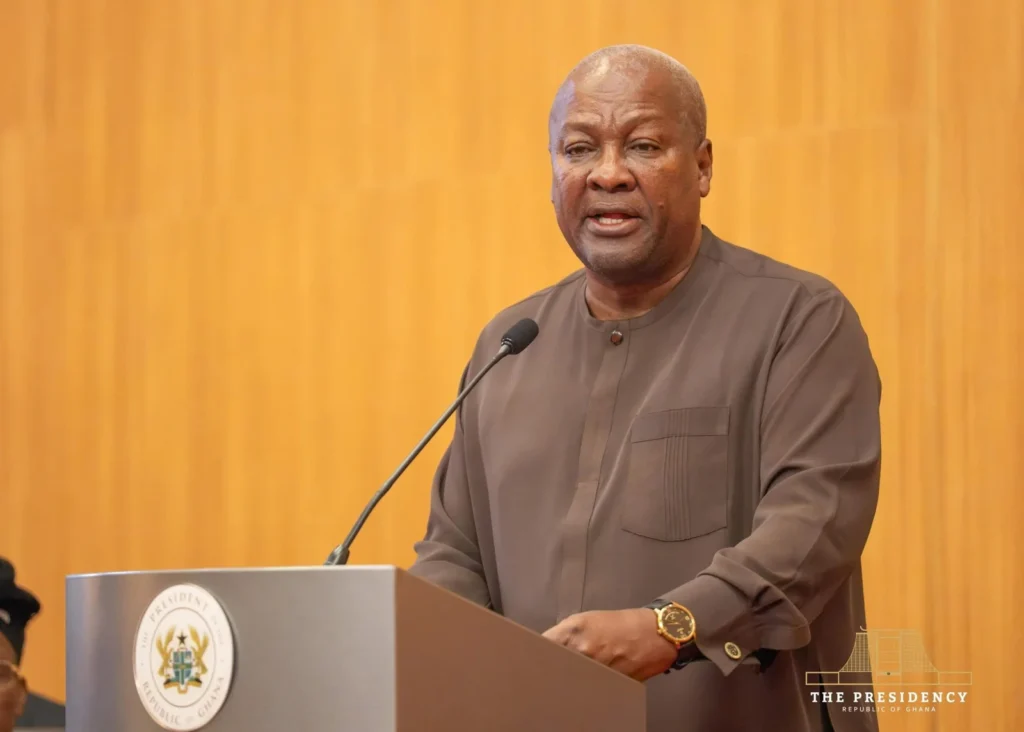
The latest board dissolutions extend a wider process of institutional reorganisation under President Mahama. The government has already undertaken changes at the ministerial level, and the new board directive moves the restructuring process deeper into the public-sector architecture.
For the administration, the argument for restructuring is likely to centre on improving efficiency, accountability and the management of public resources. For critics, however, the effectiveness of the exercise will depend on whether new appointments produce measurable improvements rather than simply replacing one set of political appointees with another.
That distinction will become increasingly important as the new boards begin to emerge. Ghana’s state-owned institutions manage significant public assets, and weak governance can ultimately translate into higher costs for taxpayers, declining service delivery or greater pressure on government finances.
The Next Appointments Will Be Closely Watched.
The most important development now will be the composition of the replacement boards. The Presidency has not provided a timeline for the appointments, saying only that the boards will be reconstituted “in due course.”
That leaves several questions unanswered. Will the government prioritise technical expertise? Will representatives from the private sector and professional institutions be included? Will the new boards receive measurable performance targets? And will their appointments be accompanied by stronger mechanisms for monitoring state-owned enterprises?
The answers will determine whether the September 2 decision becomes a meaningful governance reform or simply another administrative reshuffle.
For President Mahama, the opportunity is significant. Nine institutions with responsibilities spanning energy, banking, mining, infrastructure, housing, communications and sports are now awaiting new governing structures. If the administration uses the transition to introduce stronger professional oversight, clearer performance expectations and greater accountability, the board dissolution could become an important component of its public-sector reform agenda.
If, however, the changes amount primarily to a replacement of personnel without deeper institutional reforms, the impact could be considerably more limited. For now, Ghana is entering a period of transition in which the next appointments will be as important as the decision to dissolve the existing boards.

Comments (0)
No comments yet — be the first to share your thoughts.