

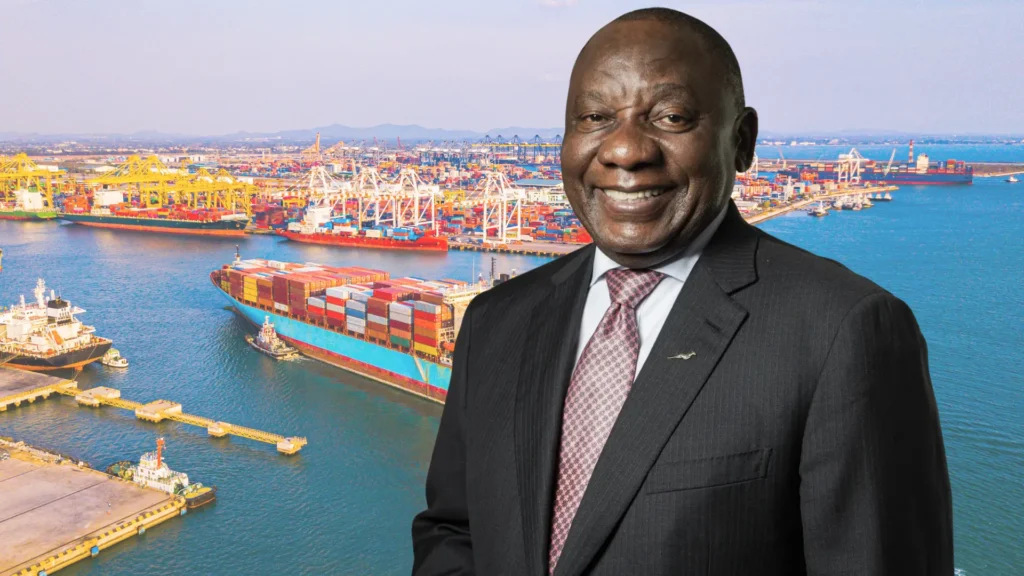
Confidence Reaches Four-Month High.
Business confidence in South Africa improved in July, with the South African Chamber of Commerce and Industry (SACCI) Business Confidence Index rising to 125.4 from 123.5 in June. The July reading is the highest level recorded since March and suggests that sentiment among South African businesses is beginning to stabilise after a difficult period earlier in the year. The latest figures were reported on 18 August 2026, making this a genuinely fresh economic development.
The improvement, however, does not mean that South African companies have become broadly optimistic about the economy. SACCI’s latest assessment points to a business environment still affected by inflation, geopolitical uncertainty, energy costs and relatively weak economic growth. The July increase therefore appears to reflect cautious improvement rather than a decisive change in the country’s economic outlook.
Vehicle Sales and Exports Support Sentiment.
Several economic indicators contributed positively to the July reading. New-vehicle sales, merchandise export volumes and lower energy prices were among the strongest factors supporting business confidence during the month. The continued presence of international tourists was also identified as a positive contributor to sentiment.
The improvement in exports is particularly significant for South Africa because international trade remains an important source of economic activity and foreign exchange. The country’s mining, manufacturing and agricultural sectors are heavily connected to international markets, meaning stronger export volumes can improve revenues for businesses while supporting employment and investment.

The increase in vehicle sales also provides an indication of domestic demand. While one month’s improvement cannot be treated as evidence of a sustained recovery, stronger vehicle purchases suggest that parts of the consumer market remained resilient despite continued pressure on household finances.
Inflation Remains a Major Concern.
The positive movement in confidence is being constrained by continuing inflationary pressure. SACCI identified higher inflation as one of the factors weighing on business sentiment, alongside lower precious-metal prices.
For South African businesses, inflation affects operating costs across the economy. Higher prices for energy, transportation, raw materials and other inputs can reduce profit margins and make it more difficult for companies to invest or hire additional workers.
The pressure is particularly important for businesses that cannot easily pass rising costs on to consumers. Smaller companies may have less bargaining power with suppliers and less capacity to absorb higher operating expenses, making them particularly vulnerable when inflation remains elevated.
Middle East Conflict Adds to Economic Uncertainty.
South African businesses are also dealing with uncertainty linked to the continuing conflict in the Middle East. SACCI warned that instability is affecting crude-oil prices and fuel supply conditions, creating additional risks for the global economy and South Africa’s domestic business environment.
Higher oil prices can have a broad impact on South Africa because increased fuel costs eventually affect transportation, manufacturing, logistics and consumer prices. Companies must therefore factor international geopolitical developments into decisions that would normally depend largely on domestic economic conditions.
The situation also illustrates how closely South Africa’s economy is connected to global markets. Even when domestic business conditions improve, external shocks can quickly affect costs, trade and investment decisions.
Precious Metals Remain Important to the Outlook.
South Africa’s dependence on commodities remains another important factor behind the latest confidence figures. SACCI identified lower precious-metal prices as a negative contributor, while global commodity prices more generally continue to influence the country’s trade balance, currency strength and corporate earnings.
This highlights both the strength and vulnerability of the South African economy. The country possesses substantial mineral resources and remains a major producer of precious metals and other commodities, but fluctuations in global prices can significantly influence economic performance.
Higher commodity prices can improve export earnings and government revenues, while declining prices can weaken investment and reduce income for mining companies and related businesses.
Businesses Remain Cautious About Growth.
Despite the improvement in the confidence index, South Africa continues to face structural economic challenges. Slow economic growth, inflationary pressures and fiscal constraints remain significant concerns for businesses.
SACCI has also pointed to uncertainty surrounding monetary policy and the country’s broader economic outlook. The chamber argues that persistent inflation and fiscal challenges continue to require attention even as some indicators improve.
The result is an economy in which businesses appear somewhat more confident than they were earlier in the year but are still unwilling to assume that a sustained recovery has arrived.
AGOA Creates Another Layer of Uncertainty.
South Africa’s international trade environment could also be affected by developments surrounding the African Growth and Opportunity Act (AGOA), the United States trade programme that provides eligible African countries with preferential access to the American market.
SACCI noted that the US Senate had voted to approve a two-year extension of AGOA, potentially extending the programme beyond its previous expiration date. However, uncertainty remained over whether South Africa would continue to benefit under the arrangement.
For South African exporters, continued access to the US market is strategically important. Any change in preferential trade arrangements could affect sectors that depend on American demand and introduce additional uncertainty into investment decisions.
A Cautious Improvement Rather Than a Recovery.
The July business confidence figures offer South Africa a modest piece of good economic news, but they should not be interpreted as evidence that the country’s economic challenges have disappeared.
The increase from 123.5 to 125.4 indicates that sentiment has improved, with stronger vehicle sales, exports and softer energy costs providing support. At the same time, inflation, geopolitical instability, commodity-price movements and structural weaknesses continue to weigh on companies.
The real test will be whether the improvement continues over the coming months. If business confidence strengthens alongside investment, employment, consumer demand and economic growth, July’s increase could prove to be an early indication of a broader recovery.
For now, however, South African businesses appear to be cautiously optimistic rather than confident about a strong economic rebound.
The latest numbers therefore tell a nuanced story: South Africa’s business sector may be finding its footing, but inflation, global instability and slow growth continue to stand between improving sentiment and a genuine economic recovery.

Comments (0)
No comments yet — be the first to share your thoughts.