

For decades, Africa’s economic story has been dominated by a contradiction that is difficult to ignore. The continent possesses enormous reserves of oil, gas, minerals, agricultural resources and other commodities, yet many African countries continue to depend heavily on the rest of the world for refined fuel, machinery, technology, manufactured goods and even basic industrial inputs. Africa has often supplied the raw materials that power global economies while importing the finished products created from those same resources. In my view, this is one of the most important economic questions facing the continent today: when will Africa move from being primarily a supplier of resources to becoming a producer of value?
That conversation appears to be changing. Governments and investors across Africa are increasingly discussing refineries, mineral processing, renewable energy, manufacturing and industrial infrastructure as strategic priorities rather than simply viewing natural resources as commodities to be extracted and exported. The shift is important because economic development is not determined only by how much a country owns underground or produces from its land. It is determined by what that country is able to build around those resources. If Africa can transform its raw materials into products, industries and businesses, the economic impact could be significantly greater than simply exporting the resources themselves.
From Resource Extraction to Value Creation.
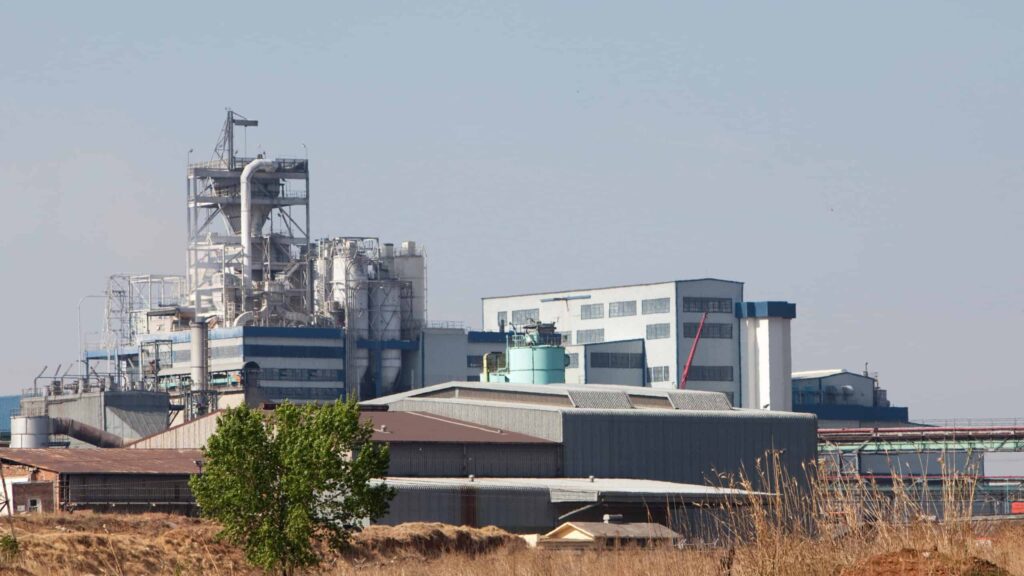
Niger provides a particularly interesting example of this emerging approach. On August 17, the country signed a $1.9 billion agreement for the development of a refinery and petrochemical complex with a planned capacity of 100,000 barrels per day. The project is expected to reduce Niger’s dependence on imported refined petroleum products while strengthening its position in regional energy markets. But the bigger significance, in my view, is not simply the number of barrels the refinery will process. It is the possibility of creating an industrial ecosystem around the country’s oil resources, including transportation, engineering, construction, maintenance, petrochemicals and other supporting services.
For years, Africa’s petroleum industry has reflected a frustrating pattern. Countries can produce crude oil but still spend billions importing refined petroleum products because they lack sufficient domestic refining capacity. That means the continent exports a relatively low-value raw material and then purchases a higher-value finished product from elsewhere. The economic value created between those two stages largely takes place outside Africa. Building refineries does not solve every economic problem, and not every refinery will automatically become profitable, but increasing the continent’s capacity to process its own resources is an important step towards retaining more value within African economies.

The Critical Minerals Opportunity.
The same argument applies to Africa’s critical minerals. The continent possesses substantial deposits of cobalt, copper, lithium, manganese and other minerals that are increasingly important to batteries, electric vehicles, renewable energy technologies and advanced manufacturing. Global demand for these resources is expected to remain significant as countries invest in the energy transition and reduce their dependence on fossil fuels. Africa therefore has an opportunity that extends far beyond simply selling minerals to international companies. The question is whether African countries can develop the processing and manufacturing capabilities necessary to participate further along the value chain.
This is where Africa needs to be much more ambitious. It makes little economic sense for the continent to export raw minerals, watch them get processed elsewhere and then import finished products at considerably higher prices. Of course, establishing battery plants, mineral-processing facilities and advanced manufacturing industries requires capital, technology, reliable electricity and specialised skills. These are not easy challenges. But if Africa never begins building that capacity, it will remain trapped in a system where the most valuable stages of production take place outside the continent. The energy transition could therefore become either a major industrial opportunity for Africa or another chapter in the continent’s long history of exporting raw materials.
The Opportunity Is Bigger Than Energy.
The biggest opportunity may not actually be the resources themselves. It may be the industries that can emerge around them. A refinery can create demand for engineers, transport companies, maintenance providers, chemical manufacturers and other businesses. A mineral-processing facility can stimulate industrial supply chains and create opportunities for manufacturers. Renewable energy can provide electricity to factories that produce goods for African consumers. Agriculture can support food-processing industries rather than simply supplying raw commodities to international markets. In each case, the resource becomes the starting point rather than the end of the economic process.
Africa’s growing population makes this opportunity even more significant. The continent is developing increasingly sophisticated consumer markets, and millions of young Africans will enter the labour market in the coming decades. That represents both an enormous opportunity and a serious responsibility. If African countries can build productive industries capable of employing this population, the demographic expansion could become an economic advantage. If they cannot, the same demographic trend could intensify unemployment, inequality and economic dependence.
But Energy Alone Is Not Enough.
There is, however, a problem that Africa cannot afford to overlook. Industrialisation requires reliable electricity, and this remains one of the continent’s biggest structural weaknesses. A refinery cannot operate efficiently without dependable power. A mineral-processing plant cannot run consistently without electricity. Manufacturing companies cannot compete globally if production is repeatedly interrupted by power shortages or if businesses are forced to rely heavily on expensive backup generation.
This means Africa’s energy conversation needs to become much more sophisticated. The objective should not simply be to build more power-generation projects and celebrate additional megawatts. The continent must also build the transmission and distribution infrastructure required to move electricity from where it is generated to where it is needed. Industrial zones need dependable power. Businesses need predictable energy costs. Cities need infrastructure capable of supporting growing commercial activity. Without that connection between energy generation and productive economic activity, Africa risks investing in infrastructure that does not deliver its full economic potential.
Industrialisation Cannot Be Built on Government Alone.
Another issue that deserves greater attention is the role of the private sector. Governments can negotiate major infrastructure agreements, provide policy direction and create incentives, but sustainable industrialisation cannot depend entirely on government spending. African businesses, banks, pension funds, institutional investors and international capital will all have to participate if the continent is to finance the scale of infrastructure and industrial projects required.
African financial institutions in particular have an important role to play. Too much of the continent’s major infrastructure financing still depends on external capital, while African savings and institutional capital remain insufficiently connected to productive investment. If African banks and investment institutions can provide more long-term financing for energy, manufacturing, transport and industrial infrastructure, more of the economic returns from development could remain within African economies.
The Risk of Building Industries That Cannot Compete.
At the same time, Africa must be careful not to confuse industrialisation with simply building large projects. A factory is not automatically an economic success because it has been constructed, and a refinery is not automatically viable because it has a large production capacity. Industrial projects must be commercially sustainable, technologically competitive and connected to real markets.
This is where governments need to strike a difficult balance. Protection can sometimes help emerging industries develop, but permanent protection can also create inefficient companies that survive only because of government support. Africa should be looking for industries that can eventually compete on price, quality and efficiency. The goal should be to create globally competitive African companies, not simply African companies that are protected from competition.
Africa’s Market Could Become Its Greatest Advantage.
One of Africa’s greatest economic advantages may be the size of its future consumer market. The African Continental Free Trade Area provides an opportunity to connect national markets and create a much larger commercial space for African producers. Instead of designing an industrial project solely around the needs of one country, businesses can increasingly think about serving consumers across multiple African markets.
That could fundamentally change the economics of manufacturing on the continent. A pharmaceutical company, food processor, automotive manufacturer or technology company that can sell across several African countries has a much greater opportunity to achieve economies of scale. Regional markets can also encourage African companies to specialise, develop supply chains and compete with producers from outside the continent.
Africa Must Stop Measuring Success Only by Exports.
For too long, economic success in resource-rich African countries has often been measured by how much oil, minerals or other commodities they export. Export revenues are important, but they do not tell the whole story. A country can export billions of dollars worth of resources while failing to create sufficient employment or industrial capacity for its population.
Africa needs a broader definition of economic success. How many jobs are being created? How much processing takes place locally? How many African companies are participating in supply chains? How much technology and expertise is being developed domestically? How much of the value generated from natural resources remains within African economies?
These questions are more difficult than simply calculating export revenue, but they are far more important if the objective is genuine structural transformation.
The Question Has Changed.
The most encouraging development is that the conversation itself appears to be changing. Africa is increasingly asking not only “What do we have?” but also “What can we do with what we have?” That distinction matters. Natural resources are valuable, but they are only the raw material for a much bigger economic possibility.
Niger’s refinery agreement should therefore be viewed within this broader context. Whether the project ultimately delivers everything its proponents expect will depend on financing, execution, infrastructure, governance and market conditions. But the underlying ambition — to process more resources locally and reduce dependence on imported products — reflects a direction that more African economies should seriously consider.
The Real Question Is What Africa Can Build.
Africa does not need to stop exporting oil, minerals, agricultural products or other raw materials. Those exports will remain important sources of foreign exchange and government revenue for many countries. The problem arises when extraction becomes the beginning and the end of the economic strategy.
The continent should be using its resources to build industries, develop skills, strengthen companies, create jobs and expand regional trade. Oil should be capable of supporting refining and petrochemical industries. Minerals should increasingly support processing and manufacturing. Renewable energy should power factories, businesses and digital infrastructure. Agricultural production should feed food-processing industries capable of serving African and international markets.
The fundamental question facing Africa is therefore no longer simply what does the continent have? It is what can the continent build with what it has?
If Africa can answer that question successfully, its enormous natural-resource wealth could become the foundation for a new era of industrialisation. If it fails to do so, the continent risks repeating a familiar cycle in which its resources generate wealth elsewhere while its own economies remain dependent on importing the products created from them.
Africa has the resources. The next challenge is turning those resources into African industries, African companies and African wealth.

Comments (0)
No comments yet — be the first to share your thoughts.