
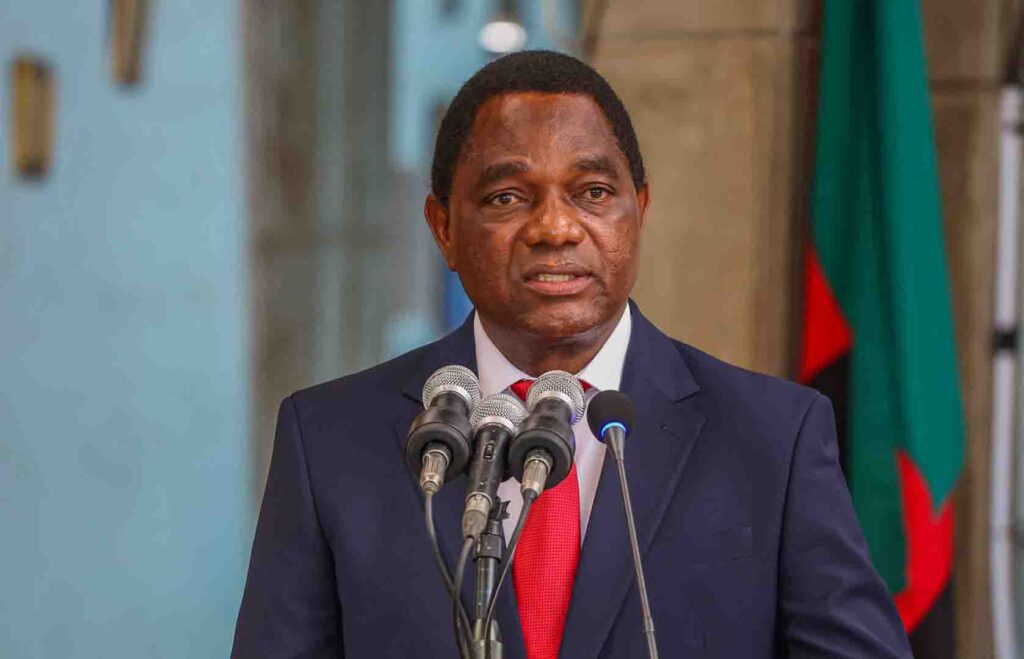
Zambia is entering the final stretch of its 2026 general election campaign, with voters preparing to decide whether President Hakainde Hichilema deserves another term in office.
The election is shaping up as an important test of Hichilema’s economic record and his government’s ability to convince voters that its policies are improving everyday life. While the administration has pointed to progress on debt restructuring and economic stabilisation, opposition parties continue to argue that many Zambians have yet to feel a meaningful improvement in their living standards.
The contest is therefore about more than political leadership. It is increasingly a referendum on the direction of Zambia’s economy.
Economy at the Centre of the Campaign.
Economic conditions have become one of the defining issues of the election.

Hichilema’s government came to power promising to restore confidence in Zambia’s economy, attract investment and address the country’s debt problems. The administration has highlighted progress in restructuring Zambia’s external debt and restoring macroeconomic stability after years of financial pressure.
Supporters argue that these measures were necessary to create a foundation for sustainable growth.
But for many households, economic recovery is ultimately measured by what happens to food prices, household incomes, employment and access to essential services.
Opposition parties have therefore focused their campaigns on the gap between macroeconomic reforms and the everyday experiences of ordinary citizens.
Copper Remains Critical.
Zambia’s economic future remains closely connected to its mining sector, particularly copper.
The country is one of Africa’s major copper producers, and the metal remains a crucial source of export earnings, government revenue and foreign investment.
The global transition toward electric vehicles, renewable energy and battery technologies has increased long-term demand for copper and other critical minerals.
Hichilema’s government has sought to attract greater investment into mining and increase production. The administration sees the sector as a major source of employment and economic growth.
The challenge will be ensuring that increased mineral production translates into broader benefits for Zambians.
Jobs and the Cost of Living.
Unemployment, particularly among young people, remains a major political concern.
Zambia has a young population entering the labour market every year, creating pressure on the government and private sector to generate more productive employment.
The cost of living is another major concern. Economic statistics may show improvement, but voters often judge governments according to whether they can afford food, transport, housing and education.
That disconnect could prove decisive at the ballot box.
A Test of Hichilema’s Presidency.
For Hichilema, the election represents an opportunity to defend his economic record and seek another mandate.
For the opposition, it is an opportunity to argue that the benefits of economic reforms have not reached enough people.
The election will therefore provide an important indication of whether Zambian voters are prepared to give the government more time to implement its economic programme or whether they want a different direction.
What Comes Next?
Beyond the election itself, investors will be watching closely.
Zambia’s ability to attract investment, expand copper production, manage debt and diversify its economy will remain critical regardless of who wins.
For voters, however, the immediate question is simpler: has the economic progress promised by the government translated into better lives?
The answer could determine Zambia’s political direction for years to come.

Comments (0)
No comments yet — be the first to share your thoughts.