

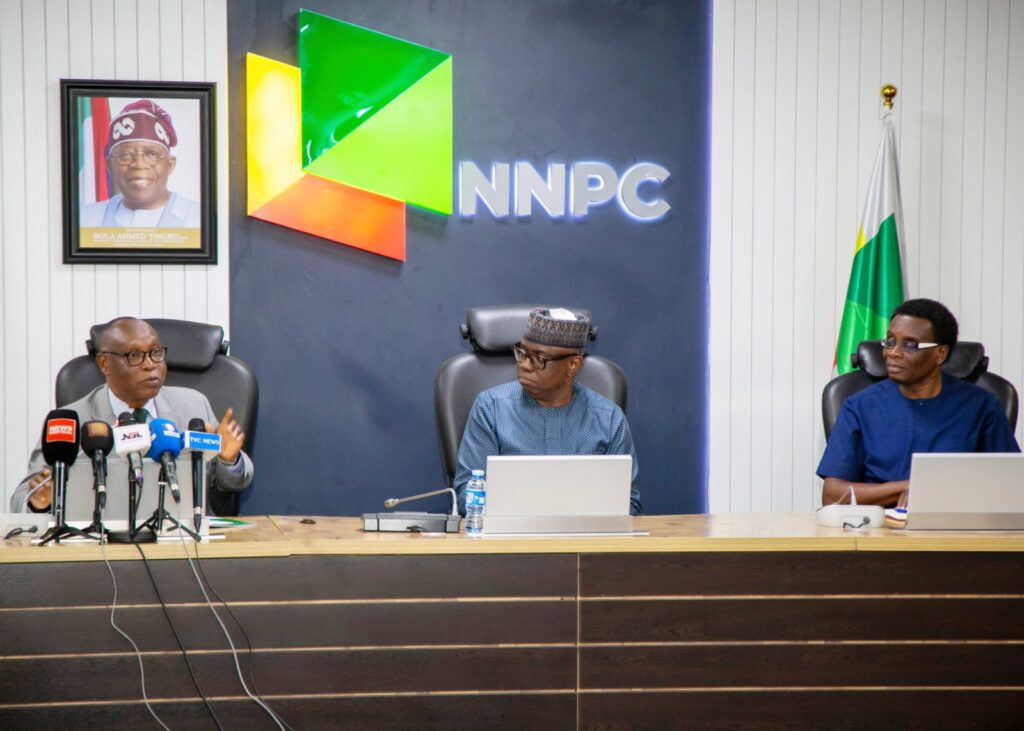
Nigeria’s state-owned oil company, NNPC Limited, ended 2025 with about ₦8.25 trillion in forward crude-sale obligations, highlighting the amount of future oil and gas production already committed under financing and prepayment arrangements.
The figure was contained in the company’s audited 2025 financial statements and represents a significant increase from approximately ₦6.21 trillion recorded in 2024. The obligations therefore increased by about 33% in one year, putting a substantial volume of future crude deliveries against money that NNPC has already received.
What the ₦8.2 Trillion Represents.
Forward-sale arrangements allow an oil company to receive money upfront in exchange for delivering agreed volumes of crude or other petroleum products at a later date.
For NNPC, these arrangements have been used as financing mechanisms, allowing the company to obtain funds while committing future production to settle the agreements.

The arrangement can provide immediate financing for operations and investments, but it also means that some future oil production is effectively already committed. This reduces the portion of future production that can generate fresh cash for other government priorities.
The latest figures therefore provide another indication of the financial commitments sitting behind Nigeria’s oil sector.
NNPC Has Committed Future Production.
According to the latest reporting on the audited accounts, NNPC has committed around 186,000 barrels of crude per day toward settling its forward-sale obligations and related financing commitments.
That commitment matters because crude oil remains central to Nigeria’s foreign-exchange earnings and government finances. Every barrel allocated to an existing financing arrangement represents production that cannot simultaneously be sold as entirely new revenue for the Federation.
The impact becomes particularly important when oil prices fall or production levels fail to meet expectations. Lower prices can reduce the value of new crude sales, while production disruptions can make it more difficult to satisfy existing delivery commitments.
The Obligations Come Alongside Stronger NNPC Earnings.
The forward-sale figure emerged just days after NNPC reported a major improvement in its 2025 financial performance.
The company reported ₦7.2 trillion in profit after tax, up 33% from ₦5.4 trillion in 2024. Revenue, however, declined by 24% to ₦34.5 trillion, largely because of lower crude prices and reduced volumes of some petroleum products.
NNPC also reported average crude oil and condensate production of 1.77 million barrels per day in 2025, its highest level in five years. The company has set an ambition of reaching 2 million barrels per day by 2027 and 3 million barrels per day by 2030.
The combination of higher production ambitions and large forward-sale commitments makes the management of future crude volumes particularly important.
Nigeria’s Oil Revenue Picture Is Changing.
The latest numbers also illustrate the complicated financial role NNPC now plays in Nigeria’s economy.
The company has been transformed into a commercially oriented limited liability company under the Petroleum Industry Act, while the federal government continues to rely heavily on petroleum revenues.
NNPC generated ₦25.39 trillion from crude oil sales in 2025, according to figures from its financial statements. Natural gas revenue increased to about ₦6.15 trillion, while petroleum-product revenue declined significantly during the year.
At the same time, NNPC reported substantial payments to government, including royalties, taxes and dividends. The company has also declared a ₦5.8 trillion dividend based on its 2025 performance.
These figures show that NNPC is generating substantial earnings, but they also demonstrate how much of the company’s cash flow is connected to existing obligations and government-related financial responsibilities.
The Cost of Using Future Oil as Financing.
Forward crude sales are not unusual in the global oil industry. They can provide companies with financing without relying entirely on conventional borrowing.
The concern for Nigeria is the cumulative size of the commitments and how they interact with production, government revenue and future investment needs.
When a company sells future production in advance, it gains access to cash today but gives up some future flexibility. If production increases substantially, the burden may become easier to manage. If production falls or oil prices weaken, however, the commitments can become more difficult to service.
Nigeria has spent years trying to increase crude production after disruptions caused by theft, pipeline vandalism, ageing infrastructure and underinvestment. The government’s ability to translate higher production into new revenue will therefore depend partly on how much of that production is already committed.
The Bigger Question Is Future Cash Flow.
NNPC’s latest accounts present a mixed picture: profitability has increased, crude production has reached a five-year high and the company is reporting stronger operating performance, but significant financial commitments remain attached to future production.
The ₦8.25 trillion forward-sale obligation is therefore more than another balance-sheet figure. It shows that part of Nigeria’s future oil income has already been monetised.
For a country seeking to use higher oil production to strengthen government finances, invest in infrastructure and attract new energy investment, managing those commitments will be an important part of the next phase of Nigeria’s petroleum strategy.
The challenge will be ensuring that increased production does not simply service existing obligations, but also generates enough new cash to strengthen Nigeria’s fiscal position and support investment in the wider economy.

Comments (0)
No comments yet — be the first to share your thoughts.