
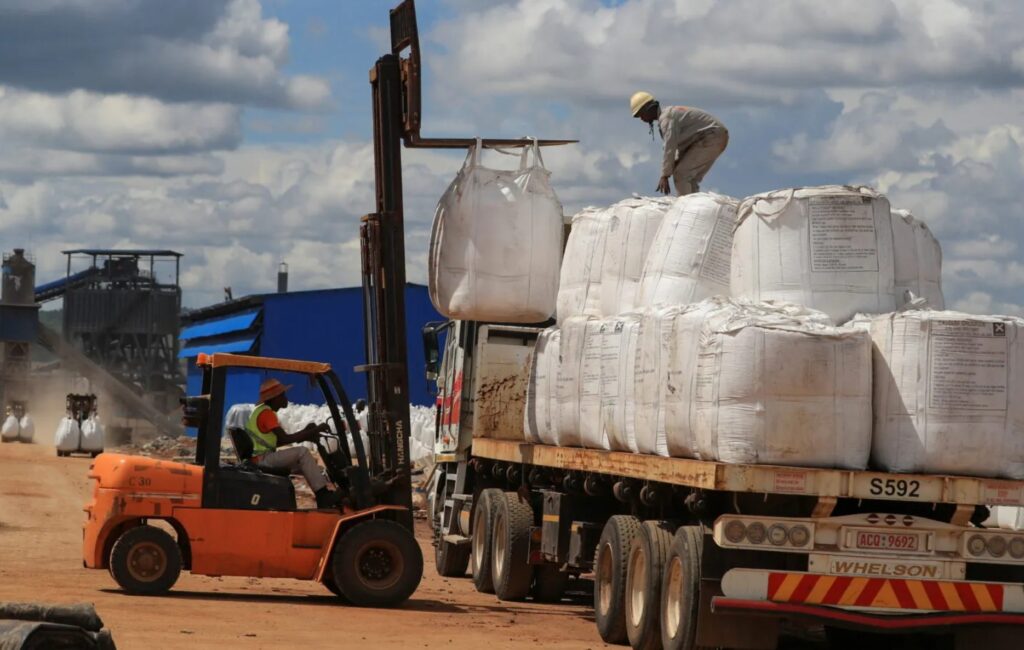
For more than a century, Africa has been described as a continent rich in natural resources.
From the cobalt mines of the Democratic Republic of Congo to the lithium deposits of Zimbabwe, the copper belts of Zambia, the gold fields of Ghana, the platinum reserves of South Africa, and the bauxite mines of Guinea, Africa possesses some of the most valuable resources on Earth.
Yet a painful contradiction remains:
Africa is one of the world’s richest continents in natural resources, but many of its people remain among the poorest.

The problem is not that Africa lacks wealth.
The problem is that too much of that wealth leaves the continent before it creates enough value for Africans.
For decades, African countries have exported raw minerals, agricultural products and natural resources, only to import finished goods made from those same materials at significantly higher prices.
Cobalt leaves the Democratic Republic of Congo as ore and returns as part of expensive batteries.
Cocoa leaves Côte d’Ivoire and Ghana as beans and returns as chocolate products worth many times more.
Cotton leaves Africa as raw fibre and returns as clothing produced elsewhere.
The question facing the continent is becoming increasingly urgent:
How long can Africa continue exporting the ingredients of global wealth while importing the finished products of development?
Africa Owns the Resources the World Needs
The global transition toward renewable energy and advanced technology has made Africa’s natural resources more valuable than ever.
According to the United Nations Economic Commission for Africa (UNECA), Africa holds approximately 30% of the world’s mineral reserves, including many critical minerals essential for electric vehicles, renewable energy systems, batteries and digital technologies.
The Democratic Republic of Congo alone produces more than 70% of the world’s cobalt, a mineral used in lithium-ion batteries powering electric vehicles, smartphones and energy storage systems.
Zimbabwe has become one of Africa’s major emerging lithium producers, while Namibia, Mali and Ghana are attracting increasing attention for lithium exploration.
South Africa dominates global platinum-group metal production, while Guinea possesses some of the world’s largest bauxite reserves, a key ingredient in aluminium production.
The irony is clear:
The minerals needed for the world’s green transition are largely found in Africa, but much of the industrial value created from them is captured elsewhere.
The Colonial Pattern Has Not Fully Disappeared
Africa’s dependence on raw material exports has deep historical roots.
During colonial rule, European powers structured many African economies around extracting resources and exporting them overseas.
Infrastructure was often built not to connect African economies with each other, but to transport minerals and agricultural products from mines and plantations to ports.
Although African countries gained political independence decades ago, many economic structures remained largely unchanged.
Today, many countries still depend heavily on exporting commodities whose prices are determined by international markets.
When commodity prices rise, governments benefit.
When prices fall, economies suffer.
This vulnerability has contributed to repeated cycles of debt, currency pressure and economic instability.
The Cost of Exporting Raw Materials
The biggest problem with raw exports is not simply the loss of revenue.
It is the loss of opportunity.
Mining creates jobs, but mineral processing creates far more economic activity.
A country that exports raw lithium earns income from extraction.
A country that processes lithium domestically can create industries around battery production, chemical processing, engineering, research, transportation and manufacturing.
The difference is enormous.
According to the International Energy Agency (IEA), demand for critical minerals will increase significantly as countries transition toward clean energy technologies. However, Africa risks remaining only a supplier of raw materials unless it develops local processing capacity.
The future value of these industries will not be created only in mines.
It will be created in factories.
DR Congo: The World’s Cobalt Supplier With Limited Benefits
Few examples demonstrate Africa’s resource paradox more clearly than the Democratic Republic of Congo.
The country possesses some of the world’s largest deposits of cobalt, copper and other strategic minerals.
Cobalt has become essential to modern technology.
It powers electric vehicle batteries, laptops, mobile phones and renewable energy storage systems.
Yet despite controlling the majority of global cobalt production, DR Congo captures only a limited share of the final value chain.
Most cobalt processing takes place outside Africa, particularly in countries such as China, which dominates global cobalt refining.
President Félix Tshisekedi has repeatedly argued that Congo must receive greater benefits from its mineral wealth and develop local processing industries.
His government has pushed for reforms aimed at increasing local value addition and attracting investments that create more jobs inside the country.
However, critics argue that improving infrastructure, electricity supply, governance and industrial capacity must happen before Africa can successfully compete in mineral processing.
Both arguments are valid.
Africa cannot simply demand factories without building the conditions that make factories possible.
Zambia Wants More Than Copper Exports
Zambia provides another important example.
The country is one of Africa’s largest copper producers, and copper remains central to the global clean energy transition.
Copper is essential for electric vehicles, solar panels, wind turbines and electrical networks.
Yet for decades, Zambia has exported copper mainly in raw or semi-processed forms while much of the higher-value manufacturing happened elsewhere.
President Hakainde Hichilema has repeatedly called for greater investment in mining value chains, arguing that Zambia should not only extract resources but also benefit from processing and manufacturing.
The government has promoted policies aimed at attracting investment in copper processing, battery minerals and industrial development.
The challenge is balancing two realities:
Africa needs foreign investment to develop its mining sector.
But it also needs stronger negotiating power to ensure investment creates local economic value.
The Battery Opportunity Africa Cannot Miss
The energy transition presents Africa with a historic opportunity.
Electric vehicles, renewable energy systems and battery storage technologies will require enormous amounts of minerals over the coming decades.
The question is whether Africa will simply supply the raw materials or participate in building the industries of the future.
The African Union has recognised this challenge through initiatives promoting mineral beneficiation and local value chains.
The African Green Minerals Strategy and other continental frameworks encourage countries to move beyond extraction toward processing, manufacturing and technology development.
However, implementation remains the biggest challenge.
Policies alone do not create industries.
Industries require electricity, skilled workers, transportation networks, research institutions and stable regulations.
Critics Warn Against Resource Nationalism
Not everyone agrees that restricting raw exports is the answer.
Some economists argue that African countries should avoid policies that discourage foreign investors.
Mining companies provide billions of dollars in investment, employment and government revenue.
Countries without established processing industries may struggle to compete internationally if they impose strict export restrictions too quickly.
There is also a risk that governments could introduce policies without the necessary infrastructure to support local industries.
For example, forcing companies to process minerals locally requires reliable electricity, technology, financing and skilled labour.
Without these foundations, policies could reduce investment rather than increase value creation.
The solution is not simply banning exports.
The solution is building competitive industries.
Africa Must Learn From Other Countries
Countries that successfully transformed natural resources into industrial power did not do so overnight.
Indonesia provides an interesting example.
The country restricted exports of raw nickel ore and pushed companies to invest in domestic processing facilities.
The policy attracted billions of dollars in investment into nickel refining and battery-related industries.
Supporters argue Indonesia moved higher up the value chain.
Critics argue the model also created environmental challenges and increased dependence on foreign investors.
The lesson for Africa is not to copy Indonesia completely.
It is to recognise that strategic policies can influence where value is created.
Agriculture Faces the Same Problem
The raw material challenge is not limited to mining.
Africa is one of the world’s largest producers of agricultural commodities but often captures limited value from them.
Côte d’Ivoire and Ghana produce more than half of the world’s cocoa supply.
Yet European companies dominate much of the chocolate processing industry.
Coffee-growing countries such as Ethiopia, Uganda and Kenya often export beans while international companies capture greater value through roasting, branding and retail.
Moving up agricultural value chains could create millions of jobs in food processing, packaging, logistics and manufacturing.
The Role of AfCFTA
The African Continental Free Trade Area (AfCFTA) could become a major tool for changing this reality.
A single African market of more than 1.4 billion people creates opportunities for regional manufacturing and industrial cooperation.
Instead of every country trying to build every industry alone, African nations can specialise, collaborate and develop regional supply chains.
For example:
- Congo could supply cobalt.
- Zambia could supply copper.
- South Africa could contribute industrial expertise.
- Rwanda and Kenya could support technology services.
- Other countries could develop manufacturing capacity.
Africa’s resources should support African industries.
The Real Challenge Is Governance
Natural resources do not automatically create prosperity.
Countries with enormous resource wealth can still experience poverty if institutions are weak.
Transparency, accountability, fair taxation and responsible environmental management are essential.
Citizens must benefit through better healthcare, education, infrastructure and employment.
Otherwise, resource wealth becomes a source of inequality rather than development.
The Verdict
Africa does not need to stop exporting resources overnight.
It needs to stop exporting opportunity.
The goal is not isolation from global markets.
The goal is participation on better terms.
The world needs Africa’s minerals.
The world needs Africa’s agricultural products.
The world needs Africa’s resources.
But Africa must decide whether it wants to remain a supplier of raw materials or become a producer of finished goods, technologies and industries.
The continent’s natural wealth should not only enrich companies that extract it.
It should create factories, jobs, innovation and prosperity for the people who own those resources.
Africa’s next economic revolution will not come from discovering more resources.
It will come from finally capturing more of the value those resources create.

Comments (0)
No comments yet — be the first to share your thoughts.