
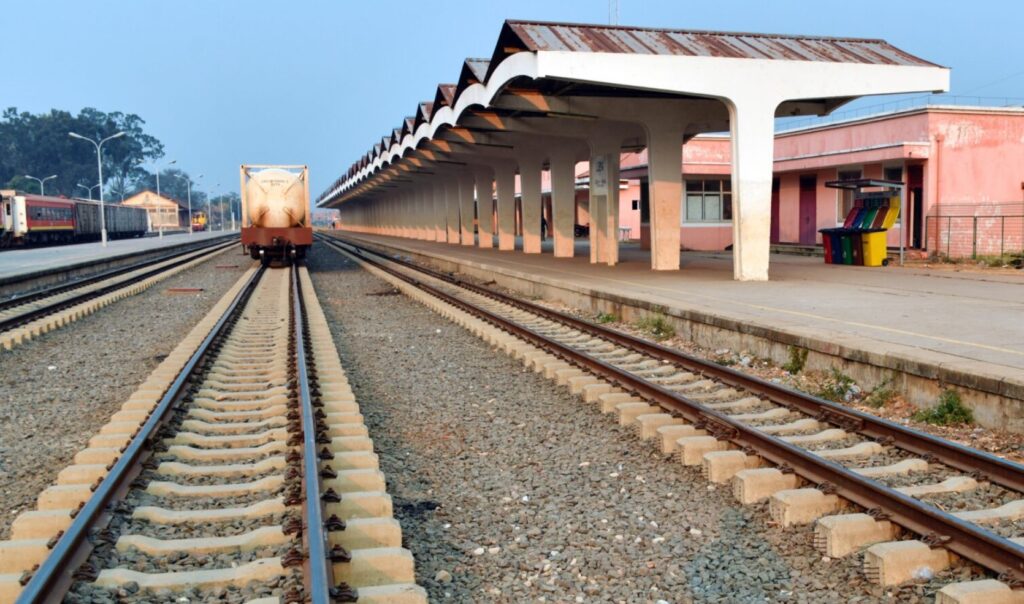
Africa’s ambition to trade more with itself has received a major boost following the financial close of the US$753 million Lobito Corridor Railway Project, one of the continent’s most important transport infrastructure investments in recent years.
The project, which stretches across Angola and will connect to the Democratic Republic of Congo and Zambia, is expected to transform the movement of minerals, agricultural products and manufactured goods while strengthening regional integration at a time when Africa is working to fully implement the African Continental Free Trade Area (AfCFTA).
For decades, poor transport infrastructure has remained one of the biggest obstacles to trade within Africa. Goods often take longer and cost more to move between neighbouring African countries than they do to Europe or Asia. The Lobito Corridor aims to change that.
Earlier this month, the Africa Finance Corporation (AFC) announced that the project had successfully reached financial close after securing US$753 million in funding, marking a significant milestone for one of Africa’s largest cross border transport projects.

A Railway With Continental Importance
The Lobito Corridor is centred on a 1,300-kilometre railway that links the Port of Lobito on Angola’s Atlantic coast to Luau, near the border with the Democratic Republic of Congo.
From there, future extensions are expected to connect directly with mining regions in the DRC and Zambia, creating one of Africa’s most important export routes for critical minerals including copper and cobalt.
These minerals have become increasingly valuable as demand grows for electric vehicles, renewable energy technologies and battery manufacturing around the world.
Once fully operational, the railway will offer mining companies a faster and more efficient route to international markets while reducing transport costs and easing congestion on existing road networks.
Financing Signals Investor Confidence
The financing package consists of a US$553 million senior loan from the U.S. International Development Finance Corporation (DFC) and a US$200 million facility from the Development Bank of Southern Africa (DBSA).
The Africa Finance Corporation, working alongside financial advisory firm Eaglestone, played a leading role in structuring and mobilising the financing for Lobito Atlantic Railway (LAR), the consortium responsible for operating the railway under a long term concession.
Speaking after the financial close, AFC President and Chief Executive Officer Samaila Zubairu described the project as a landmark achievement for regional integration and African industrialisation.
“The financial close of the Lobito Corridor Railway Project underscores AFC’s leadership in delivering complex transformational infrastructure that advances Africa’s industrialisation and regional integration,” Zubairu said.
More Than a Mining Corridor
Although much of the international attention has focused on transporting copper and cobalt from Central Africa, economists say the railway’s long term value extends far beyond mining.
Improved transport links could stimulate agriculture, manufacturing, tourism and cross border trade across the region.
Communities located along the railway are expected to benefit from improved logistics, new business opportunities and employment created through construction, maintenance and supporting industries.
Ports, warehouses and industrial zones are also likely to emerge around key transport hubs, creating additional economic activity.
Trade experts believe the corridor could eventually become one of Africa’s most important commercial routes connecting Atlantic shipping lanes with the mineral rich interior of Southern and Central Africa.
Supporting the AfCFTA Vision
The timing of the project is particularly significant.
Africa is currently implementing the African Continental Free Trade Area, which aims to create the world’s largest free trade area by connecting 54 countries and more than 1.4 billion people.
However, reducing tariffs alone is not enough to increase trade.
Efficient transport networks are equally important.
According to the African Development Bank, inadequate transport infrastructure continues to add significant costs to African businesses, making locally produced goods less competitive.
Projects such as the Lobito Corridor are therefore viewed as essential if AfCFTA is to achieve its full economic potential.
Better railway connections can reduce transport costs, shorten delivery times and encourage greater movement of goods between African countries.
Strategic Interest From Global Partners
The project has also attracted significant international attention.
The United States and several European partners have supported the Lobito Corridor as part of broader efforts to strengthen supply chains for critical minerals used in clean energy technologies.
Copper and cobalt transported through the corridor are essential for manufacturing batteries, electric vehicles and renewable energy equipment.
At the same time, African leaders have emphasised that the project should not only serve international markets but also support industrial development within Africa.
Many economists argue that the continent must move beyond exporting raw minerals and instead develop industries that process and manufacture finished products closer to where the resources are produced.
Challenges Still Lie Ahead
While the financial close represents an important milestone, considerable work remains before the corridor reaches its full potential.
Construction and rehabilitation work will continue over the coming years, while additional railway links into Zambia and the Democratic Republic of Congo will require further investment.
Security, maintenance, border procedures and customs coordination will also play an important role in determining the corridor’s long term success.
Analysts note that infrastructure alone cannot transform regional economies unless governments also improve trade policies, simplify border crossings and encourage private sector investment.
Why It Matters for Africa
The Lobito Corridor represents far more than a railway project.
It reflects a growing recognition that Africa’s future economic growth depends on better connections between its countries.
For too long, many transport networks were designed during the colonial era to move raw materials from inland regions to coastal ports for export.
Today’s infrastructure investments are increasingly focused on connecting African economies to one another.
If successfully implemented, the Lobito Corridor could reduce transport costs, strengthen regional supply chains, attract new industries and support millions of dollars in additional trade every year.
It also demonstrates that large scale infrastructure projects continue to attract international financing when they are supported by strong regional partnerships.
As Africa seeks to industrialise and expand trade under AfCFTA, projects like the Lobito Corridor may prove just as important as new factories or mines.
They provide the roads, railways and logistics systems needed to turn economic ambition into reality.

Comments (0)
No comments yet — be the first to share your thoughts.