

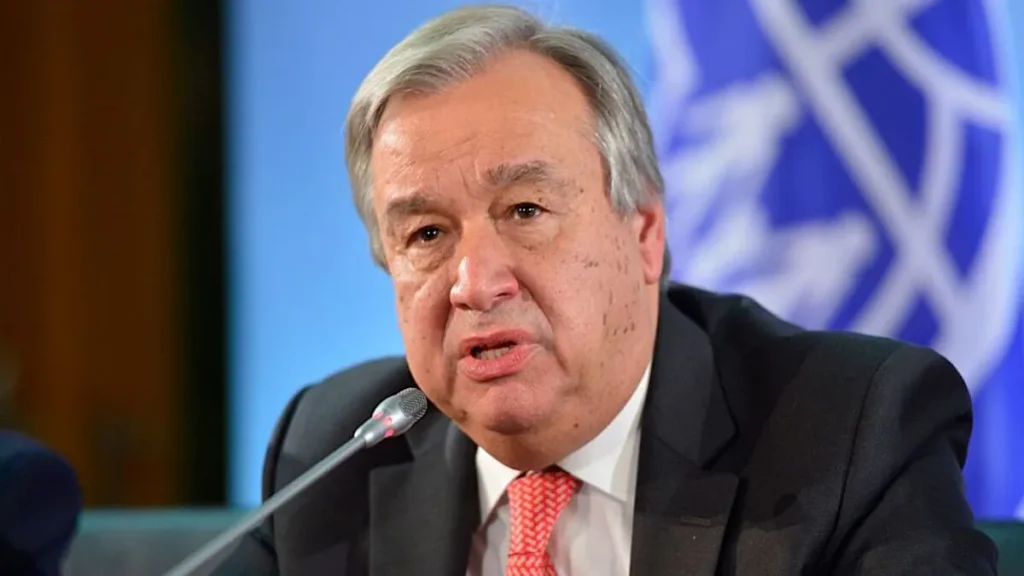
The United Nations has raised fresh concerns over the worsening security situation in West Africa and the Sahel, warning that terrorist groups are expanding their operations beyond traditional conflict zones and threatening the stability of several countries across the region.
Addressing the UN Security Council, Leonardo Santos Simão, the Special Representative of the Secretary-General for West Africa and the Sahel, said extremist groups continue to exploit weak governance, political instability, and humanitarian crises to strengthen their presence and recruit new members.
The warning comes as governments across the region struggle to contain a growing wave of attacks targeting civilians, security forces, and critical infrastructure.
Terrorist Groups Expanding Their Reach
According to the United Nations, terrorist organizations that once operated mainly in the central Sahel are increasingly extending their influence into coastal West African countries.

Nations such as Benin, Togo, Ghana, and Côte d’Ivoire have all experienced rising security concerns in recent years as extremist groups attempt to establish new footholds outside the traditional conflict zones of Mali, Burkina Faso, and Niger.
The UN noted that these groups continue to exploit porous borders, limited state presence in remote communities, and economic hardship to expand their operations.
Security analysts say the spread of violence beyond the Sahel could significantly alter the security landscape of West Africa if coordinated action is not taken.
Humanitarian Crisis Deepens
The growing insecurity has also fueled one of Africa’s most severe humanitarian crises.
Millions of people have been displaced from their homes by conflict, while many communities continue to face food shortages, disrupted education, and limited access to healthcare.
Humanitarian agencies warn that insecurity is making it increasingly difficult to deliver aid to vulnerable populations, leaving many families without basic necessities.
Children and women remain among the most affected, with schools closing in several conflict-affected areas due to security concerns.
Political Instability Complicates Security Efforts
The security crisis continues to unfold against a backdrop of political uncertainty in several Sahel countries.
Military-led governments in Mali, Burkina Faso, and Niger have reshaped regional security partnerships following a series of coups in recent years. These changes have altered cooperation with international allies and led to new security arrangements as governments seek different approaches to combating terrorism.
The United Nations emphasized that while military operations remain necessary, lasting peace cannot be achieved through security measures alone.
Officials stressed that addressing poverty, unemployment, weak governance, and limited economic opportunities will be essential to reducing the conditions that allow extremist groups to recruit young people.
Call for Stronger Regional Cooperation
The United Nations urged countries across West Africa to strengthen intelligence sharing, improve border security, and enhance cooperation in combating cross-border terrorism.
The organization also called on the international community to maintain its support for regional peacebuilding efforts, humanitarian assistance, and long-term development programmes.
According to the UN, sustainable security will require a comprehensive approach that combines military action with investments in education, infrastructure, governance, and job creation.
Regional organizations, including the Economic Community of West African States (ECOWAS), are expected to play a critical role in coordinating responses to the evolving threat.
Looking Ahead
The UN warned that without sustained regional and international cooperation, the terrorist threat could continue to spread, placing additional pressure on governments already facing economic and political challenges.
While security forces across the region have achieved successes against armed groups, officials caution that the fight against terrorism is entering a new phase that demands greater coordination and long-term commitment.
As West Africa confronts one of its most significant security challenges in recent years, the United Nations says protecting civilians, strengthening institutions, and addressing the root causes of extremism will be essential to achieving lasting peace and stability across the region.

Comments (0)
No comments yet — be the first to share your thoughts.